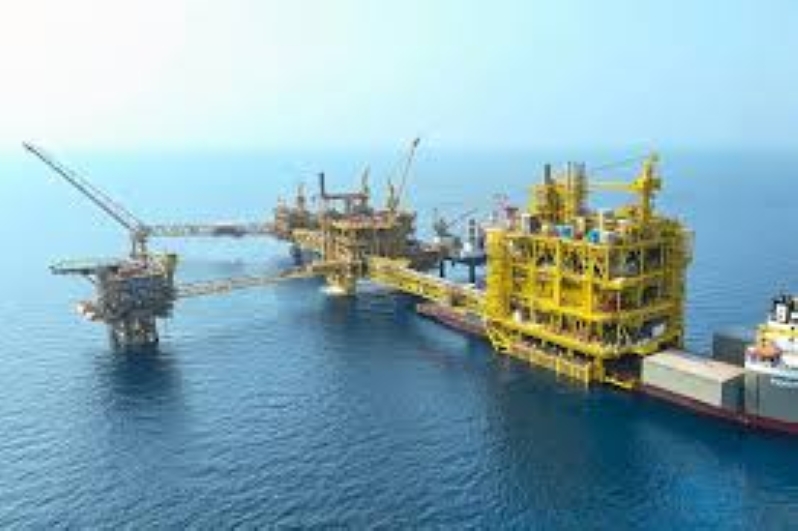
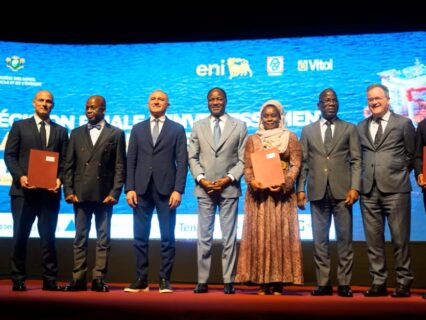
Italian energy major Eni and its partners, Petroci and Vitol, have approved the Final Investment Decision (FID) for Phase 3 of the Baleine offshore development in Côte d’Ivoire, marking another major milestone for one of Africa’s fastest-developed hydrocarbon projects.
The approval, announced during a ceremony in Abidjan attended by Ivorian officials including Mines, Petroleum and Energy Minister Mamadou Sangafowa-Coulibaly, will significantly expand production from the Baleine field – already the country’s largest hydrocarbon discovery. The project is being developed by Eni alongside state-owned Petroci Holding and global energy trader Vitol.
Baleine Phase 3 Production Capacity to More Than Double
Under Baleine Phase 3, oil production is expected to increase from approximately 60,000 barrels per day to 150,000 barrels per day. Natural gas output will rise from around 80 million cubic feet per day to 200 million cubic feet per day.
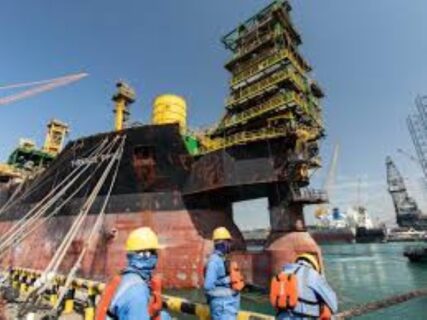
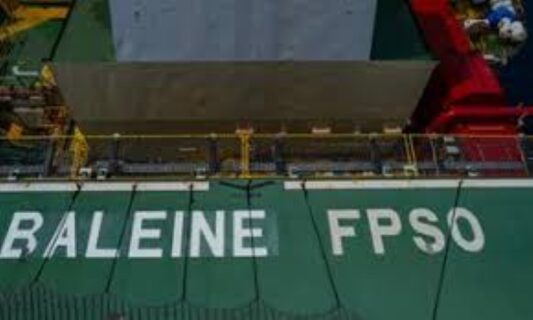
The expansion will be supported by the construction of a new Floating Production Storage and Offloading vessel (FPSO). Eni says the FPSO will be designed to deliver high operational efficiency, strong safety standards and reduced environmental impact.
Importantly, all gas produced from Baleine Phase 3 will be allocated to the domestic market. This continues to reinforce Côte d’Ivoire’s power generation system and supports industrial growth as electricity demand continues to rise across the country and the wider West African region. This will also support other energy generation assets in Côte d’Ivoire including the Gribo-Popoli Hydropower Station in the country’s wider Sassandra River basin hydropower cascade plan.
Baleine Oil and Gas Project Offshore Côte d’Ivoire
The Baleine oil and gas project in Côte d’Ivoire has rapidly become one of the most closely watched offshore developments in Africa. This is due to its scale, accelerated execution timeline and overall relevance to regional energy security.
Discovered in 2021 in the CI-101 and CI-802 offshore blocks, Baleine is considered the largest hydrocarbon discovery ever made in Côte d’Ivoire and the first major commercial discovery in the country in more than two decades.
Baleine Phase 1 production started in record time in 2023, followed by Phase 2 expansion activities that significantly boosted output. The newly sanctioned Phase 3 effectively transforms Baleine into a full-scale offshore energy hub capable of supporting both domestic consumption and export revenues.
The project also aligns with Côte d’Ivoire’s ambition to position itself as a regional energy and industrial center. Growing domestic gas supplies are needed for electricity generation, industrialization and energy access initiatives throughout the country.
Beyond Baleine oil and gas project, Eni has continued expanding its upstream footprint offshore Côte d’Ivoire through additional exploration campaigns and discoveries, including the Calao South gas-condensate discovery announced earlier in 2026. That discovery reinforced confidence in the broader offshore basin potential surrounding Baleine.
Finance and Ownership Structure
Baleine oil and gas project in Côte d’Ivoire’s features a multi-partner offshore development structure involving international and national stakeholders.
Following Eni’s 2025 divestment transaction with Vitol, the project ownership structure currently consists of:
- Eni – 47.25%
- Vitol – 30%
- Petroci Holding – 22.75%
The transaction formed part of Eni’s “dual exploration model,” under which the company monetizes discoveries by bringing in strategic partners. This is while retaining operatorship and accelerating development timelines.
Although Baleine Phase 3 capex figure was not publicly disclosed in the FID approval announcement in Abidjan, the development is expected to involve substantial offshore infrastructure investment. This will be centered around the new FPSO, subsea systems and gas monetization infrastructure.
Environmental Concerns and Energy Transition
Eni has consistently positioned Baleine as a lower-emissions upstream project within its African portfolio. Previous company statements described Baleine as Africa’s first upstream development targeting net-zero Scope 1 and Scope 2 emissions through operational efficiency measures and offset initiatives.
The company’s broader strategy in Côte d’Ivoire also includes biofuel feedstock initiatives and energy transition projects. These are aimed at integrating local agricultural value chains into renewable fuel supply systems.
However, like many large-scale hydrocarbon developments globally, Baleine also sits within wider debates about balancing African industrialization, energy access and economic growth with long-term decarbonization goals.
Outlook on Baleine Phase 3 Offshore Development
The approval of Baleine Phase 3 further consolidates Côte d’Ivoire’s emergence as one of the most dynamic upstream markets in sub-Saharan Africa.
With production expected to reach 150,000 barrels of oil per day and 200 million cubic feet of gas daily, Baleine could also materially reshape the country’s fiscal revenues. Industrial energy availability and regional influence within West Africa’s energy landscape could also feel some shift.
For Eni, the project strengthens its position as one of the continent’s most active offshore operators. This is while complementing its expanding LNG and gas monetization strategy across Africa.
Baleine Phase 3 Offshore Development Project Fact Sheet
Location: Offshore Côte d’Ivoire
Operator: Eni
Partners: Vitol, Petroci Holding
Project Type: Offshore oil and gas development
FID Approval: May 2026
Oil Production Target: 150,000 barrels/day
Gas Production Target: 200 million cubic feet/day
Key Infrastructure: New FPSO unit
Gas Allocation: Domestic market supply
Strategic Importance: Largest hydrocarbon project in Côte d’Ivoire


Leave a Reply