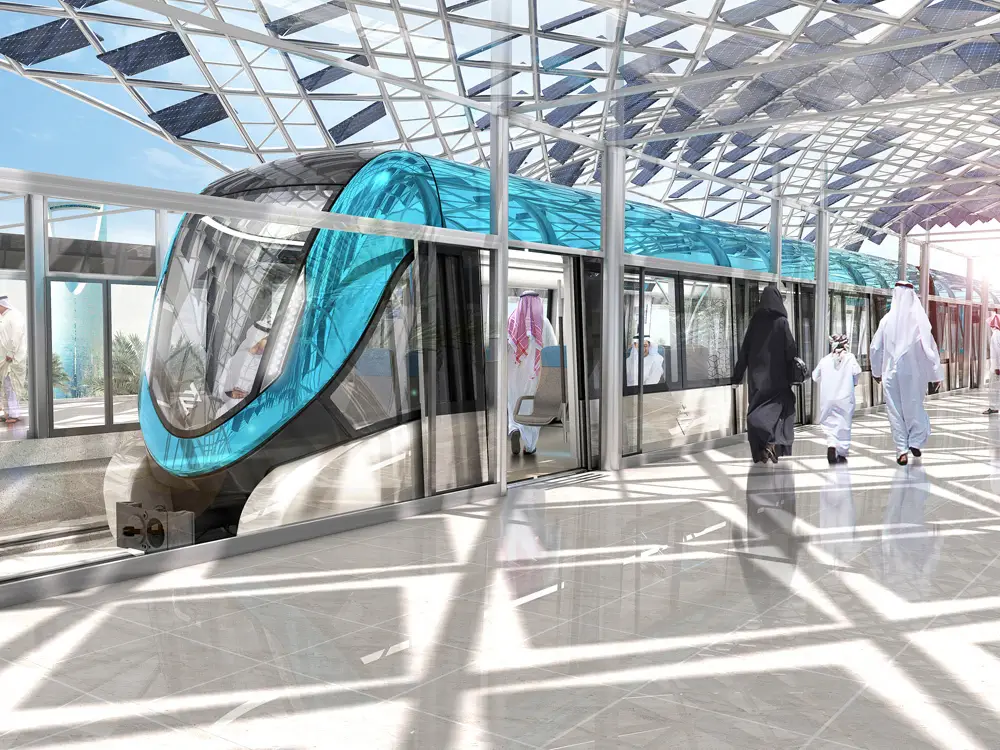
Riyadh Metro project continues to expand its operational capacity as the six-line network now serves the city with full functionality. The system spans 176 kilometers and 85 stations, making it one of the world’s largest urban rail networks. Moreover, authorities continue to enhance performance while preparing new extensions to meet rising demand.
Furthermore, the network achieved full operations in 2025, following phased openings across all lines. Since then, ridership has increased steadily as more residents adopt public transport. As a result, the system continues to reduce congestion and improve mobility across key urban corridors.
In addition, the project remains central to Saudi Arabia’s Vision 2030 strategy. It supports sustainable transport while linking major economic zones, residential districts, and public facilities. Therefore, the metro strengthens Riyadh’s position as a modern and connected global city.
Meanwhile, ongoing developments continue to shape the next phase of expansion. Notably, the proposed Line 7 has entered procurement, with contractors submitting bids for design and construction works. Consequently, you can explore the latest progress in the Riyadh Metro Line 7 bids, which highlights participating consortia and project scope.
Riyadh Metro project strengthens integrated urban mobility
Importantly, the Riyadh Metro project integrates with the city’s bus network and other transport systems. As a result, it creates a seamless mobility ecosystem across urban and suburban areas. Moreover, this integration reduces reliance on private vehicles while improving travel efficiency.
Additionally, the network connects major landmarks, including King Khalid International Airport and King Abdullah Financial District. Therefore, the system supports both daily commuting and economic activity. At the same time, it enhances accessibility to emerging developments such as Diriyah Gate and Qiddiya.
Furthermore, authorities continue to implement operational improvements, including service optimization and passenger experience upgrades. These measures aim to increase ridership while ensuring long-term sustainability.
Riyadh Metro project expansion drives future growth
Looking ahead, the Riyadh Metro project continues to evolve through new lines and extensions. For instance, the planned $900 million Riyadh Metro Line 7 will connect western Riyadh developments, including Diriyah and Qiddiya. As a result, the expansion will support tourism, entertainment, and residential growth.
Moreover, authorities have awarded additional extension works, including the Red Line expansion. This project adds new stations and extends connectivity into underserved areas. Consequently, the metro network continues to grow in both scale and impact.
In addition, planners are prioritizing integration with future infrastructure projects. Therefore, the metro will remain a key component of Riyadh’s long-term urban development strategy.
Also Read: Riyadh Airports awards project management consultancy services contract for airside projects at KKIA
The stations and vehicles along the Riyadh Metro will be constantly monitored by early warning systems, cameras, and communication systems, that are all directly connected to the main control center. The main stations involved in the project are characterized by monorail sites that have been designed on several levels.
In addition to the facilities that will be available, the sites will have air-conditioning considered for the sake of the safety and comfort of the passengers.
Riyadh Metro Project team, cost of construction, and expectations
The Riyadh Metro Project is scheduled to be completed and become operational within the first quarter of this year. Contracts for the project were awarded back in July 2013, while construction works began in 2014, taking a total of 4 years of development and construction.
The construction companies involved in the projects are Consolidated Contractors Company, Almabani General COntractors, Larsen & Toubro, Strukton, Samsung, Webuild, and Neema.
The total cost of the Riyadh Metro Project has got a total cost of US$ 22.5bn. Following the Mecca Metro which was opened in November 2010, the Riyadh metro system will be the second metro system in the country. In the Arabian Peninsula, the metro system will be the fourth in the Arab World, the sixth while in the Middle East, the fifteenth.
Project Fact Sheet
Project Name: Riyadh Metro Project
Client: Royal Commission for Riyadh City (RCRC)
Estimated Cost: $22.5 billion
Project Type: Urban rail transit system
Network Length: 176 km
Number of Lines: 6 operational lines
Stations: 85
Operational Status (2026):
- Fully operational since 2025
- Ridership increasing steadily
- System undergoing continuous optimization
Recent Developments:
- Red Line extension awarded
- Line 7 in procurement phase
- Network integration improvements ongoing
Key Connections:
- King Khalid International Airport
- King Abdullah Financial District
- Downtown Riyadh
- Diriyah Gate (planned expansion)
- Qiddiya (future connection)
Project Team
Client / Developer: Royal Commission for Riyadh City (RCRC)
Main Delivery Consortia
BACS Consortium:
- Bechtel
- Almabani General Contractors
- Consolidated Contractors Company (CCC)
- Siemens
FAST Consortium:
- FCC
- Atkins
- Alstom
- Samsung C&T
- Strukton
- TYPSA
ANM Consortium:
- Webuild (formerly Salini Impregilo)
- Bombardier Transportation
- Ansaldo STS
- Larsen & Toubro
- Nesma & Partners
- Worley
Key Consultants and Designers
- Parsons (Program management)
- AECOM (Design and engineering)
- Jacobs (Engineering consultancy)
- Systra (Rail specialist consultancy)


Leave a Reply