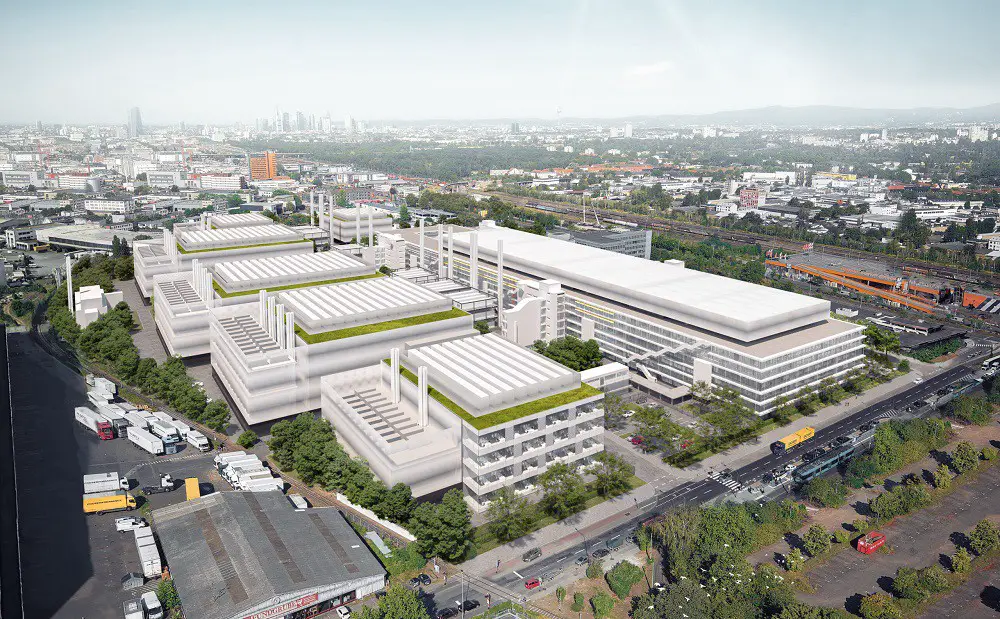
The Digital Park Fechenheim project in Frankfurt has been reframed in 2026 as a long-term, phased digital infrastructure campus rather than a single hyper scale build-out, reflecting broader adjustments in global data center investment cycles. Developed on the former Neckermann industrial site, the scheme is now anchored by Digital Realty as a multi-phase ecosystem targeting up to eleven data centers and around 200MW of IT capacity, integrating heritage preservation, low-carbon construction methods, and heat reuse systems as part of Frankfurt’s expanding cloud and interconnection hub strategy.
This repositioning comes at a time when global hyper scale expansion has become more selective and capital-sensitive, particularly following project reassessments in markets such as Australia and New Zealand. A relevant example is the West Auckland data center construction pause, where Amazon’s reported financial write-down signaled tighter scrutiny of large-scale deployments and shifting AI infrastructure demand expectations. In contrast, Frankfurt’s Fechenheim campus has maintained steady construction momentum into 2026, with new phases such as FRA20 progressing toward 2027 operational readiness despite broader market volatility.
The evolution of Frankfurt’s Fechenheim campus contrasts sharply with the financial recalibration seen in projects such as the West Auckland data center halt, where hyperscale operators have begun reassessing capital exposure amid shifting AI infrastructure demand cycles and regional power constraints. While West Auckland reflects short-term investment tightening and write-downs, Frankfurt demonstrates a more structured, phased delivery model that prioritizes incremental capacity expansion over speculative full-site build-outs.
The Digital Park Fechenheim to help in the growth of digital infrastructure
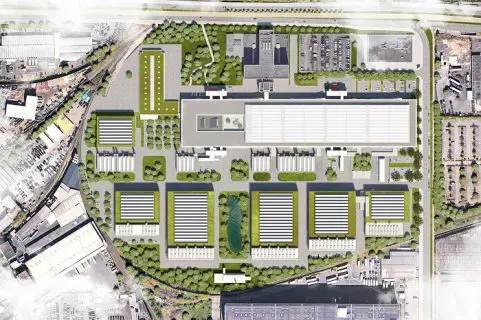
With the investment and development of the Digital Park Fechenheim in Frankfurt, Interxion is stressing the importance of the region: Companies require a strong digital infrastructure to handle, analyze, and evaluate increasing amounts of data. In order to accommodate this demand, Interxion plans to build a new data centre campus on the former Neckermann site with an IT capacity of up to 200 MW in the final expansion.
For the entire area, an innovative urban planning concept was implemented, which included the replanting of green spaces. As a result, more than 10,000 square meters of land will be opened up and the tree population will be greatly boosted. The plans also call for green facades and partial greening of the future data centres’ roofs. A pond will also be built in the campus’s centre.
The goal of these comprehensive initiatives is to actively contribute to the beneficial development of the urban climate. Rainwater collected in cisterns provides irrigation for the green areas. These also feed the pond, which might be utilized for extinguishing water purposes, among other things. The municipal office’s utilization of rainwater resources for green spaces is also considered.
Digital Park Fechenheim power sources
Sustainability efforts for the Digital Park Fechenheim are also in the works. The new data centres will not only be powered entirely by renewable energy, but they will also investigate the possibility of self-generation. To that end, Interxion is currently conducting extensive simulations of all campus areas to determine whether they are suitable for the installation of photovoltaic modules — with the goal of not only producing their own green electricity but also increasing efficiency in the cooling of data centres and office space through shading.
Also Read: US$ 1bn DeKalb Data Center Expansion Project in Chicago, Illinois, Underway
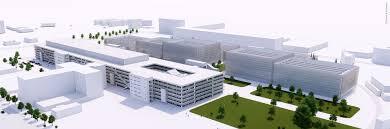
The recycling of waste heat is also part of the concept. The Eiermann building will house around 18,000 square meters of office and storage space, which will be heated using waste heat generated by the surrounding data centres. Additional concepts for additional feeding into local and district heating networks are now being worked out and are about to be finished.
Interxion is significantly increasing its presence in the east of Frankfurt and hence the footprint of its worldwide data centre platform PlatformDIGITAL® with the expansion of the former Neckermann site to the Digital Park Fechenheim, which is just around one kilometre from the Ostend campus. As a result, the organization provides its consumers with access to approximately 290 facilities in 47 major cities.
Both facilities are linked by redundant fibre-optic lines and a variety of plumbing systems. Interxion thus enables its customers to achieve scalable and seamless development in the near vicinity of DE-CIX and, thanks to reduced latency, offers them the optimal colocation environment for future-oriented applications and business models (AI, digital transformation, etc). (AI, digital transformation, etc.).
Project Fact Sheet
Project name: Digital Park Fechenheim
Location: Frankfurt am Main, Germany (Fechenheim district)
Developer: Digital Realty (formerly Interxion)
Site type: Redeveloped Neckermann industrial campus
Land area: ~100,000 m²+ total campus footprint
Planned capacity: Up to ~11 data centers
IT load target: ~200 MW (full build-out scenario)
Project timeline: 2021–2030 (phased delivery)
Current phase (2026): FRA18–FRA22 cluster construction + FRA20 expansion underway
Completion outlook: Ongoing phased delivery toward late 2020s–2030
Project Team
Client / Developer: Digital Realty Germany GmbH
Former entity (legacy development): Interxion (acquired/merged into Digital Realty)
Architect / Integrated design: Drees & Sommer (Integrated Design Team)
General planning & technical delivery: Multi-disciplinary engineering consortium under RIBA-stage delivery model
Project management support: FF-Projekt GmbH (overall coordination and permitting support)
City stakeholders: City of Frankfurt planning authorities and heritage preservation offices (Egon Eiermann building conservation oversight)

Leave a Reply