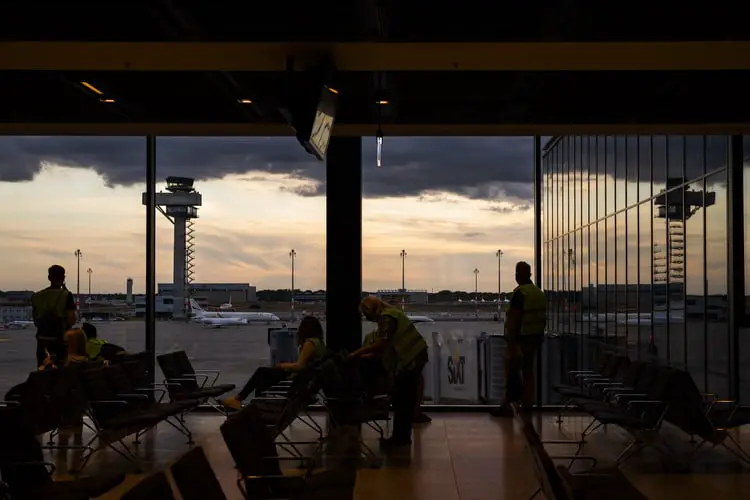
Construction of Brandenburg Airport Terminal 2 in Berlin, Germany, has been completed, marking a significant milestone in the ongoing development of one of Europe’s most important aviation gateways. The new terminal expands passenger handling capacity and strengthens the airport’s ability to cater to growing traveller demand.
The completion of Terminal 2 supports long-term growth strategies for air traffic in Berlin and the surrounding region, improving operational efficiency and enhancing the overall passenger experience at Berlin Brandenburg Airport (BER).
Expanded Capacity and Enhanced Passenger Experience
Terminal 2 expands airport capacity with state-of-the-art facilities designed to streamline passenger flow and reduce congestion during peak travel periods. The new terminal includes:
- Expanded check-in and security screening zones to improve throughput
- Additional departure gates and waiting areas to accommodate more flights
- Modern passenger amenities, including lounges, retail, and dining spaces
- Improved baggage handling and logistics systems for faster processing
- Enhanced wayfinding and accessibility features for travellers
The upgraded infrastructure enhances BER’s ability to serve both domestic and international flights, providing a modern travel environment for millions of passengers annually.
Strategic Importance for Berlin’s Aviation Network
The completion of Terminal 2 positions Berlin Brandenburg Airport to meet both current and future demands of air travel:
- Improved Handling Capacity: Berlin’s fast-growing passenger volumes require expanded infrastructure to prevent delays and congestion. Terminal 2 increases annual capacity significantly.
- Enhanced Connectivity: With additional gates and processing facilities, BER can support new routes and more frequent services to European and intercontinental destinations.
- Operational Efficiency: Modern airport terminals are designed for optimal passenger flows and operational logistics, reducing dwell times and improving airline turnaround performance.
- Passenger Experience: Retail, hospitality, and passenger service upgrades contribute to a modern travel environment that boosts customer satisfaction.
The expansion aligns with broader trends across major European hubs, which are investing in terminal enlargement and modernisation to capture rising air traffic and competitive airline services.
Context Within European Airport Development
Terminal 2’s completion at BER reflects a wider pattern of capacity growth across the continent:
- Airports such as London Heathrow, Paris Charles de Gaulle, and Munich Airport have all undertaken terminal expansions in recent years to boost traveler throughput. Frankfurt Airport has now joined that group with the official opening of its new Terminal 3, adding 19 million passenger capacity to Germany’s busiest hub, part of a long-term strategy to enhance service quality and commercial offerings while addressing capacity constraints and competing effectively with other major European hubs.
- Integration of digital systems, automated processes, and passenger service technologies is increasingly standard in modern European terminals.
- Improved intermodal connectivity — including rail, metro, and shuttle services — enhances accessibility for regional and international passengers.
These developments position European aviation hubs to compete effectively in a post-pandemic growth era.
Outlook and Future Enhancements
With Terminal 2 now operational, focus will shift to commissioning, optimisation of passenger systems, and integration with broader airport functions. Future priorities may include:
- Enhanced digital journey tools for passengers (e-boarding, self-service kiosks)
- Expansion of ground transport links connecting the airport with the Berlin metropolitan region
- Additional capacity planning to support continued passenger demand growth
The completion of Terminal 2 effectively prepares Brandenburg Airport for the next phase of its role as a high-capacity international aviation centre serving Germany and Europe.
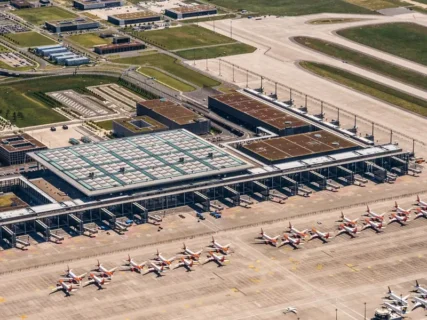
Reported 2nd October 2020: Construction at Berlin’s Brandenburg Airport Terminal 2 construction has officially been completed. Notice for the opening of the US$235 million terminal was given just this week. The new terminal will be used alongside the existing Terminal 1 and the soon-to-be-added Terminal 5. Terminal 2 at Brandenburg Airport will give the airport an annual capacity of 40 million passengers. The existing Terminal 1 is connected to the new terminal via two bridges. On 25 October, the existing Schöneld Airport will become Terminal 5 of the new BER complex, ahead of the airport’s planned opening on 31 October. The Brandenburg Airport Terminal 2 construction has been completed in two years; after initially getting the go-ahead on 7 July 2017, the plan for the terminal was changed and work eventually began in October 2018. The finished facility has an annual capacity of 6 million passengers.
Also Read: Zanzibar; Abeid Amani Karume International Airport terminal 3 construction completed.
Berlin Brandenburg is set to open later this year, to replace both Schönfeld and Berlin Tegel airports. While Schönfeld is being absorbed into the new airport, Tegel will close on in November. Air France, which was the first civil airline to land at Tegel in 1960 will be the last to depart from the airport on 8 November. Despite the new Brandenburg airport having three terminals at its disposal, airport bosses are not expecting to put all of the new facilities into immediate use, due to the ongoing drop in passenger numbers due to the Coronavirus pandemic and international travel restrictions.
With the opening of BER airport, all air traffic in the German capital region will be concentrated in one location. Berlin is a major tourist magnet, political center and trade fair city. The state of Brandenburg has been gaining economic importance, attracting global companies, such as Tesla. The new airport location is an important hub for linking the strong economic and tourism region to more than 150 destinations worldwide. During the ceremonial opening, a Lufthansa and an easyJet plane will be landing simultaneously at the new airport.

Leave a Reply