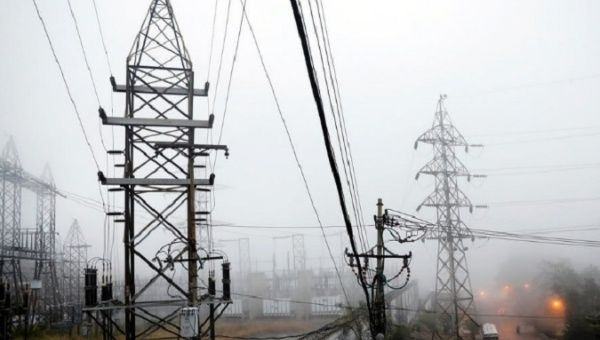
Venezuela national power grid has become a focal point of renewed energy diplomacy in South America, as mid-2026 developments signal a broader reintegration of Venezuela into Latin American electricity cooperation frameworks. Alongside the landmark GE Vernova national grid rebuild deal aimed at restoring more than 5GW of grid capacity over the next four years, Caracas has also been engaging regional partners. This includes Brazil who has been in discussions around cross-border grid stability, technical support and long-term energy security. This initiative builds on historic interconnections between the two countries. Brazil has previously relied on Venezuelan-linked transmission corridors in Roraima, and now reflects Brasilia’s renewed interest in strengthening regional resilience. This will be through diversified supply routes, grid interconnections and coordinated infrastructure modernization across the Northern Amazon energy arc.
Brazil’s Reentry into Venezuela’s Electrical Grid: What Has Happened Since the Program’s Inception in September 2023
Since Brazil’s initial push to re-engage Venezuela’s electricity sector in September 2023, progress has been gradual but increasingly structured. It has since moved from diplomatic pleasantries into technical and energy-security coordination frameworks.
Over the 2024-2025 period, discussions have reportedly shifted toward practical restoration priorities in cross-border grid reliability. This has centered around northern transmission stability and regional energy security integration tied to northern Amazon interconnections.
By mid-2026, this earlier engagement has evolved into a more formalized regional posture via private manager Ambar Energia. It is now aligning with Venezuela’s broader grid rehabilitation agenda – actively anchored by large-scale modernization efforts such as the GE Vernova-backed program to restore over 5GW of capacity – where Brazil’s role is increasingly framed less as a peripheral partner and more as a strategic stabilizer in regional power balancing, interconnection planning and long-term electricity security coordination.
Brazil’s Reentry into Venezuela’s Electrical Grid for Energy Security
Reported September 20, 2023 – The Minister of Mines and Energy for Brazil, Alexandre Silveira, announced that his country is resuming attempts to establish a connection to Venezuela’s electrical grid, in order to import electricity from the Caribbean country.
The reconnection with Venezuela was cut off in 2019 by the then President Jair Bolsonaro. According to him, it is a project that strives to offer energy security to the areas in northern Brazil. The minister was recently in New York to unveil an energy transformation project.
Also read: Project for Development of Electricity Connections breaks grounds in Koudougou, Burkina Faso
A directive to re-import clean, renewable electrical energy, particularly the hydraulic energy from the Guri plant, was issued, according to Silveira. He said that they had already started the integration process with Venezuela.
As the only part of Brazil that is still not connected to the national electrical grid, the interruption of energy imports from Venezuela had an impact on the energy supply to the state of Rorai.
Agreement to reconnect electrical grid
The electrical grid connecting the two countries will be reconnected. This is as agreed upon by Venezuelan President Nicolas Maduro and Brazilian President Lula da Silva in May.
The leader of Bolivarian declared that to recover the transmission lines, investments of at least $4 million USD would be required. These lines had deteriorated due to inactivity.
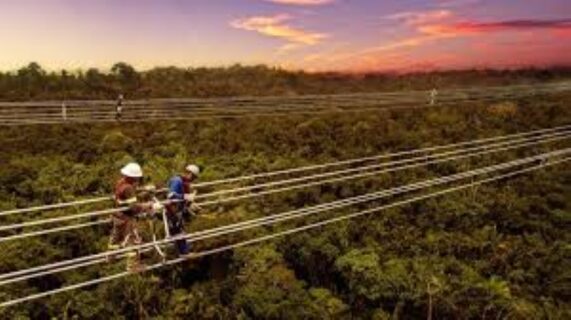
In order to ensure Roraima’s energy security, Brazil is currently working on another front by constructing a transmission line that will link Roraima and Manaus.
The transmission line’s first two towers will be inaugurated by Silveira in October. The two towers will connect Roraima with Brazil’s national electrical grid for the first time.
To sum up, Brazil’s efforts to restore its energy link with Venezuela are important. These efforts aim to lessen its dependence on energy imports, marking significant developments in the region. They will help Brazil be more energy secure and self-sufficient. They will also ensure a consistent electricity supply for the northernmost part of the country.



Leave a Reply