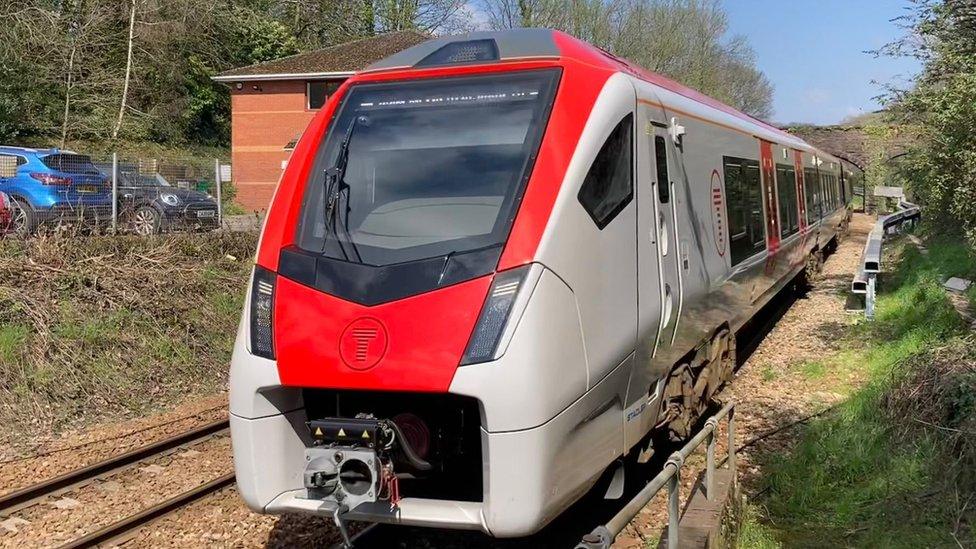
Prime Minister Keir Starmer has officially endorsed a massive £14 billion strategic vision to transform the Welsh railway network, a move designed to address decades of underinvestment and bridge the economic gap between Wales and England. The announcement focuses on two critical corridors: the full electrification of the North Wales Main Line and a significant capacity boost for the South Wales Main Line, which includes the construction of seven new stations. This infrastructure push serves as a direct legislative response to the cancellation of the northern leg of HS2, repurposing capital to deliver tangible connectivity improvements that will decongest the M4 motorway and slash journey times between Holyhead, Manchester, and London. While the full £14 billion represents a long-term pipeline, the government has unlocked an immediate £445 million funding tranche to move these schemes from the drawing board to the delivery phase.
Electrifying the North: Engineering Challenges
For the heavy construction sector, the “Jobsite Impact” of this directive is substantial, particularly along the North Wales coast. The electrification of the 126-mile route requires a massive mobilization of piling rigs and overhead line equipment (OLE) teams. Engineers will face the complex logistical challenge of installing thousands of steel masts and catenary wires on a Victorian-era alignment that hugs the Irish Sea, often requiring extensive bridge raisings and tunnel clearance works to accommodate the high-voltage cables. Simultaneously, the signaling architecture will need a complete digital overhaul to handle the increased frequency of electric rolling stock, moving away from legacy mechanical systems to modern LED and digital control centers.
Welsh Rail Transformation: Factsheet
Project Name: Welsh Rail Network Overhaul (North & South Wales Main Lines)
Total Vision Value: ~£14 Billion (Long-term strategic pipeline)
Immediate Funding: £445 Million (Spending Review allocation)
Client/Delivery Body: Network Rail (Wales & Western), Transport for Wales (TfW), UK DfT
Construction & Delivery Team (Network Rail CP7 Framework Partners):
Electrification & Plant: AmcoGiffen (Wales & Western Region)
Stations & Buildings: Octavius Infrastructure (Lead for station renewals/builds)
Civils & Structures: AmcoGiffen, Morgan Sindall Infrastructure
Geotechnical & Drainage: BAM Nuttall
Signaling & Telecoms: Siemens Mobility, Telent
Track Alliance: Colas Rail, AECOM (South Rail Systems Alliance)
South Wales Metro Alliance (Craidd): Amey Infrastructure Wales, Balfour Beatty
Key Projects:
North Wales Main Line: Electrification (Holyhead to Crewe).
South Wales Main Line: 7 New Stations (Magor & Undy, Llanwern, Cardiff East, Newport West, Somerton, Cardiff Parkway, Deeside).
Strategic Goal: M4 congestion relief; reduced journey times to Manchester/London.
South Wales: Seven New Stations and Urban Connectivity
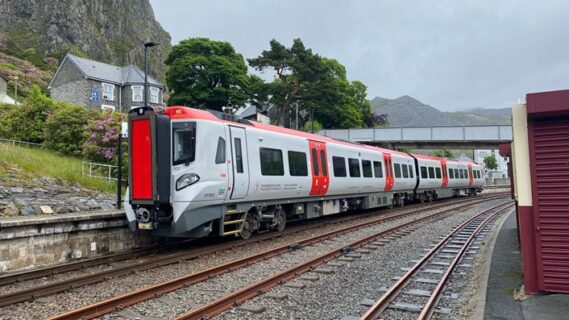
In South Wales, the focus shifts to civil station building and urban integration. The commitment to build seven new stations—strategically located to serve the populous corridor between Cardiff and Bristol—will require rapid modular construction techniques to minimize disruption to live rail traffic. These stations, proposed for sites such as Cardiff East, Newport West, and Magor, will require new platforms, footbridges with lift shafts for accessibility, and park-and-ride infrastructure. This program effectively operationalizes the recommendations of the Burns Commission, transforming the relief lines of the South Wales Main Line into a high-frequency commuter metro. Such regional efficiency stands in stark contrast to broader UK infrastructure challenges, notably the HS2 high-speed rail project, which has faced significant delays beyond 2033 and cost overruns exceeding £100bn, further emphasizing the need for viable, localized alternatives to car travel.
Leave a Reply