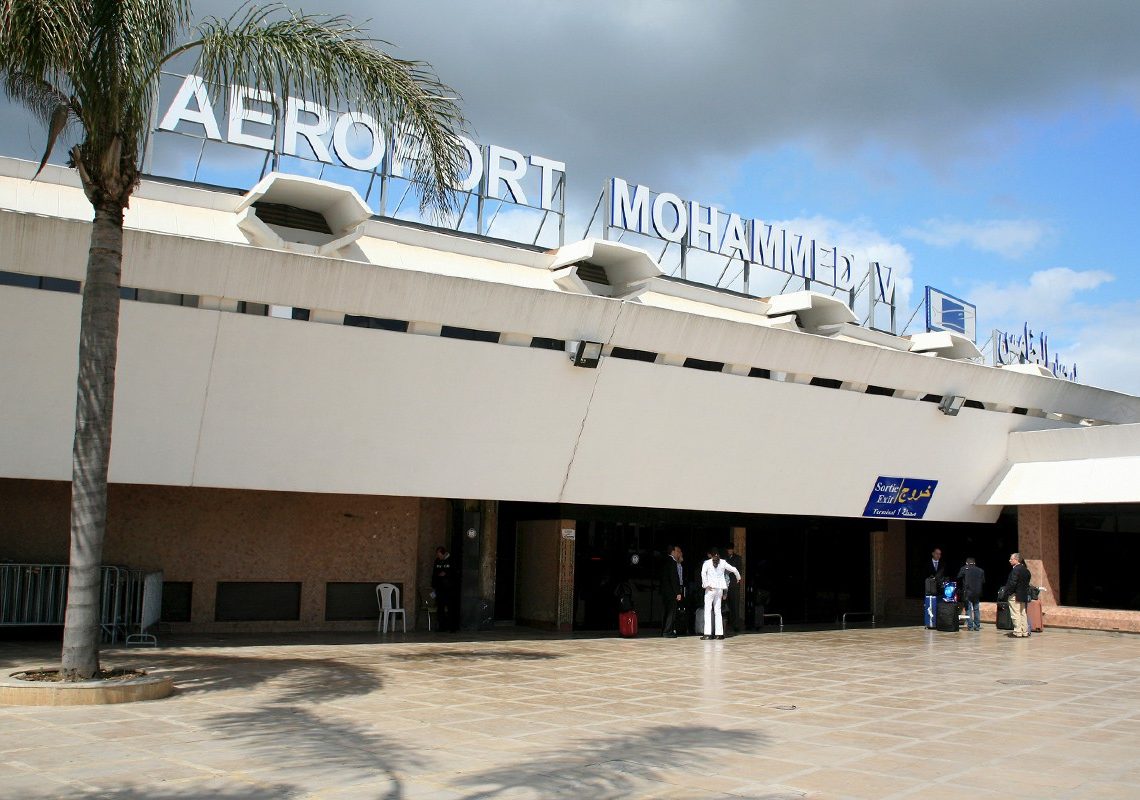
A team of UK-headquartered architects RSHP alongside France’s Egis and ALA Architects will be designing a new terminal at Casablanca’s Mohammed V Airport. Additionally, this airport is expected to increase its capacity to 20 million passengers a year ahead of the 2030 Fifa World Cup.
The project is expected to cost US$3bn (12bn Dirhams). The terminal will be H-shaped and have three storeys. It will use modular construction to meet its 2029 deadline.
Other Upgrade Features
Additionally, the upgrade includes a new 3.7km runway, taxiways and a new control tower. Also, the terminal’s roof design is inspired by the undulations of the Atlantic Ocean and Casablanca’s coast.
A high-speed rail connection will link the airport to Casablanca and major cities across the country.
Facilities at the New Mohammed V Airport Terminal
The terminal will have green oases, retail areas, VIP lounges and a premium airport hotel.
Furthermore, a joint venture of Morocco’s two largest contractors SGTM and TGCC were awarded a contract on the project. They were to deliver the terminal in January 2026. Additionally, preparatory work on the site commenced in July 2025 and is complete.
Also, Ivan Harbour who is RSHP’s senior design director, stated: “The airport will be a celebration of light, warmth and human scale, undulating from grand central spaces to intimate and calming oases, a memorable experience for all travelling through it.”
“It will be a state of the art, responsible, building that interprets and celebrates the landscape of its place to create a graceful threshold between Casablanca and the world beyond.”
Stephen Barrett who is RSHP’s director in France, stated: “Beyond the responsibility of designing buildings that are environmentally and socially sustainable, a key architectural challenge in airport design is capturing a spirit of place—avoiding the creation of in-between spaces where a traveller can feel themselves to be both everywhere and nowhere.”
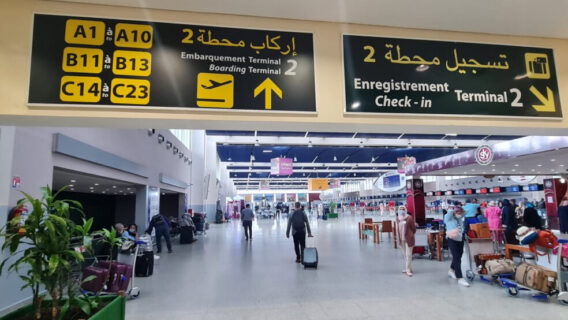
Lastly, the 2030 Fifa World Cup will be hosted jointly by Morocco, Portugal and Spain. Also, there will be three special centenary opening matches played in Argentina, Paraguay and Uruguay.
Project Factsheet
Design Concept: An “H-shaped” modular terminal inspired by the waves of the Atlantic Ocean and traditional Moroccan culture (Andalusian motifs and Atlas Berber carpets).
Total Investment: Approximately MAD 12.8 billion ($1.28 billion).
Surface Area: Roughly 600,000 m².
Capacity Increase: Initial Phase: Adds 20 million passengers/year.
Total Capacity: Targeted to reach 35–40 million passengers annually (up from 15 million).
Completion Date: Scheduled for mid-2029, ahead of the 2030 World Cup.
Runway: New 3,700m x 45m parallel runway to accommodate the world’s largest long-haul aircraft.
Control Tower: A new 42-meter tall air traffic control tower.
Connectivity: Integrated High-Speed Rail (LGV) station connecting the airport to Casablanca (30 mins), Rabat (35 mins), and Marrakech (55 mins).
Design Consortium: RSHP Architects (UK), Egis Bâtiment International (France), and Ala Concept (Morocco).
Construction Consortium: A 100% Moroccan joint venture led by SGTM (Société Générale des Travaux du Maroc) and TGCC (Travaux Généraux de Construction de Casablanca).
Project Team
SGTM (Société Générale des Travaux du Maroc): Morocco’s leading construction firm. Additionally, they are splitting the contract 50/50 with TGCC.
TGCC (Travaux Généraux de Construction de Casablanca): A major Moroccan industrial and building contractor.
STAM (Société de Travaux Agricoles Marocains): Handled the critical site preparation and earthworks, which were reported as 40% complete by late 2025.
Jet Contractors: A Moroccan specialist in complex architectural envelopes and steel structures, involved in structural studies and execution.
RSHP Architects (UK): Formerly Rogers Stirk Harbour + Partners. Additionally, they are the lead architects for the “H-shaped” modular terminal design.
Egis Bâtiment International (France): The lead engineering partner. Also, Egis has a massive presence in Morocco (over 45 years) and manages the technical integration of the airport’s systems.
ALA Concept (Morocco): A Moroccan architecture and interior design firm collaborating on the cultural and aesthetic integration of the terminal (Andalusian and Berber motifs).
Ineco (Spain): A Spanish state-owned engineering and consultancy firm recently awarded a contract (March 2026) for specialized engineering services and project oversight.
Incide Engineering (Italy): Involved by Jet Contractors for specialized executive structural studies, particularly for the domestic and central modules.
ONDA (Office National Des Aéroports): The Moroccan National Airports Office, acting as the project owner and primary decision-maker.
Ministry of Transport and Logistics: Providing governmental oversight as part of the “Airports 2030” national strategy.
Leave a Reply