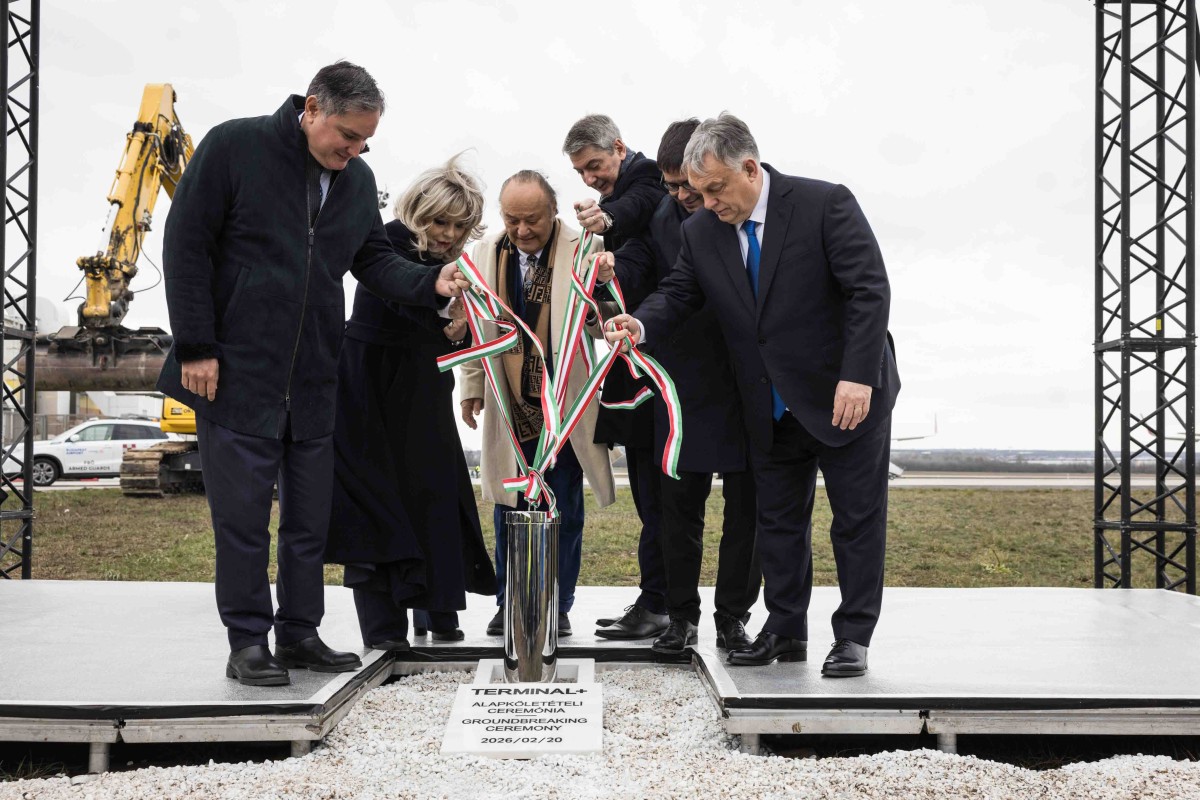
Budapest Airport has officially launched a monumental €1 billion (approx. $1.08 billion) modernization and expansion program, a capital expenditure push designed to dramatically boost capacity and solidify its status as a premier Central European aviation hub. The cornerstone of this decade-long master plan is the development of a brand-new terminal facility, alongside sweeping upgrades to existing airside and landside infrastructure. As passenger numbers continue to rebound and exceed historical peaks, this expansion moves Budapest Airport out of a purely operational phase and into a heavy construction cycle.
Jobsite Impact: Structural Steel and Complex BHS Integration
For the Tier 1 civil engineering and heavy construction firms eyeing this pipeline, the scope of work is vast. The construction of a new terminal building requires massive site preparation. The immediate “Jobsite Impact” will involve extensive earthmoving and the installation of deep pile foundations to support the wide-span structural steel roof trusses typical of modern terminal architecture.
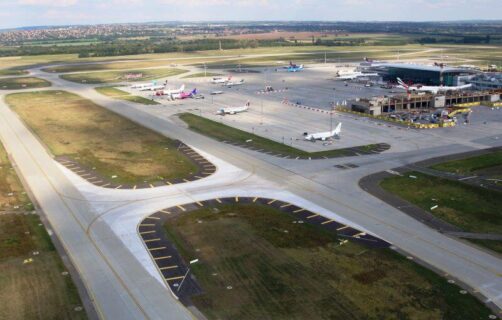
Budapest Airport Expansion: Factsheet
Project Name: Budapest Airport €1 Billion Modernization & Expansion Programme
Location: Budapest Ferenc Liszt International Airport (BUD), Hungary
Developer/Client: Budapest Airport Zrt.
Total Investment: €1 Billion (~$1.08 Billion USD)
Key Scope:
Construction of a new passenger terminal facility.
Expansion of airside infrastructure (new aircraft stands, aprons, and taxiways).
Integration of a state-of-the-art Baggage Handling System (BHS).
Landside road network and parking upgrades.
Delivery Challenge: Executing heavy civil works in a live, 24/7 operational airport environment.
Status: Program officially launched; moving into detailed design and phased procurement.
Beyond the aesthetic outer shell, the most technically demanding aspect of the build will be the Mechanical, Electrical, and Plumbing (MEP) integration—specifically, the new Baggage Handling System (BHS). Airport contractors will need to thread miles of high-speed conveyor belts, automated sorting nodes, and explosive detection systems (EDS) through the subterranean levels of the new facility. This requires absolute precision in the sequencing of the concrete pours to ensure the conveyor matrices align perfectly with the check-in islands above and the apron makeup areas below.
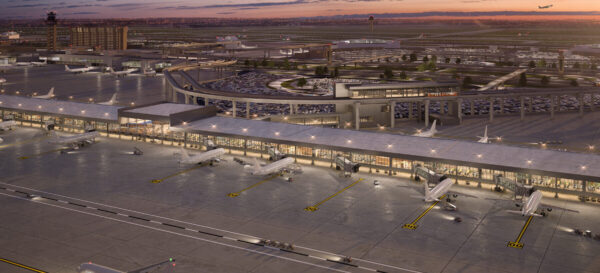
Navigating a Live Operational Environment
Adding another layer of complexity is the necessity of phased delivery. Contractors will be executing heavy civil works—including pouring thousands of cubic meters of high-strength concrete for expanded aircraft aprons and taxiways—directly adjacent to active flight lines. This requires rigorous Foreign Object Debris (FOD) management and strict security protocols for the construction workforce. The logistics of moving heavy plant machinery, structural steel, and curtain wall glazing panels into the secure airside zone will demand a highly choreographed supply chain to ensure zero disruption to current flight schedules. These operational challenges are central to major aviation expansions, such as the Gatwick Airport second runway plans in the United Kingdom, where balancing construction growth with active airfield operations remains a top priority.
Leave a Reply