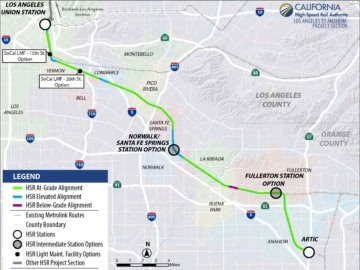
In a major step toward completing California’s bullet train vision, the California High-Speed Rail Authority (CHSRA) today, December 5, 2025, released the Draft Environmental Impact Report/Environmental Impact Statement (EIR/EIS) for the 30-mile Los Angeles–Anaheim corridor. The move marks a critical milestone in the state’s effort to deliver high-speed rail service to Southern California.
The LA–Anaheim segment, which stretches from Los Angeles Union Station to the Anaheim Regional Transportation Intermodal Center (ARTIC), is the final link in the Phase I route connecting San Francisco to Los Angeles and Anaheim. With today’s release, 100% of Phase I’s nearly 500 miles are now under environmental review or cleared.
Shared Passenger Corridor and Electrification
The preferred design, known as Shared-Passenger-Track Alternative A, proposes two electrified high-speed rail tracks running alongside existing freight and Metrolink service. The project includes the installation of overhead catenary systems, a new light maintenance facility in Vernon, and upgrades to existing passenger stations. While no new stations will be constructed, modifications at LA Union Station and ARTIC will enable seamless high-speed rail operations.
Environmental and Community Impact
According to the Draft EIR/EIS, the project would displace approximately 256 businesses and three homes, mostly in Commerce and Vernon. CHSRA has pledged relocation assistance and mitigation measures to minimize disruption. Environmental benefits include significant reductions in air pollutants and greenhouse gas emissions once service begins.
However, the report also identifies unavoidable visual impacts to historic infrastructure in Downtown Los Angeles, where modern HSR equipment would alter the character of several bridges. Mitigation strategies such as aesthetic design treatments and shielded lighting have been proposed.
LA–Anaheim High-Speed Rail environmental review draft
A Key Step Toward High-Speed Connectivity
The release of the draft environmental review opens a 45-day public comment period and initiates the final stretch of planning for a corridor that sees daily congestion on both road and rail. With Union Station and ARTIC serving as multi-modal hubs, the LA–Anaheim segment is expected to become a crucial link in California’s statewide mobility network.
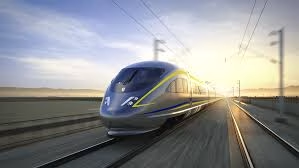
When complete, the Los Angeles–Anaheim section will connect directly with the Central Valley HSR spine and future extensions toward San Francisco, promising a dramatic reduction in travel time across the state. Trains will reach speeds of up to 220 mph in dedicated segments, with zero-emission electric service throughout.
Looking Ahead
Construction contracts for LA–Anaheim are expected to be awarded following completion of the final EIR/EIS, anticipated in 2026. With over 463 miles of the Phase I system already environmentally cleared, CHSRA is pushing forward on multiple fronts, including active track and systems procurements in the Central Valley.
Today’s release marks more than just a paperwork milestone—it signals real momentum for a transformative infrastructure project decades in the making.
Public hearings for the LA–Anaheim segment will be held throughout December and January, with community input set to shape the final design. This project is one of the major rail developments currently underway in the United States.
LA–Anaheim High-Speed Rail Segment: Project Factsheet
Project Overview
Project: Los Angeles–Anaheim High-Speed Rail (HSR) Segment
Lead Agency: California High-Speed Rail Authority (CHSRA)
Project Type: High-speed passenger rail (Tier II segment)
Corridor Length: 30 miles
Endpoints: Los Angeles Union Station (LAUS); Anaheim Regional Transportation Intermodal Center (ARTIC)
Latest Development (December 5, 2025)
CHSRA released the Draft Environmental Impact Report/Environmental Impact Statement (EIR/EIS) for the LA–Anaheim segment.
This publication begins the public review period and represents the final major environmental milestone before issuing a Final EIR/EIS in 2026.
Project Cost and Funding
Estimated Capital Cost: $6.9 billion
Funding Sources:
California Prop 1A bonds
State Cap-and-Trade / Cap-and-Invest revenues
Federal grants (CRISI, FRA programs)
Regional partner contributions (LA Metro, OCTA, local agencies)
Planned Infrastructure
Two electrified HSR tracks integrated within the existing LOSSAN corridor.
Overhead Catenary System (OCS) and Traction Power Substations.
Light Maintenance Facility (LMF) in the City of Vernon.
Track upgrades and corridor modifications for shared operations with Metrolink, Amtrak, and BNSF.
No new stations; upgrades and platform modifications at LAUS and ARTIC.
Roadway grade separations, new bridges, drainage, and safety systems.
Service Features
Train Technology: 220 mph next-generation electric high-speed trains.
Service Type: High-speed intercity passenger service with zero-emission operations.
Connectivity: Direct connection to statewide system (San Francisco ↔ Central Valley ↔ LA/Anaheim).
LA–Anaheim High-Speed Rail Environmental Review (Draft EIR/EIS)
Property Impacts: 256 businesses and 3 residential properties affected; full relocation assistance provided.
Air Quality: Significant long-term reductions in greenhouse gases and smog-forming pollutants.
Noise & Vibration: Mitigated through grade separations and dedicated HSR infrastructure.
Visual Impacts: Notable effects on certain historic bridges in Downtown LA; mitigation proposed.
Project Timeline
December 5, 2025: Draft EIR/EIS published.
2026: Final EIR/EIS anticipated.
Post-2026: Right-of-way acquisition, utility relocation, and early civil works.
Construction Start: Following environmental clearance and contract awards.
Key Agencies & Partners
California High-Speed Rail Authority (CHSRA)
Federal Railroad Administration (NEPA assignment)
LA Metro, OCTA, Metrolink (SCRRA)
Amtrak, BNSF Railway
Cities of Los Angeles, Commerce, Vernon, Fullerton, Anaheim
Strategic Importance
Final Southern California link in California’s Phase I HSR system.
Connects major population and employment centers in LA County and Orange County.
Enables clean, fast statewide mobility and supports corridor modernization.
Leave a Reply