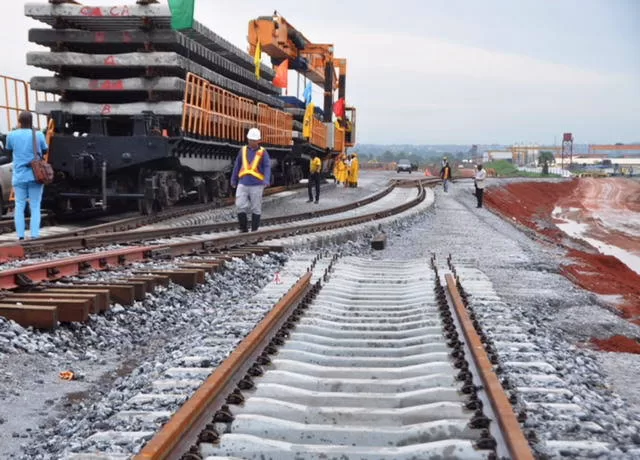
The Lobito Corridor is a cross-border railway infrastructure project connecting Zambia, Angola, and the Democratic Republic of the Congo. The Italian government committed $270 million toward the development of the project as part of ongoing financing arrangements.
The railway is intended to support regional transport connectivity and facilitate the movement of goods across the corridor as development progresses.
This informationwas revealed by Africa Finance Corporation (AFC) President Samaila Zubairu during a press briefing in Washington D.C. The briefing was held alongside Zambia’s Finance and National Planning Minister Dr. Situmbeko Musokotwane and Angola’s Transport Minister Ricardo de Abreu.
Also read: US$1.3 Billion Lobito Corridor Development Deal Signed by Angola
Other Projects
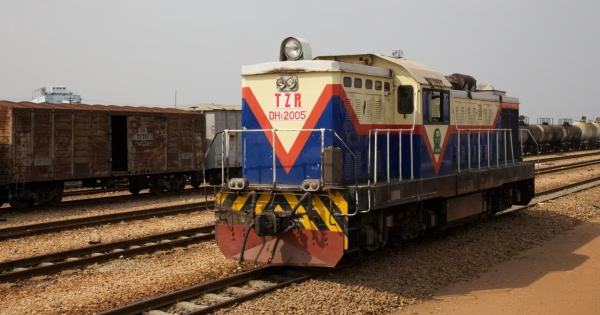
Another significant project taking shape is the Tazara railway project, a railway linking Tanzania and Zambia. Chinese mining, shipping, and logistics companies are mulling over investing $1.4 billion Tazara railway project. The railway links Zambia copper region to a port on the Indian Ocean as various companies aim to upgrade the 1,860-kilometer rail line. Copper producers CMOC Group Ltd. and Zijin Mining Group Co. are teaming with state-owned China Civil Engineering Construction Corp (CCECC). CCECC signed a deal with Zambia and Tanzania last year in September to rehabilitate the Tazara railway project.
Project Factsheet
Infrastructure: The core of the corridor is the Benguela Railway, which was constructed in the early 20th century and later rehabilitated. The project involves the operation, management, maintenance, and potential expansion of this railway line and associated infrastructure. A new 485-mile rail line is also planned to connect Angola and Zambia.
Participating countries: Angola, the Democratic Republic of Congo (DRC), and Zambia are central to the Lobito Corridor initiative. Tanzania has also recently joined the project, envisioning a link between the Atlantic and Indian Oceans.
Strategic Importance:
- Trade facilitation: The corridor offers a more direct and efficient route for exporting minerals (like copper and cobalt) and other goods from the DRC and Zambia to global markets, reducing transportation costs and transit times compared to existing routes through southern or eastern African ports.
- Economic diversification: It aims to stimulate economic growth in the participating countries by attracting investments in various sectors, including agriculture, manufacturing, and logistics, and creating employment opportunities.
- Regional integration: The Lobito Corridor is expected to enhance regional connectivity and foster greater intra-African trade.
Key players and initiatives:
- A consortium called Lobito Atlantic Railway (LAR), comprising Trafigura, Mota-Engil, and Vecturis, was awarded a 30-year concession for the operation of the railway.
- The European Union (EU) and the United States (US) are jointly supporting the development of the corridor under the G7’s Partnership for Global Infrastructure and Investment (PGII) and the EU’s Global Gateway strategy.
- Several Memoranda of Understanding (MoUs) and agreements have been signed between the participating countries, the EU, the US, the Africa Finance Corporation (AFC), and the African Development Bank (AfDB) to facilitate the project.
Also read: Tanzania’s Lobito Corridor Plan
Other Contributions Towards the Lobito Corridor Project
Other than the $270 million, Mr. Zubairu also revealed that the Italian Government has provided another $50 million directly to AFC to support ongoing work on the corridor.
Mr. Zubairu noted that the African Development Bank (AfDB) has also pledged its support for the project. This further enhances the corridor’s credibility and appeal to the African and international investors. “The Lobito Corridor has attracted strong continental and external support. This makes it a highly promising partnership that will strengthen regional links and significantly boost intra-African trade.” he said.
Significance of the Project
Finance Minister Dr. Musokotwane pointed out the importance of the project for Zambia and the wider region. This is particularly in light of expanding mining activities in both Zambia and the DRC. “The Lobito Corridor will be a key project in transporting critical minerals,” he said. He also said that the railway line is expected to create jobs. It will also facilitate regional integration, and stimulate economic development.
Dr. Musokotwane also showed gratitude to the United States and the Trump administration for their support of the Lobito Corridor. He emphasized the strategic importance of the project in promoting Africa’s general infrastructure goals.
The Lobito Corridor project is part of a broader effort to improve trade infrastructure across Africa. Lastly it is expected to position the continent as a competitive player in the global minerals supply chain.

Leave a Reply