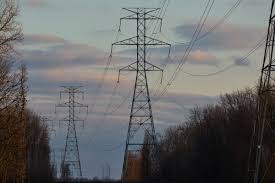
Central Ohio is poised for a major electricity upgrade as PJM Interconnection has approved a 300-mile, 765-kV transmission line. The project will strengthen the region’s grid, support rising power demand, and fuel ongoing economic growth in the Columbus area.
The initiative, developed through the joint venture Grid Growth Ventures, LLC — a partnership between Transource Energy, LLC (AEP + Evergy) and FirstEnergy Transmission, LLC — includes approximately 300 miles of new 765-kilovolt (kV) transmission lines and upgrades to multiple substations across central Ohio.
Powering Growth at Scale
Central Ohio is experiencing a surge in electricity demand driven by new data centers, manufacturing facilities, and increasing adoption of electric vehicles. The 765-kV lines will provide a reliable backbone for this growth:
A single 765-kV line can supply power to roughly two million homes — enough to serve the entire Columbus metropolitan area twice over.
Consolidating power in a single high-voltage corridor reduces land use by approximately 50% compared to multiple lower-voltage lines, minimizing environmental and community impact.
Analysts note that reliable and abundant electricity is now a key factor in attracting businesses, particularly energy-intensive industries, to the region.
Jobs, Economy, and Innovation
The project is expected to generate thousands of construction jobs, ranging from engineers to linemen, and to support economic growth by reducing the risk of costly power outages for local manufacturers.
The high-voltage lines also enhance integration with renewable energy sources, supporting Ohio’s ongoing energy transition. Extra-high-voltage corridors make it easier to connect solar and wind power to the grid efficiently while maintaining stability.
Lessons from Other PJM Projects
Similar 765-kV projects in the region, such as AEP’s Indiana-Kentucky corridor and FirstEnergy’s Pennsylvania projects, demonstrate the benefits of consolidating power transmission:
Improved regional grid flexibility
Reduced congestion costs
Lower cumulative environmental and land impacts
Central Ohio’s project follows these proven strategies, balancing reliability, economic growth, and environmental stewardship.
This Central Ohio project is part of a broader effort by PJM to strengthen the regional grid and meet growing electricity demand across its service area. Just recently, PJM approved another 220-mile, 765-kV transmission line in the Mid-Atlantic region, highlighting the organization’s ongoing strategy to expand high-voltage corridors and improve reliability for multiple states within its 13-state footprint.
Community Considerations
Residents near the proposed transmission corridors may experience construction-related disturbances. Mitigation measures are planned to reduce impacts:
Routing lines along existing industrial corridors where feasible
Narrower right-of-way footprints
Compensation programs for affected landowners
These strategies aim to minimize disruption while maintaining the project’s scale and effectiveness.
Strategic Implications
With central Ohio emerging as a hub for technology, manufacturing, and data center operations, the transmission expansion ensures the region remains competitive within PJM’s 13-state market.
The project positions the grid to handle future energy demand efficiently, support economic development, and serve as a potential model for other fast-growing areas in the PJM region.
Central Ohio New 765-kV Transmission Line: Project Factsheet
Project Scope
- 300 miles of 765-kV transmission lines
- Multiple substation upgrades
- Serves central Ohio and Columbus region
Development Partners
- Grid Growth Ventures, LLC (joint venture)
- Transource Energy, LLC (AEP + Evergy partnership)
- FirstEnergy Transmission, LLC
Drivers
- Rising electricity demand in Columbus region
- Economic growth, new manufacturing, data center expansion
- Growing adoption of electric vehicles
Technology Highlights
- 765-kV line capacity: powers 2 million homes
- 50% reduction in land use vs. multiple lower-voltage lines
- Reduced right-of-way footprint
- Lower environmental impact
Customer Benefits
- More reliable service and faster outage restoration
- Infrastructure to attract new businesses
- Support for energy-intensive industries
- Grid ready for future energy needs
Leave a Reply