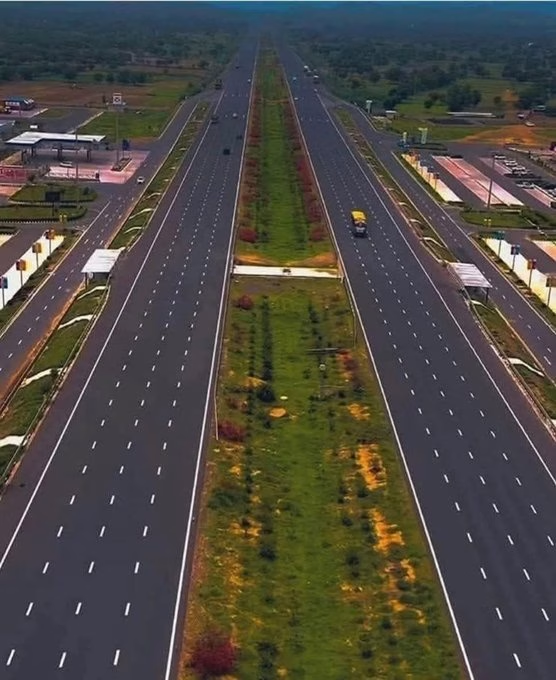
Kenya has officially engaged Chinese state-owned enterprises to execute a landmark $1.5 billion expansion of the Rironi-Mau Summit highway, marking a significant geopolitical pivot after the cancellation of a prior agreement with a French consortium. President William Ruto personally officiated the launch of this critical infrastructure project on Friday, underscoring the government’s commitment to upgrading the Northern Corridor without incurring additional sovereign debt.
The new deal replaces the stalled negotiations with Vinci Highways and Meridiam, entrusting the massive dual-carriageway expansion to the China Road and Bridge Corporation (CRBC) and Shandong Hi-Speed Road and Bridge International. This strategic decision signals a robust return of Chinese engineering firms to East Africa’s high-value infrastructure market, capitalizing on their track record of rapid delivery demonstrated by the recently completed Nairobi Expressway. The project is poised to transform regional logistics by alleviating chronic congestion on one of Kenya’s busiest transport arteries. This will facilitate seamless trade flows into landlocked neighboring countries.
Innovative Financing and Strategic Split
Utilizing a sophisticated Public-Private Partnership (PPP) model, the project is structurally designed to shield the Kenyan taxpayer from direct financial liability by relying on a user-pay tolling system for revenue recovery over a 28-year period. The development has been segmented into two distinct phases to ensure efficiency, with CRBC partnering with Kenya’s National Social Security Fund (NSSF) to tackle the heavy-traffic segment from Rironi to Naivasha.
Meanwhile, Shandong Hi-Speed Road and Bridge International will oversee the second phase extending from Gilgil to Mau Summit, ensuring that the entire 233-kilometer corridor meets international expressway standards. The financing framework is composed of a 75 percent debt and 25 percent equity split, a mechanism that distributes risk among the private investors rather than the state treasury. This innovative approach addresses previous public outcry regarding spiraling national debt while securing the capital necessary to modernize the country’s aging transport infrastructure.
Boosting the Northern Corridor
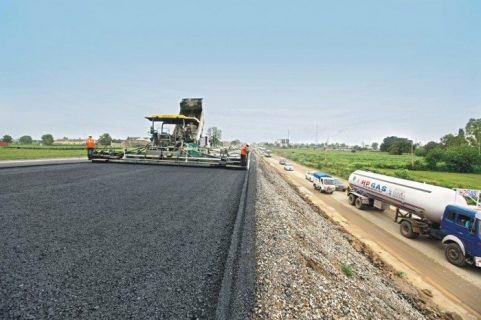
The Rironi-Mau Summit highway serves as the backbone of the Northern Corridor, a vital trade route connecting the port of Mombasa to key markets in Uganda, Rwanda, and the Democratic Republic of Congo. By expanding the existing road into a four-lane and six-lane dual carriageway, the project aims to significantly reduce travel times for heavy commercial vehicles that currently face debilitating delays due to traffic bottlenecks. President Ruto has insisted on this high-capacity design to improve road safety on a stretch notorious for fatal accidents, rejecting earlier proposals that suggested a less ambitious expansion scope.
Upon completion, the private contractors will operate and maintain the highway for the duration of the concession, ensuring that the infrastructure remains in pristine condition through rigorous long-term asset management. This seamless connectivity will lower the cost of doing business across the region, making East African exports more competitive in the global market.
Cementing Kenya’s Logistics Dominance
Cementing Kenya’s status as the region’s logistics powerhouse, this initiative builds upon the operational success of the Nairobi Expressway, which has already revolutionized urban mobility within the capital city. The project highlights an evolution in the “Belt and Road” initiative within Africa, shifting away from state-backed loans towards sustainable, equity-based investment partnerships that align with local economic realities. Western development partners have faced challenges in matching the speed and financial agility of Chinese firms, leading to a renewed dominance of Beijing-backed entities in Kenya’s mega-project landscape, a trend underscored as Kenya’s government takes U-turn to revive on $286 million Kiambu Road dualing project.
As construction mobilizes in late 2025, investors are closely monitoring the execution of this PPP model as it could serve as a blueprint for future infrastructure developments across the continent. The successful delivery of this highway will likely trigger a wave of similar logistics investments, positioning Kenya to handle the projected surge in cross-border trade volume by 2027.
Kenya Rironi-Mau Summit Highway Factsheet
Location: Rironi to Mau Summit, Kenya
Developers:
Phase 1: China Road and Bridge Corp (CRBC) + NSSF
Phase 2: Shandong Hi-Speed Road and Bridge International
Project Type: Highway Expansion (Dual Carriageway)
Investment: ~$1.5 Billion
Timeline: Construction start Nov 2025; Completion 2027
Key Stats:
Length: 233 km (Total corridor upgrade)
Lanes: Expansion to 4 and 6 lanes
Concession: 28-year toll period
Financing:
Model: Public-Private Partnership (PPP)
Split: 75% Debt, 25% Equity
NSSF Stake: 45% equity in Phase 1
Strategic Context:
Trade: Vital link for Northern Corridor (Uganda, Rwanda, DRC).
Policy: Shift from sovereign debt to private equity model.
Precedent: Follows the success of the Nairobi Expressway.
Leave a Reply