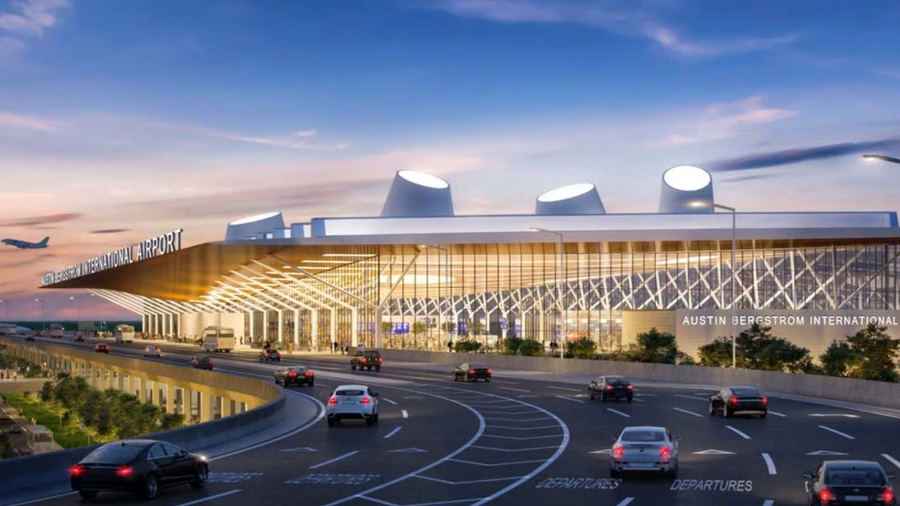
Austin-Bergstrom International Airport (AUS) has reached a pivotal milestone with the approval of a new Airline Use and Lease Agreement (ULA), effectively unlocking approximately $5 billion in funding for the most significant expansion in the airport’s history. This agreement, finalized between the City of Austin and its major carrier partners—including Southwest, American, and Delta—sets the financial and operational framework for the “Journey With AUS” program.
Furthermore, the expansion is a response to the city’s meteoric growth, aimed at increasing capacity, improving passenger flow, and modernizing aging infrastructure to handle an anticipated 30 million annual passengers by the end of the decade—a nationwide trend of aviation upgrades that also sees Skanska-Flatiron JV securing a $323M contract as LAX roadway improvements enter construction. With the ULA in place, the airport can now issue the necessary municipal bonds to finance a multi-year construction pipeline that will fundamentally reshape the Central Texas aviation landscape.
The Midfield Concourse and Sub-Surface Tunnel
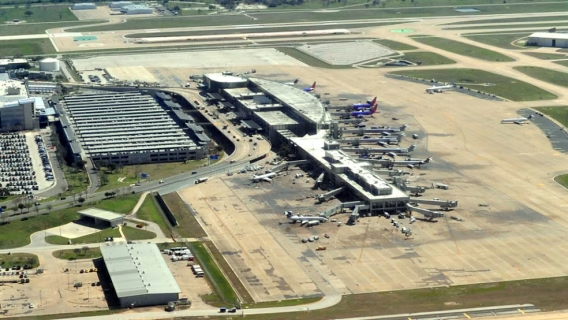
The centerpiece of the $5 billion expansion is the construction of Concourse B, a new midfield facility that will initially add at least 20 new gates to the airport. To connect this new concourse with the existing Barbara Jordan Terminal (BJT), engineers are designing a sophisticated sub-surface pedestrian tunnel. This underground corridor will feature moving walkways and advanced baggage handling systems, allowing for seamless transfers without requiring passengers to exit the secure area.
Additionally, this “midfield” strategy mimics the layouts of larger international hubs like Denver or Atlanta, providing the scalable footprint necessary for AUS to transition from a regional facility into a major international gateway.
“Journey With AUS” Expansion: Factsheet
Location: Austin-Bergstrom International Airport (AUS), Austin, TX
Total Program Cost: ~$4.5 Billion to $5 Billion
Key Funding Mechanism: New Airline Use and Lease Agreement (ULA)
Major Components:
Concourse B: 20+ new gates.
Midfield Tunnel: Underground pedestrian and baggage connection.
BJT Optimization: Expansion of security, ticketing, and arrivals.
Central Utility Plant: Modernized HVAC and power systems.
Airlines Involved: Southwest, American, Delta, United, and other signatory carriers.
Target Completion: Phased delivery through 2030; Concourse B expected by 2028-2029.
Impact: Increases capacity to ~30 million passengers annually.
Terminal Modernization and Capacity Upgrades
Beyond the new concourse, a significant portion of the capital will be directed toward the Barbara Jordan Terminal (BJT) Optimization project. What’s more, it includes a massive westward expansion of the terminal to create additional space for security checkpoints, ticketing counters, and baggage claim carousels. Construction teams are already working on several “early-out” projects, such as the new Central Utility Plant and the expansion of the West Infill, which will add three new security lanes.
These upgrades are critical for alleviating the bottlenecking that has plagued the airport during peak travel periods over the last two years. The plan also incorporates significant enhancements to the terminal drive and parking infrastructure to improve landside access for ground transportation and ride-share services.
Economic Impact and Strategic Future
The “Journey With AUS” program is expected to be a massive economic engine for Central Texas, creating thousands of construction jobs and long-term opportunities in the aviation, hospitality, and retail sectors. By securing the ULA, airport leadership has ensured that the costs of these improvements are largely borne by the airlines and travelers who use the facility, rather than local taxpayers.
Further, as construction on Concourse B and the midfield tunnel begins to ramp up in late 2026—paralleling global aviation upgrades like Perth Airport partnering with Bechtel for a $3.4 billion infrastructure overhaul—the project will serve as a bellwether for the region’s ability to keep pace with its rapid industrial and population growth. The agreement also provides a roadmap for future phases, including a potential Concourse C, ensuring that Austin-Bergstrom remains resilient and adaptable to the evolving needs of the global travel market.
Leave a Reply