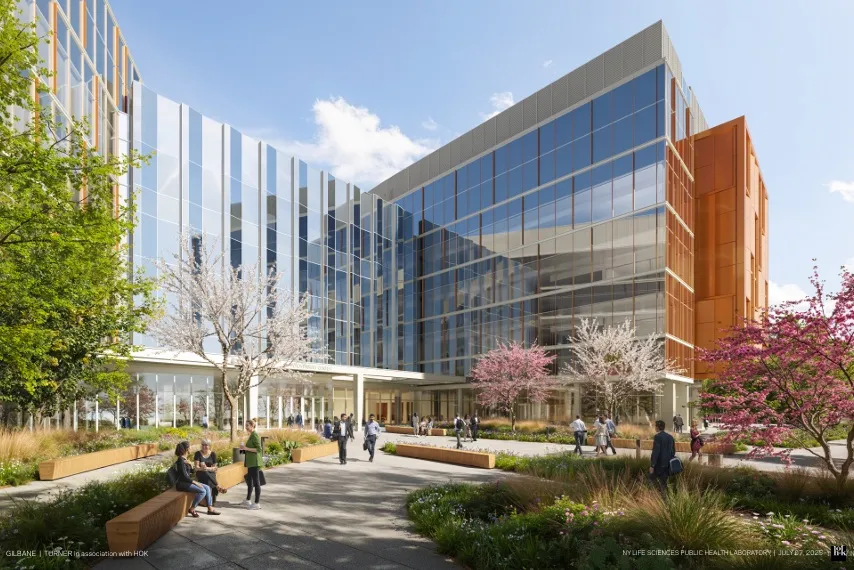
New York State has officially commenced construction on the transformative $1.7 billion Wadsworth Center Laboratory, a massive infrastructure project aimed at redefining public health research and response capabilities in Albany. Governor Kathy Hochul announced the milestone on Monday, confirming that heavy work is now underway at the W. Averell Harriman State Office Building Campus in Albany. This state-of-the-art facility represents one of the largest public investments in the state’s history and is designed to serve as a fortress against future public health crises, equipping New York with superior tools for disease detection and biomedical research.
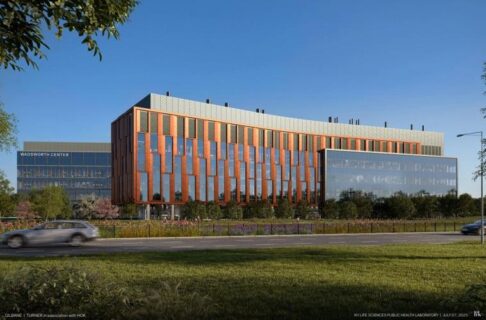
The ambitious project seeks to solve a long-standing logistical challenge by consolidating the Wadsworth Center’s operations, which are currently scattered across five separate, aging locations in the Capital Region. By bringing these disparate laboratories under one roof, the state aims to foster greater collaboration among scientists and streamline critical workflows. The new facility will function as a centralized hub for the New York State Department of Health, enhancing its ability to monitor environmental threats, genetic disorders, and infectious diseases with unprecedented efficiency.
Wadsworth Center Laboratory, Albany: Factsheet
Project Name: Wadsworth Center Laboratory (New York State Life Sciences Public Health Laboratory)
Location: W. Averell Harriman State Office Building Campus, Albany, New York
Total Investment: $1.7 Billion
Owner: New York State Department of Health (DOH)
Project Manager: Dormitory Authority of the State of New York (DASNY)
Design-Build Team: Gilbane Building Company and Turner Construction Company (Joint Venture)
Architect: HOK
Facility Size: 663,000 gross square feet (5 stories)
Construction Start: January 2026
Expected Completion: 2030
Workforce: Will house ~800 staff members
Key Objectives:
Consolidate five existing lab locations into one campus.
Enhance pandemic readiness and response.
Modernize New York’s biomedical and environmental research infrastructure.
Slated for completion in 2030, the new laboratory is envisioned as a “Lab for the 21st Century,” integrating flexibility and resilience into its core design. The project is being overseen by the Dormitory Authority of the State of New York (DASNY), ensuring that the complex meets the rigorous demands of modern science. Once operational, it will not only secure New York’s position as a leader in public health but also serve as a magnet for top-tier scientific talent, reinforcing the Capital Region’s status as a growing center for life sciences innovation.
Design, Construction, and Economic Impact
To execute this complex build, the state has engaged a joint venture between construction giants Gilbane Building Company and Turner Construction Company, working in association with the renowned architectural firm HOK. The team is tasked with delivering a 663,000-square-foot facility that balances aesthetic appeal with high-tech functionality. Renderings reveal a sleek, five-story structure featuring an aluminum plate and glass façade, designed to maximize energy efficiency and sustainability while providing a secure environment for sensitive research.
Beyond its scientific mission, the construction phase is expected to be a significant economic driver for Albany and the surrounding areas. The project will generate thousands of construction jobs over the next four years, providing a steady stream of employment for local union workers and contractors. Upon completion, the laboratory will house approximately 800 permanent staff members, ranging from researchers and lab technicians to administrative support personnel, anchoring a stable workforce within the revitalized Harriman Campus—a commitment to strengthening regional healthcare infrastructure that is mirrored in Pennsylvania, where Penn State Health breaks ground on a Level II NICU in Lancaster. This $3.6 million expansion at the Lancaster Medical Center will create a specialized unit equipped to care for premature infants born as early as 32 weeks, eliminating the need for families to travel to Hershey for advanced neonatal treatment.
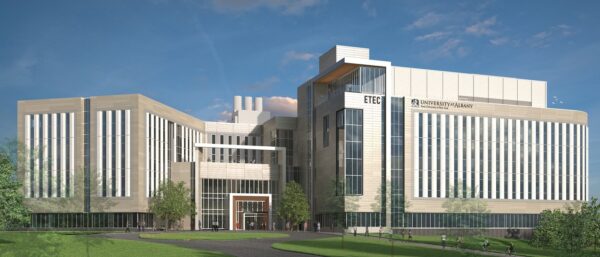
The development also signals a broader shift in the utilization of the Harriman State Office Campus, moving away from its mid-20th-century office park roots toward a more dynamic, mixed-use future. While the primary focus remains on public health security, state officials and local lawmakers hope the massive investment will catalyze further redevelopment in the area, potentially attracting private life science companies and retail amenities to the campus. This synergy between public investment and potential private growth is central to the state’s long-term economic strategy for Upstate New York—a revitalization effort further anchored as Micron breaks ground on a $100 billion semiconductor megafab in New York.
Leave a Reply