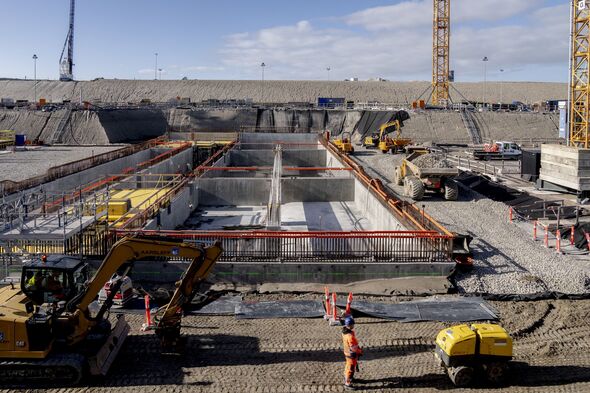
The construction of the Fehmarnbelt tunnel will make it the world’s longest underwater rail and road tunnel. It is being built in Europe. The Fehmarnbelt tunnel is one that is highly anticipated as it expected to link Denmark and Germany. The first element of a future 18-kilometer tunnel under the Baltic Sea was inaugurated by the Danish King, Frederik X. It is expected that once completed, the tunnel will link Southern Denmark to northern Germany. It will also contribute to the green transition of the transport sector in both European Countries. The Fehmarnbelt link, which is expected to be completed and opened by 2029, will facilitate in cutting travel time. The tunnel is expected to cut travel from the present 45 minutes using ferry to a mere 7 minutes by train. It will link Roedby on the Danish side to Puttgarten in Germany.
The State of Affairs Regarding the Construction of the World’s Longest Underwater Rail and Road Tunnel
Though the Channel Tunnel is longer than the Fehmarnbelt Tunnel it does not have a road tunnel but 2 train tunnels and one service tunnel. Hence the reason this new project is described as the world’s longest underwater rail and road tunnel is one that has received accolades from the German and Danish governments. Frederik unveiled a plaque at the entrance of the first 217-meter section of the tunnel. The plague is expected to be submerged into a seabed trench on the Danish side later this year. He also dropped a coin at his effigy into a time capsule containing objects donated by those who built the concrete elements. The contracted construction company, Sund & Baelt, have been tasked with the construction and implementation of the tunnel. Furthermore, they are also expected to unveil it within the set timeline. The company is optimistic and claims that once completed, the Fehmarn link will be the longest submersible tunnel. It is also expected that the tunnel will include an electrified train track.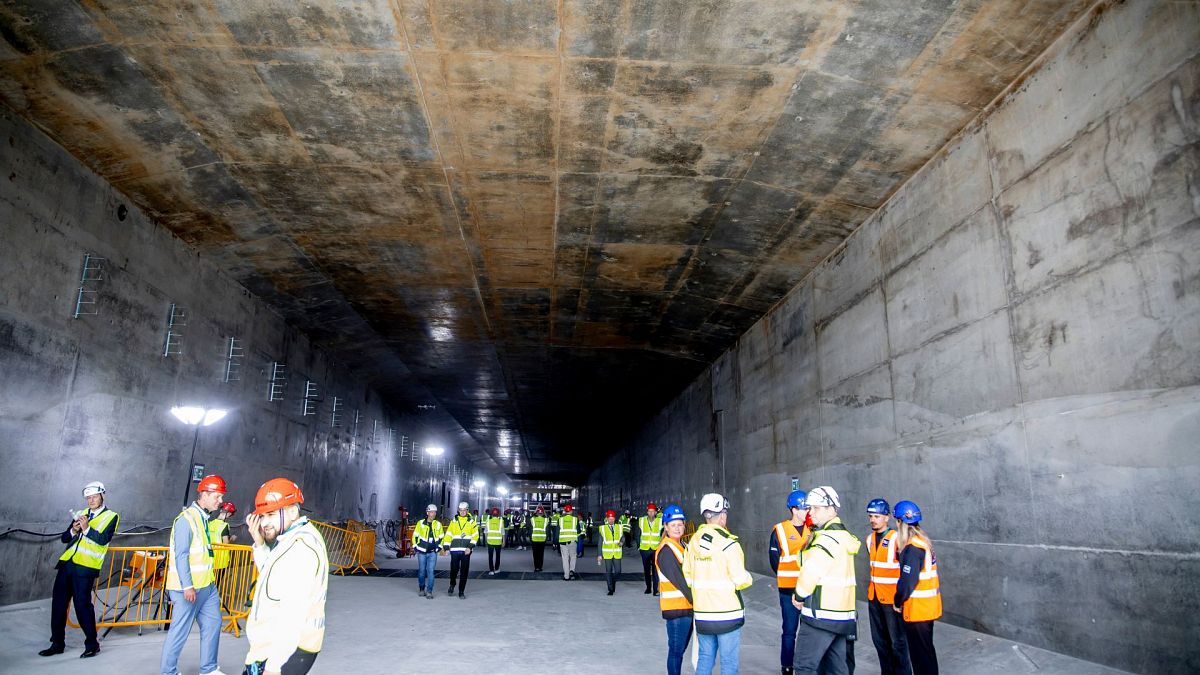
The Significance of the Construction of the Fehmarnbelt Tunnel
The significance of the construction of the world’s longest underwater rail and road tunnel is one that is expected to be fundamental. Once completed, the tunnel will cut travel time between Denmark and Germany, bring forth economic and social benefits. Automobiles are also expected to be able to cross the Baltic Sea in 10 minutes. It is also expected that trains will do that in seven minutes, saving on time spent on travelling. Furthermore, the tunnel is essential in the ambitions that both countries have to promoting sustainable development infrastructures. The Fehmarnbelt is expected to facilitate in the green transition of the transport sector in both countries. In 2011, it was decided that a link between the southern Denmark Island of Lolland and the northern German Isle of Fehmarn to be built as an immersed tunnel. Work was commissioned on both ends of the tunnel in July, 2022. 
Other Significant Construction Projects in Europe
Other than the construction of the world’s longest underwater rail and road tunnel, Europe is making advances in other major projects. One of these projects is the Codogno-Cremona-Mantova Doubling Railway Line. The project involves the doubling of an 84km railway line connecting Codogno to Mantua via Cremona in Lombardy, Italy. Construction work commenced in Q1 2024 and is expected to be completed in Q4 2030. The project is part of an important intervention for the Lodi area. It is considered of strategic value also for the modernization of transport at the national level. Furthermore, it will guarantee significant benefits, both in environmental and economic terms and in transport efficiency.
Fehmarnbelt Tunnel Project Factsheet
- Official Name Fehmarnbelt Fixed Link / Fehmarnbelt Tunnel
- Location Beneath the Fehmarnbelt strait (Baltic Sea), connecting Rødbyhavn on the Danish island of Lolland and Puttgarden on the German island of Fehmarn.
- Tunnel Type Immersed Tube Tunnel
- World Record Longest immersed tunnel for combined road and rail traffic.
- Length 18 kilometers (approximately 11 miles)
- Depth Approximately 40 meters (131 feet) below the sea surface.
- Mode of Transport Four-lane motorway and two-track electrified railway.
- Construction Method Built from 89 prefabricated, 73,000-tonne concrete elements (79 standard, 10 special) manufactured on land, towed, and lowered into a trench on the seabed.
- Travel Time 7 minutes by train (at up to 200 km/h) / 10 minutes by car (at up to 110 km/h). (Reduces travel time between Hamburg and Copenhagen to 2.5 hours).
- Start of Construction 2020 (Danish side) / 2021 (German side).
- Anticipated Opening Mid-2029
- Construction Cost Estimated at €7.4 billion (at 2015 price levels).
- Funding Model User-financed (tolls and railway charges), with loans guaranteed by the Danish state.
- Key Features Continuous hard shoulders, emergency exits, and a central monitoring control center. Designed for a 120-year lifespan.
Also read:
Construction of the $8.4B World’s Largest Green Hydrogen Plant Commences in Saudi Arabia
Construction officially begins on Europe’s latest railway, $4 billion Rail Baltica
£6bn Africa-Europe Tunnel Studies Underway; Project to Kick Off Operations by 2030