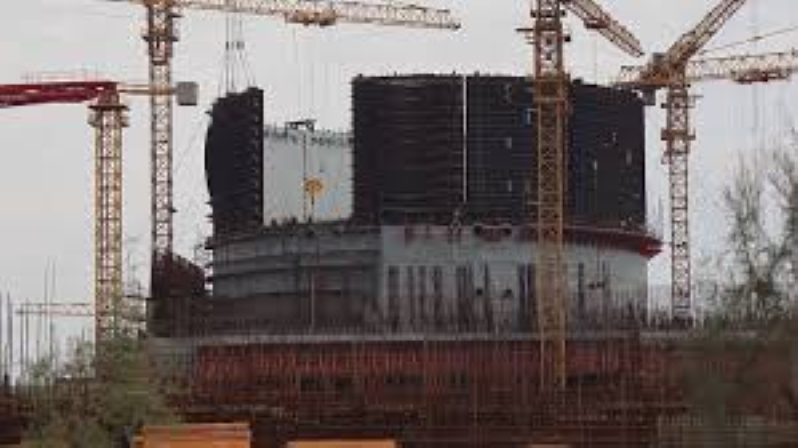
Construction work on Unit 2 of the Bushehr Nuclear Power Plant is well underway and over 60% complete in Iran’s flagship nuclear energy project. The Russian state nuclear corporation, Rosatom, had previously paused operations and evacuated over 600 workers after the site area faced regional conflicts and external military strikes. However, following a tentative ceasefire, both countries moved quickly to get the project back on track.
According to Rosatom Director General Alexey Likhachev, the construction site is actively progressing, with around 2,200 local Iranian contractors already back on duty. While the active Unit 1 continues to run safely at 100% capacity, current work on Unit 2 is heavily focused on reinforcing and pouring structural concrete.
Earlier this year, teams successfully installed the 140-ton third ring of the reactor’s inner containment building, pushing its height to 40 meters. Rosatom confirms that key heavy equipment is still being manufactured on schedule in Russia, with the Unit 2 reactor core now over 60% complete and its steam generators halfway finished. Shipments of these major components are expected to start next year as crews push toward a target operational date of 2029.
Tehran is also pursuing other nuclear initiatives in the country despite the ongoing Iran-Israel war, including five new coastal power plants and the $25bn Iran-Hormoz nuclear power plant mega-project.
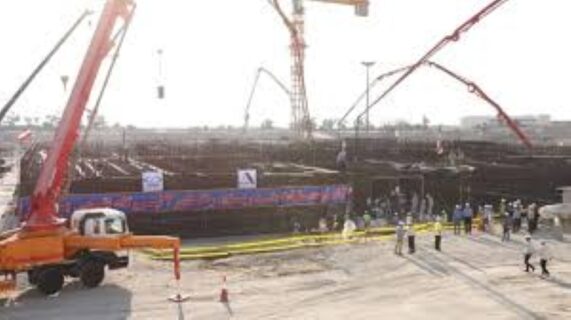
Fact Sheet for Bushehr Nuclear Power Plant Unit 2 Expansion
Location: Halileh, Persian Gulf Coast, Southern Iran
Reactor Type: Russian-designed Generation III+ VVER-1000 Pressurized Water Reactor
Generation Capacity: 1,000 MW (Adding to Unit 1’s current 915 MW output)
Current Construction Milestones: Core catcher installed; third tier of the inner containment structure successfully mounted to a height of 40 meters; heavy concrete reinforcement active.
Project Construction Status: Reactor pressure vessel is over 60% complete; steam generators are 50% complete in Russian facilities.
Target Operational Date: 2029 (With Unit 3 following closely behind)
Key Industrial Partners: Atomic Energy Organization of Iran (AEOI) and Rosatom State Atomic Energy Corporation
€1,800 Billion Funding Initiates Construction on Second Bushehr Nuclear Reactor
Reported October 10, 2023 – €1,800 billion funding kicks off construction for the second reactor for the Bushehr nuclear facility. Head of the Atomic Energy of Organization of Iran (AEOI) Mohammed Eslami, said that the government’s support has accelerated the construction of the two nuclear reactors under deals worth 1,800 billion. The head of the organization also added that the construction of the second and third nuclear reactors has increased exponentially compared to earlier years. He added that the work progress is moving according to schedule as those involved are working round the clock in three shifts.
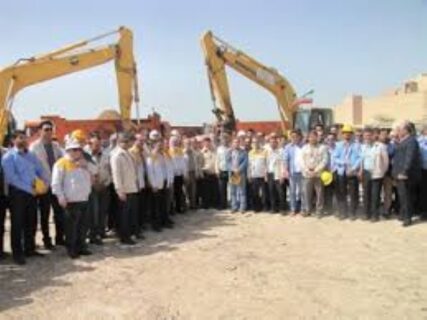
The Iranian government hopes that the second unit will be completed and operational in less than five years, as plans for the construction of the third unit and its completion a year and a half later are still in sight. Iran’s 1000-megawatt Bushehr nuclear facility was built by Russia after years of delay and was officially handed over to the Iranian government in September, 2013. Over the years, the nuclear facility has produced a total of 60 billion kilowatt hours of electricity, including 7 billion kw/h last year.
Read also: Iran and Taliban in Talks to Resume Works on Khaf-Herat Railway Project
Bushehr Nuclear Power Plant Units 2 and 3 Reactors to Save The Country $1,600bn of Gas Annually
The engineer in charge for the construction of the second and third Bushehr reactors said that once the reactors are in full operation, they will save the country $1600 billion dollars cubic meters of gas and 10 million barrels of oil per year. The construction and completion of the two reactors will also avert the emission of 7 million tons of toxic gases. Iran has made immense progresses and achievements over the past years despite the many hurdles it has had to face in their goal of harnessing nuclear energy. The country has closely been cooperating with other nuclear organizations and entities such as International Atomic Energy Agency (IAEA) as a signatory to the Nuclear Non-Proliferation Treaty.


Leave a Reply