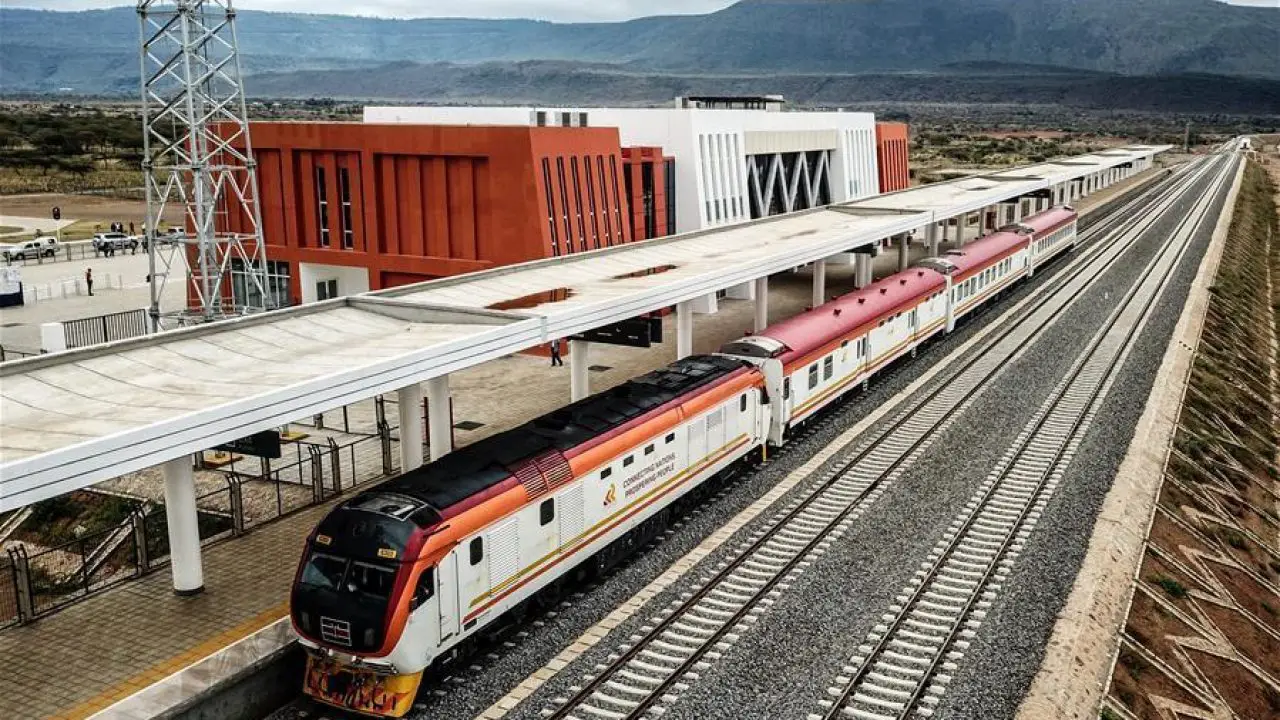
In 2024, the Government of Kenya signed the Kenya–Uganda Standard Gauge Railway (SGR) commercial contract, marking an important step in the planned extension of the railway from Naivasha to Malaba at the border with Uganda. This agreement formed part of the broader development of the SGR network and represented progress toward completing the third phase of the project, commonly referred to as Phase 2B. The extension is intended to strengthen rail connectivity within the region and support more efficient movement of goods and passengers between the two countries.
In recent developments, the Government of Kenya has revived the Naivasha–Kisumu–Malaba Standard Gauge Railway (SGR) project, valued at over Ksh500 billion, after a multi-year pause, reaffirming its commitment to advancing the extension. The revived plan, covering approximately 371 kilometres to the Uganda border at Malaba, includes renewed engagement with key stakeholders, with Kenya Railways and the designated contractor involved in implementation, while land acquisition and compensation processes continue to be managed by the National Land Commission. This renewed momentum marks a significant step toward progressing the project from planning into execution.
Cost of the Kenya-Uganda SGR Extension
The Kenya–Uganda Standard Gauge Railway (SGR) Commercial Contract and the associated Naivasha–Malaba extension remain a major component of Kenya’s transport and economic development plans, with the combined extensions estimated at about $13 billion. The project framework, which includes feasibility studies and preliminary designs for Phase 3, continues to be relevant as part of the long-term expansion of the railway network beyond Naivasha. These technical and planning components form the basis for advancing the project toward full implementation and eventual regional integration.
The proposed extension has continued to draw support from regional leaders, including Kisumu County Governor Anyang Nyong’o, who has consistently emphasized its importance to the region’s growth. Once completed, the railway is expected to significantly improve the movement of goods and passengers from the Port of Mombasa through Naivasha to Kisumu and onward to Uganda, strengthening trade efficiency across the corridor. The project is also seen as a key driver for unlocking the western tourism circuit, leveraging the region’s natural attractions to stimulate broader economic growth and development.
Significance of the Kenya-Uganda SGR Commercial Contract
This contract is set to boost economic activities at the newly refurbished Port of Kisumu by opening up business opportunities for the people living around the Lake region to carry out trading activities.
This SGR extension project has been eagerly waited for by the lake region and the region urges the Kenyan government to execute it at a faster speed to enable its completion and be put to utilization with immediate effect.
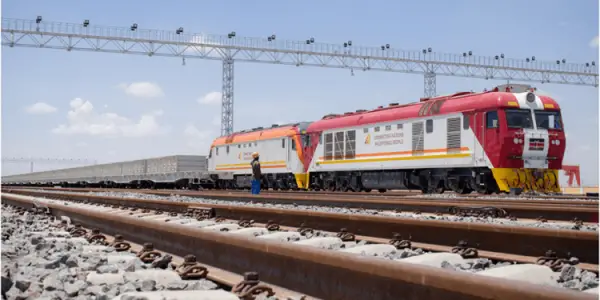
The then Cabinet Secretary for Transport, Kipchumba Murkomen, stated that the central government intended to get the project back on track and expressed optimism that a significant portion of the works could be completed within the year. This statement was made while he was serving in office, reflecting the government’s plans at the time to accelerate progress on the Standard Gauge Railway extension.
The project itself was initiated under former President Uhuru Kenyatta, with the broader vision of connecting Mombasa to Kisumu and ultimately extending to the Uganda border. Today, it remains part of Kenya’s long-term infrastructure agenda, with ongoing efforts focused on advancing the Naivasha–Kisumu–Malaba corridor to strengthen regional connectivity and support economic growth.
Challenges Facing Kenya-Uganda SGR Extension
The SGR extension project experienced a slowdown after the completion of Phase 2A, which runs from Nairobi to Naivasha, as further progress on the subsequent phases was affected by financing constraints. As a result, the continuation of the line beyond Naivasha, toward Kisumu and the Uganda border, was not implemented at that time, leaving the next stages of the project pending further funding and implementation arrangements.
The governor of Kisumu County who also holds the post of chairman of Lake Region Economic Bloc (BLOC) called upon the government of Kenya to expedite the Kenya-Uganda SGR Extension project so as to unlock the full economic potential of the lake region. Generally, this project is foreseen to bolster economic growth and relations between Kenya and Uganda via trade that will be taking place.
Also read: $1 Billion Chinese Tazara Revamp Proposal Issued
Kenya-Uganda SGR Construction Project to Resume
$16 Billion to be Allocated for Lappset SGR Development Cost
