The Japanese government, through the Japan International Cooperation Agency (JICA), has officially reaffirmed its commitment to fund the $650 million (KSh 85 billion) Mombasa Gate Bridge project under its Official Development Assistance program. Slated to become the largest cable-stayed bridge in sub-Saharan Africa, the 1.4-kilometer iconic structure will span the Likoni Channel to provide a seamless, permanent four-lane highway linking Mombasa Island with Kenya’s South Coast. This ambitious infrastructure asset is strategically designed to completely replace the aging, breakdown-prone Likoni Ferry service that has slowed local transport since 1937, while maintaining a soaring 69-meter mid-point clearance to safeguard uninterrupted shipping access to the busy Kilindini Harbor.
Beyond transforming daily local commutes and revitalizing coastal tourism, the project is framed as a critical continental trade lynchpin designed to interface East Africa’s bustling Northern Corridor with the Central and emerging trans-African Lobito Corridors. The total project scope will encompass roughly 13 kilometers of connected approach roads and interchanges, starting near King’orani Prison and descending near Javi la Wageni Primary School to tie directly into the Mombasa Southern Bypass. While the Kenya National Highways Authority (KeNHA) recently rolled out fresh bridge maintenance manuals and finalized preliminary logistics, the project’s physical rollout continues to navigate delicate phases of environmental compliance and extensive land acquisition, involving an estimated KSh 9.4 billion resettlement action plan to compensate and relocate over 1,700 affected coastal households and local fishermen.
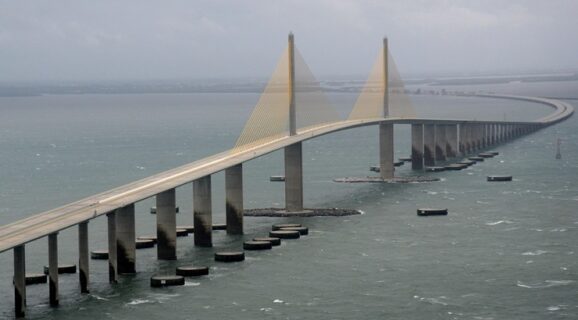
With this bridge set to become the longest in the Sub Saharan Africa, it showcases how African countries are setting the bar high in transport infrastructure engineering and creativity. In another similar project, South Africa is also developing what will be Africa’s longest cable-stayed and cantilever bridge, the Mtentu Bridge.
February 22, 2024
According to a press release that was released by the State House in Kenya on Thursday 8th January, announced that the Head of State of Kenya, President William Ruto, had secured a total of Ksh350 billion which would be utilized for the Mombasa Gateway Bridge Funding in order to fund the upcoming project of his administration. This is a great step as Kenya draws closer into achieving its dreams of having the longest bridge in Africa, the Mombasa Gateway Bridge, as the president managed to secure billions for the Mombasa Gateway Bridge Funding thereby guaranteeing its completion.
In the deals that the president signed with the Japanese government, the two mega projects i.e. the Mombasa Gateway Bridge and the Dongo Kundu Infrastructure Ecosystem benefited the highest with the two projects securing a total amount of Ksh260 billion.

Mombasa Gateway Bridge Funding Financier
This funding comes one month after the Cabinet Secretary in charge of Transport Ministry, Kipchumba Murkomen, met the officials from Japan during the second Kenya-Japan Quality Infrastructure Conference that was held in Nairobi in order to discuss the construction of the Mombasa Gateway Bridge.
According to the Cabinet Secretary, the Mombasa Gateway Bridge has been under construction since its feasibility study was conducted in the year 2019.
“Japan is also a part of upcoming new projects like the Mombasa Gateway Bridge which is set to be the longest in the African continent,” Murkomen said at the time.

The bridge is significant in that it will enable easier movement of both people and goods between the island of Mombasa and the South Coast and also be a tourist attraction in the region. Earlier on, the project had been fashioned as a Ksh47 billion extended loan by the Japanese government.
The construction works of the Mombasa Gateway Bridge had been initially scheduled to kick off in the month of June the year 2021, with its completion date set for the year 2024 but due to delays postponements on the project have been happening.
Challenges Facing the Bridge Project
Among the delays that were incurred was as a result of the need of the Kenyan government to compensate a total of 1,706 households that had to be displaced from a total of 725 plots which add up to 62.6 hectares of land.
In the other hand, the Dongo Kundu Infrastructure Ecosystem project has an aim of setting up infrastructure that will be supporting the Mombasa Special Economic Zone. The feasibility test of the project was conducted in February of 2020.

The Kenyan president and the Prime Minister of Japan, Fumio Kushido, also reached an agreement that required Kenya to issue a bond of Ksh40 billion (Samurai bond) in Japan so as to fund both energy and infrastructure projects.
A Samurai bond is a yen-denominated bond that is issued in Tokyo by a non-Japanese company. However, the bond is subjected to all the financial regulations of the Japanese law.
Additionally, Kenya also got to secure a total of Ksh30 billion from the Japan Bank for International Cooperation that would be utilized to purchase both heavy machinery and assets. The Olkaria Geothermal Development project is set to receive Ksh15 billion. Moreover, Japan will provide Ksh1 billion that would be utilized into the production of medical oxygen for quite a number of hospitals.
Project Factsheet
Project Name: Mombasa Gate Bridge (MGB) Construction Project
Primary Objective: Provide a permanent, high-capacity road link over the Likoni Channel, completely replacing the 89-year-old Likoni Ferry service and the temporary Liwatoni Floating Bridge.
Executing Agency: Kenya National Highways Authority (KeNHA)
Lead Co-Financier: Government of Japan through the Japan International Cooperation Agency (JICA) under the Official Development Assistance (ODA) program.
Design Service Life: 120 years
Structural & Engineering Specifications
Bridge Type: Cable-stayed bridge (Set to be the largest stayed-cable bridge in Sub-Saharan Africa).
Total Bridge Length: 1.4 kilometers
Total Project Scope: 13.2 kilometers (Including all connected arterial approach roads, flyovers, and interchanges).
Traffic Capacity: 4 lanes (Dual carriageway layout).
Span Configuration: 3 main spans supported by 4 marine/shore pylon piers.
Vertical Shipping Clearance: 69 meters above the highest water level at midpoint (Designed to ensure unrestricted mast clearance for ultra-large maritime vessels entering Kilindini Harbor).
Route Alignment & Layout
Mombasa Island Origin: Starts near King’orani Prison on Lumumba Road. It rises over the Mombasa Railway Station, cuts above Moi Avenue (west of Canon Towers), and runs along Archbishop Makarios Road through Ganjoni before turning right above Liwatoni to cross the channel.
Likoni Mainland Touchdown: Crosses the channel near the Sultan of Zanzibar Palace Ruins (near Puma Primary School), follows the eastern shoreline of Mweza Creek, and descends to grade level near Javi la Wageni Primary School.
Terminal Connection: Extends past Mtongwe Road to terminate directly into the Mombasa Southern Bypass (Dongo Kundu Bypass) at Ziwani on the Kwale County border.
Labor & Economic Injection: Projected to create approximately 80,000 direct and indirect jobs for Kenyans during peak construction phases and inject roughly KSh 80 million annually into the local coastal economy.
Also read: $134 Million Set Aside by the Kenyan Government as Construction of Dongo Kundu SEZ Berth Takes Shape
Ksh394 Billion KeNHA Highways Plan Unveiled
$600Million Olkaria Data Center Project Breaks Ground in Naivasha