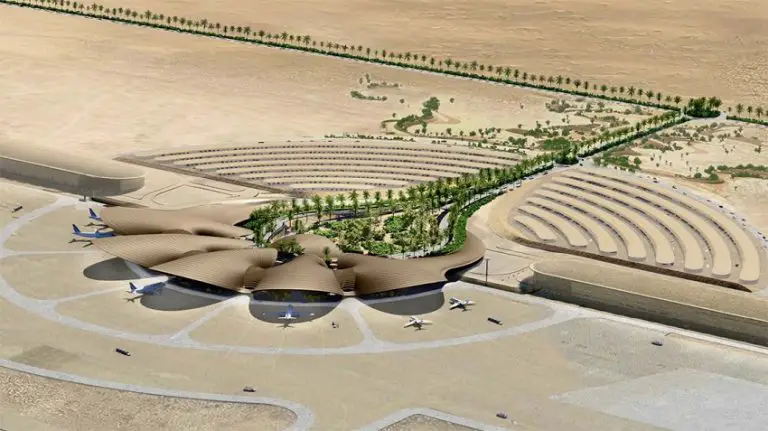
Red Sea International Airport has entered a new operational phase as Saudi Arabia expands aviation infrastructure along its western coastline. The airport now handles growing domestic and international traffic while supporting the wider Red Sea tourism development programme. In addition, operators continue advancing passenger facilities, airline connectivity, and sustainability initiatives as visitor numbers increase across the destination.
The airport officially opened domestic operations in 2023 before launching international services in 2024. Since then, Red Sea International Airport has expanded connections through airlines including Saudia, flydubai, and Qatar Airways. Furthermore, the airport’s first terminal phase is fully operational, with additional expansion phases aligned with the long-term growth of The Red Sea and AMAALA developments.
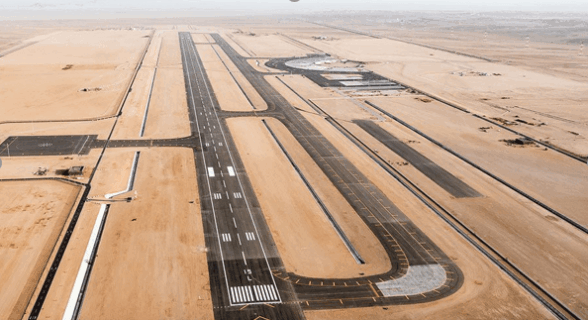
CEO of Red Sea Global (RSG), John Pagano revealed that the airport’s design features a comprehensive boutique facility. Moreover, its inspiration stems from the natural beauty of the surrounding desert landscape. Quite impressively, it will stand as the region’s only airport to include a dedicated runway for seaplanes. The Red Sea International Airport Project will be able to handle aircraft of all scales. These include Airbus A380 to private jets.
Red Sea International Airport expands passenger operations and airline connectivity
Designed by Foster + Partners, the airport features a desert-inspired architectural concept powered entirely by renewable energy infrastructure. The project also aims to become the region’s first airport targeting LEED Platinum certification. Consequently, Saudi Arabia continues positioning the airport as a benchmark for sustainable aviation development within the Middle East tourism sector.
Current operations indicate strong passenger growth across both domestic and international markets. During the 2026 Eid Al-Adha period, the airport increased total flight movements to 80 while offering more than 15,000 seats. Domestic services linked Riyadh and Jeddah, while international operations connected the airport with Dubai and Doha.
Airport operators also confirmed that Red Sea International Airport continues expanding workforce capacity and sustainability programs. The airport strengthened Saudization initiatives while pioneering sustainable aviation fuel adoption across Saudi Arabia’s tourism aviation sector. Moreover, airport management expects additional airline partnerships and route expansions as tourism demand rises across the Red Sea destination.
Red Sea International Airport supports Saudi Arabia’s tourism infrastructure strategy
The airport supports Saudi Arabia’s broader Vision 2030 diversification strategy by improving tourism accessibility along the kingdom’s western coast. Long-term plans target one million annual passengers by 2030 while balancing domestic and international traveller volumes. Industry executives also expect international passenger ratios to increase significantly as European and global connectivity expands further.
Red Sea International Airport additionally complements other major Saudi aviation projects currently under development. These include the King Salman International Airport construction project in Riyadh, which forms another major pillar within the kingdom’s aviation expansion strategy.
The wider Red Sea tourism programme continues attracting infrastructure investment across hospitality, transport, and renewable energy sectors. Therefore, Red Sea International Airport remains a critical gateway supporting Saudi Arabia’s long-term tourism and economic diversification ambitions.
Read Also: Neom cross-border city project in northwestern Saudi Arabia
Development of the Red Sea International Airport Project
On 13 July 2020, the project awarded its development contract to an all-Saudi joint venture between Almabani alongside Nesma & Partners. Thereafter, on 5 January 2021, Daa International got on board as the official operator via the signing of a $266 million agreement. The international subsidiary will oversee the project’s development and operation. In addition to corporate and financial services, Daa International will also provide aviation services as well as airfield and terminal operations.
Overall, the project aims to support the creation and construction of a sustainable gateway. Similar to the rest of Red Sea GLobal‘s infrastructure, the project’s source of power will solely be from renewable energy. In fact, the development is set to become the first carbon-neutral airport, especially within the Middle East. The airport development will feature state-of-the-art amenities including high-quality restaurants and a spa. Approximately, it is said to serve about one million passengers.
Taking it a step further, the facility will have no baggage claims area. Instead, John Pagano explained, luggage will be delivered to guest’s hotel rooms, in order to shorten processing times. Conclusively, John Pagano said that the Red Sea International Airport Project will benchmark new standards, especially in sustainable aviation.
Project Fact Sheet
Project name: Red Sea International Airport (RSI)
Location: The Red Sea destination, western Saudi Arabia
Developer: Red Sea Global
Project type: International tourism airport
Operational status: Operational and expanding
Initial opening: Domestic operations launched in 2023
International operations launch: 2024
Main architectural consultant: Foster + Partners
Sustainability target: LEED Platinum certification
Energy source: Fully powered by renewable energy
Passenger target: One million passengers annually by 2030
Current airline operators:
- Saudia
- flydubai
- Qatar Airways
Main domestic connections:
- Riyadh
- Jeddah
Main international connections:
- Dubai
- Doha
Airport operations manager: daa International
Integrated transport systems:
- Electric vehicles
- Boats
- Seaplanes through Fly Red Sea
Strategic programme: Saudi Vision 2030 tourism and aviation expansion
Project Team
Project developer: Red Sea Global
Airport owner: Red Sea Global
Masterplan architect: Foster + Partners
Airport operator: daa International
Sustainability delivery partner: Red Sea Global renewable infrastructure division
Airline partners:
- Saudia
- flydubai
- Qatar Airways
Mobility integration provider: Fly Red Sea
Aviation infrastructure consultants: Multiple international engineering and airport planning firms
Renewable energy integration teams: Red Sea Global infrastructure consortiums
Hospitality integration partners: AMAALA and The Red Sea destination development teams



Leave a Reply