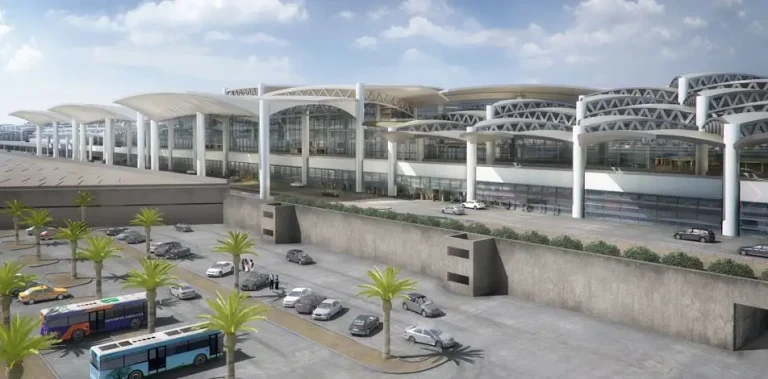
King Khalid International Airport (KKIA) in Riyadh, Saudi Arabia, continues to roll out phased infrastructure enhancements that span terminals, passenger processing, and logistics capacity. This is part of an overarching strategy to position Riyadh as a global aviation and cargo hub. Moreover, this long‑term development drive illustrates how the airport’s growth remains relevant to current projects like the Riyadh cargo center construction project.
Scope and Progress of the King Khalid International Airport Terminal Expansion Project
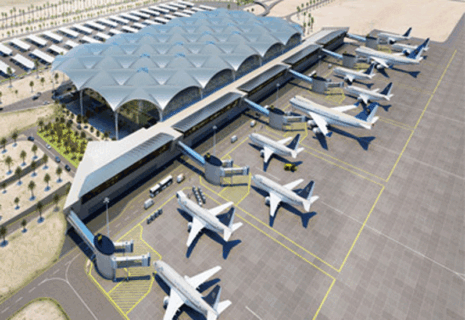
In June 2023, Al Rashid Trading & Contracting Company (RTTC) secured a major contract to redevelop Terminals 1 and 2 at KKIA, awarding the reconstruction work to a joint venture with Turkish contractor IC İçtaş. The work involved the reconstruction of terminal halls and the connecting structures between them, marking a significant early phase in the airport’s multi‑year transformation plan.
Unlike a project near completion, the Terminals 1 and 2 redevelopment remains active and ongoing. Sources from 2024–2026 including updates from contracting parties and broader airport expansion news confirm that this phase has progressed but not reached final completion. Meanwhile, other airport initiatives, such as the opening of International Terminal 2 in early 2026 and preparations for a capacity target nearing 56 million passengers by the end of 2026, illustrate how KKIA’s phased expansion remains dynamic and future‑oriented.
Strategic drivers and impact
The RTTC/IC İçtaş terminal project is just one element of KKIA’s evolving infrastructure, which now also includes cargo and logistics expansion exemplified by the newly launched Riyadh cargo center construction project led by Rowad Modern Engineering. This linkage underlines how terminal enhancements and cargo infrastructure are part of a cohesive strategy to boost freight throughput and overall airport capacity.
From an operational perspective, KKIA’s ongoing works spanning passenger terminals, logistics hubs, and cargo systems demonstrate Saudi Arabia’s long‑term investment in air transport infrastructure. These developments connect to national objectives under the Kingdom’s economic diversification plans and reflect sustained demand for integrated transport facilities across the Middle East.
Read Also: Deal Signed for New Coke/Synthetic Graphite Complex Project in Rabigh, Saudi Arabia
An Overview of the King Khalid International Airport Project
King Khalid International Airport’s start year was 1983 with the General Authority for Civil Aviation (GACA) of Saudi Arabia contributing as a sponsor. Its design was by Hellmuth, Obata, and Kassabaum (HOK), a US-based architecture engineering firm.
Currently, Riyadh Airports Company (RAC) is the international airport’s operator. Initially, from 2008 to 2014, Fraport was the airport’s operator under a six-year contract.
The current project is a part of the country’s enormous investment in tourism infrastructure. Furthermore, it plays an essential role towards a strategy to attract over 100 million tourists, annually by 2030. As a result, the airport’s design strives to accommodate up to 120 million travellers by the same year.
Riyadh Airports awards project management consultancy services contract for KKIA
Riyadh Airports has awarded a contract to Egis and local subsidiary Projacs to deliver project management consultancy services for airside projects at King Khalid International Airport (KKIA).
It is currently working on upgrading the airside infrastructure, adding new services and facilities. In an effort to ensure that customers continue to enjoy pleasant, safe, and efficient services.
Egis and its local subsidiary Projacs, which specialises in project management in the Middle
East, will be project management consultants for design review, construction management
and supervision of new airside infrastructure.
These services include the review and approval of contractors’ technical deliverables relating to infrastructure, airfield ground lighting (AGL), NAVAIDS and an upgrade of baggage handling systems at Terminals 3 and 4.
Most of the airside infrastructure will be redeveloped, including the two runways, taxiways, cargo aprons and isolated parking positions. The entire AGL equipment and systems will be replaced by a LED lighting system with a dedicated IT control system.
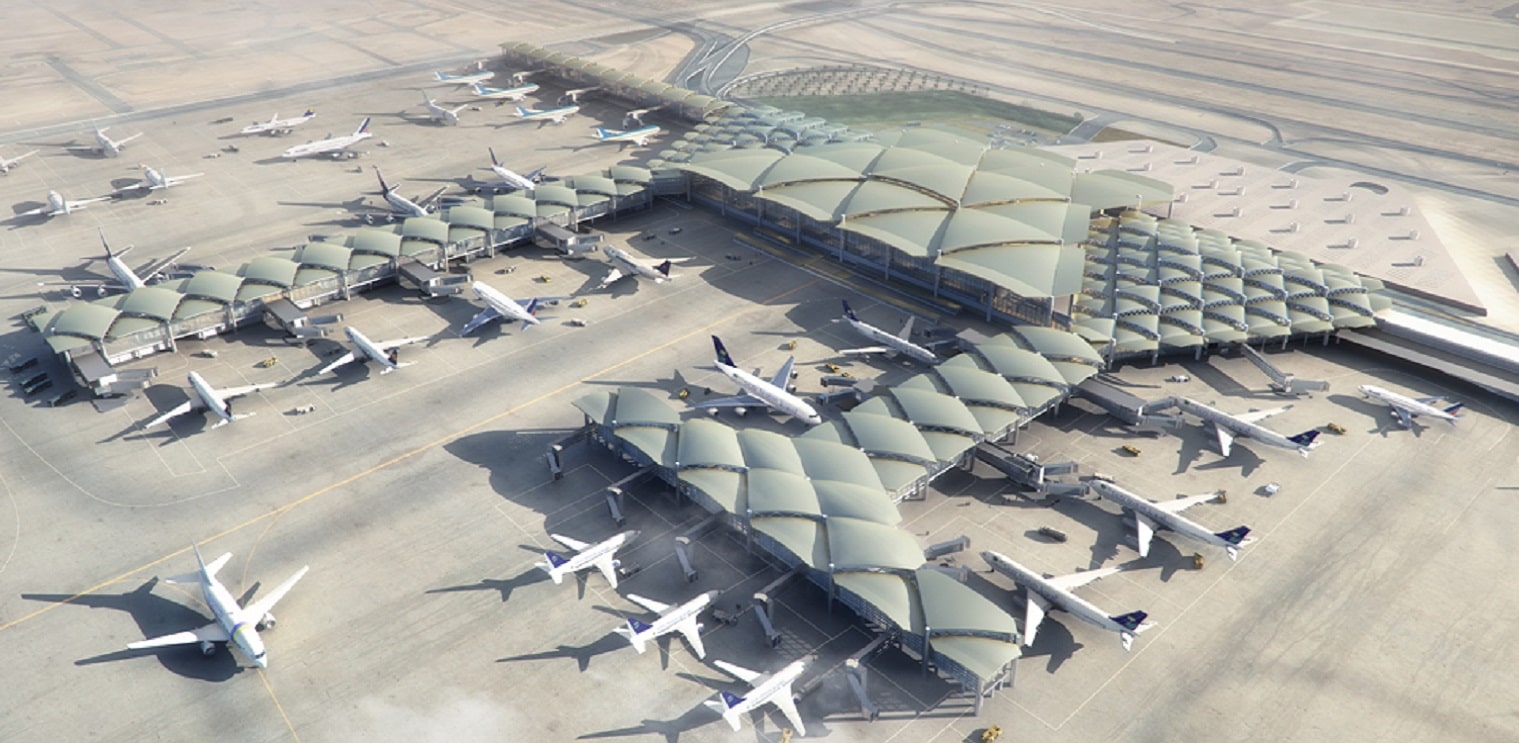
Project Fact Sheet: KKIA Terminal Redevelopment
Project name: King Khalid International Airport Terminals 1 & 2 redevelopment
Location: King Khalid International Airport, Riyadh, Saudi Arabia
Client/Owner: General Authority of Civil Aviation (GACA)
Main contractor: RTCC / IC İçtaş Joint Venture
Sector: Aviation infrastructure and terminal redevelopment
Scope:
- Rebuild Terminals 1 and 2 halls
- Construct connecting structures between terminals
- Integrate with broader KKIA expansions
Current status: Ongoing (early 2026)
Strategic alignment: Saudi National Transport and Logistics Strategy and Vision 2030
Project Team
Owner & Regulator: General Authority of Civil Aviation (GACA) – Project owner and regulatory authority
Project management Consultancy:
- Egis
- Projacs
Airport Operator & Sponsor: Riyadh Airports Company – Coordinates operations and infrastructure
Contractors:
- Al Rashid Trading & Contracting Company – Primary contractor
- IC İçtaş – International construction partner
Partners and Supporting Entities:
- Matarat Holding Company – Airport subsidiary oversight
- GACA technical divisions – Project coordination and technical oversight

Leave a Reply