The Cape Winelands Airport project in South Africa is progressing steadily as developers move closer to construction following key approvals. Moreover, the redevelopment of the existing Fisantekraal airfield into a modern aviation hub continues to gain momentum. Therefore, the project is now entering a decisive phase as stakeholders resolve final administrative hurdles. In addition, the development aims to expand aviation capacity in the Western Cape while supporting regional economic growth.
Cape Winelands Airport project in South Africa nears construction milestone
The Cape Winelands Airport project in South Africa has secured environmental authorisation, marking a major step forward. However, developers are currently awaiting the outcome of several landowner appeals before construction can begin. Consequently, these appeals represent the final regulatory hurdle delaying ground-breaking activities.
Meanwhile, project stakeholders remain confident that approvals will be finalised within 2026. As a result, construction is expected to commence once the appeals process concludes. Furthermore, earlier plans indicated that construction could start in early 2026, subject to regulatory clearance.
Importantly, the airport is scheduled for completion around 2028, positioning it as Cape Town’s second major aviation hub. Therefore, the project will help ease congestion at existing facilities while improving regional connectivity.
Infrastructure scope and economic impact
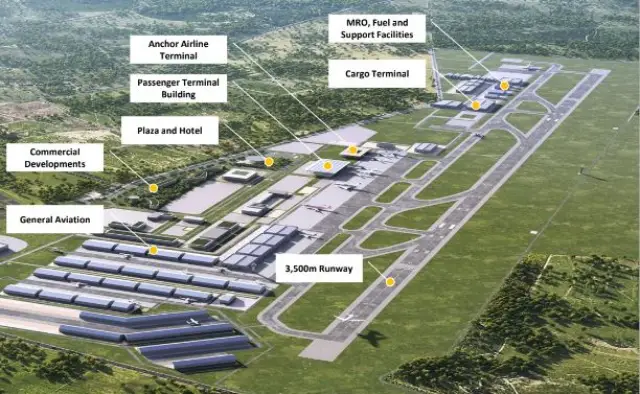
The development will transform the current general aviation airfield into a full-scale international airport. Consequently, the project includes a new passenger terminal, extended runway, and upgraded airside infrastructure. In addition, cargo and logistics facilities will be integrated to support trade and freight operations.
Moreover, the airport will form part of a broader mixed-use precinct spanning approximately 450 hectares. Therefore, planners aim to integrate aviation, logistics, commercial, and hospitality components within a single development.
Similarly, the project is expected to generate significant economic benefits, including job creation and increased tourism. As such, it will complement existing infrastructure while supporting long-term growth in the Western Cape. Furthermore, the airport will operate alongside Cape Town International Airport to expand overall capacity rather than compete directly.
In parallel, South Africa is pursuing additional aviation infrastructure projects to strengthen national connectivity. Notably, the proposed Vaal Aerostropolis International Airport project in Gauteng reflects a similar strategy of using airport-led development to drive economic growth. Therefore, both projects highlight a coordinated push to expand capacity, support trade, and unlock new regional corridors.
The Cape Winelands Airport project in South Africa continues to move toward construction despite regulatory delays. Ultimately, it reflects a broader national strategy to expand aviation infrastructure and support economic development through airport-led projects.
Thanks to an investment of R7 billion in the Berg River maintained level (RML) all existing airport facilities will undergo renovations. Once completed the airport will be designated as Code F meeting all criteria for accommodating passenger planes such, as the Airbus A380 during takeoff and landing.
The expansion project Involves the construction of a building, cargo facilities and fuel storage buildings, on both sides of the realigned runway, which is 3.5 kilometers long. Additionally there are plans for structures like offices and hotels just outside the airports boundary line.
Completion date
As for the completion date Cape Winelands Airport is scheduled to open its doors in 2027. Nick Ferguson, the managing director of RSA.Aero South Africa, a holding company and private developer mentioned that this project has been in progress, for years.
In 2020 we acquired an existing airport. Have been actively working on the project since. Our main objective is to determine the aviation transportation needs of the area.
According to Ferguson this airfield originally completed in 1943 will serve as the hub for a network of airports that will be established in cities, across the country.
Essentially what we mean is that the airport becomes a part of the city and oversees municipal affairs. This is a practice observed in the United States, which boasts, around 2000 airports nationwide.
In a growing city, like ours it is crucial to have an airport. The existing one is not sufficient to meet the increasing demand from passengers those traveling to the West Coast.
Location
The CapeWinelands Airport originally known as Fisantekraal airfield was built in 1943. Is located 13 km northeast of Durbanville. During World War II it played a role in defending shipping, around the Cape of Good Hope by operating Lockheed Ventura bombers. Interestingly the largest plane ever to land there was the Lockheed C 130 Hercules, affectionately nicknamed Flossie.
Read also Second phase of Tamale International Airport commissioned
Project Fact Sheet
Project Name: Cape Winelands Airport Project
Location: Durbanville (near Cape Town), Western Cape, South Africa
Estimated Cost: $480 million (approx. R8 billion)
Project Type: Airport redevelopment and expansion
Scope:
- Expansion of existing airfield into international airport
- New passenger terminal and support facilities
- Runway extension to accommodate wide-body aircraft
- Cargo and logistics infrastructure
- Mixed-use precinct including commercial and hospitality developments
Site Area: Approximately 450 hectares
Capacity (Long-term): Over 5 million passengers annually by 2050
Current Status (2026):
- Environmental approval secured
- Awaiting resolution of landowner appeals
- Pre-construction phase nearing completion
Timeline:
- Construction start: Expected 2026 (subject to final approvals)
- Completion / opening: Targeted 2028
Key Objectives:
- Expand aviation capacity in the Western Cape
- Support tourism and trade growth
- Reduce congestion at existing airports
- Promote sustainable airport development
Project Team
Project Owner / Developer: RSA Aero
Strategic Partner: Growthpoint Properties
Main Contractor: WBHO
Government Stakeholders:
- Western Cape Government
- Local municipalities in Cape Town region
Consultants:
- Environmental and planning consultants (EIA and approvals)
- Engineering and design teams (detailed design phase ongoing)
Operators: Cape Winelands Airport management
Key Stakeholders:
- Local communities and landowners
- Aviation regulators
- Tourism and logistics sector participants