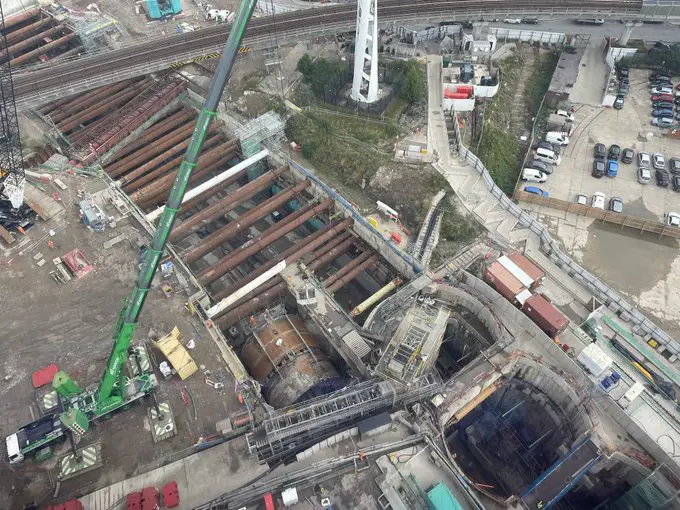
The Silvertown Tunnel is a 1.4km twin-bore road tunnel beneath the River Thames in east London, connecting Silvertown in the London Borough of Newham to the north with the Greenwich Peninsula to the south, developed by Transport for London (TfL) and delivered under a Design-Build-Finance-Operate-Maintain (DBFOM) model by the Riverlinx consortium. Conceived to relieve chronic congestion at the adjacent Blackwall Tunnel, the project also introduced new zero-emission bus routes and a dedicated cycle shuttle service. The Silvertown Tunnel opened to traffic in the early hours of 7 April 2025, with tolling beginning at 6am the same day. In June 2025, TfL confirmed it had implemented a grace period for approximately one month for drivers who failed to pay toll charges from opening, and had since begun issuing penalty charges. The tunnel’s completion marks one chapter in a broader wave of transformative transport infrastructure advancing across the UK — most notably HS2’s Curzon Street Station in Birmingham, where engineers have just completed a 2,011-pile foundation programme across the 400-metre city centre site, transitioning the project from groundworks to above-ground construction.
Project Overview
Type: Twin-bore road tunnel beneath the River Thames
Location: Silvertown (Newham) to Greenwich Peninsula, East London
Tunnel length: 1.4km (twin bores of 1.1km each)
TBM diameter: 11.87m (UK’s largest TBM at time of construction)
TBM name: Jill (named after Jill Viner, London’s first female bus driver)
Construction start: Spring 2021
Tunnelling completed: September 2023 (ahead of schedule)
Opened: 7 April 2025; tolling commenced same day
Total cost: £179 million (construction); minor cost increases noted during delivery
Toll charges: £4 per car journey (6am–10pm, 7 days a week); same charges applied to Blackwall Tunnel simultaneously
Discounts: 50% for low-income residents in Newham, Greenwich, and Tower Hamlets; 100% for Blue Badge holders; exemptions for TfL-licensed taxis
New bus services: 21 buses per hour across both tunnels at peak times (up from 6); new Superloop SL4 route (Canary Wharf to Grove Park) launched free for at least 12 months
Cycle shuttle: Free dedicated shuttle bus for cyclists through the tunnel, running 5 buses/hour, 6:30am–9:30pm daily
Notable post-opening event: Approximately 1,000 cyclists staged a mass trespass on 25 April 2025 in protest at the absence of cycling infrastructure
Concession period: Riverlinx to operate and maintain both Silvertown and Blackwall tunnels for 25 years
Project Team
Client: Transport for London (TfL)
TfL Chief Capital Officer: Stuart Harvey
Mayor of London: Sadiq Khan
Concessionaire: Riverlinx Limited
Construction Joint Venture (CJV): Riverlinx CJV — Bam Nuttall, Ferrovial Construction, SK Ecoplant
CJV Project Director: Borja Trashorras
Riverlinx CEO: John Hagan
Equity/Finance: abrdn, Invesis, Cintra, Macquarie Capital, SK Ecoplant
TBM Manufacturer: Herrenknecht (earth pressure balance machine)
Key subcontractor: Keltbray
Supporting works: Tidal Basin Roundabout upgrades, Lower Lea Crossing improvements, new pedestrian and cycle bridge at Boord Street
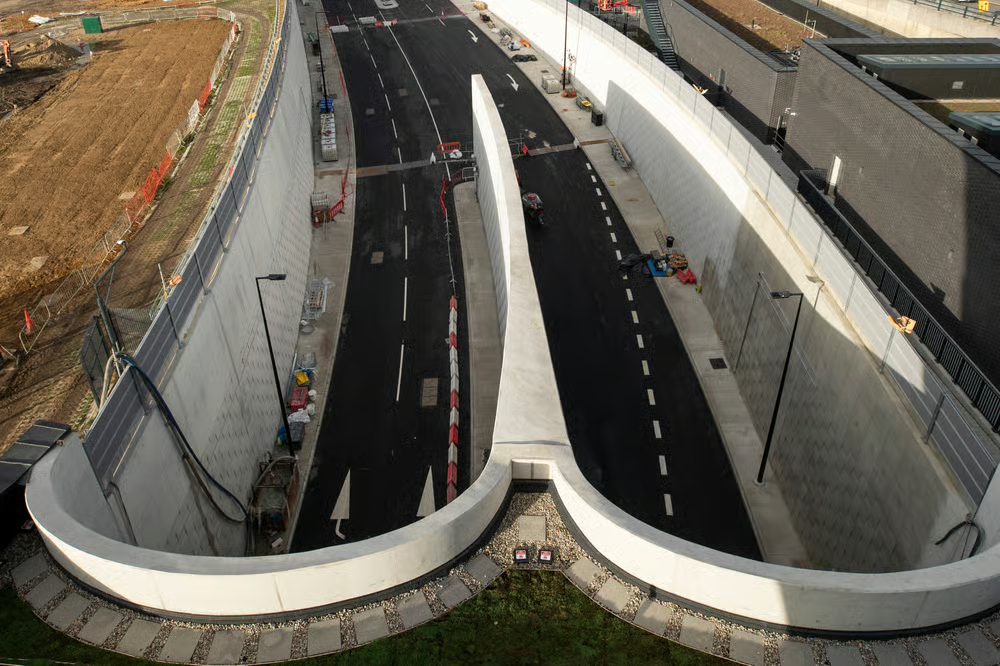
Published 4th August 2023: The central tunnelling operations for the Silvertown Tunnel under Transport for London (TfL) are now finished. Both tunnels beneath the River Thames have been fully dug out. The Silvertown road tunnel, spanning 1.4km, will join Silvertown in Newham, north of the River Thames, with the Greenwich Peninsula near the O2 Arena, south of the river. The tunnel is set to open in 2025.
The Riverlinx CJV joint venture, consisting of Bam Nuttall, Ferrovial, and SK Ecoplant, oversees the TfL scheme. The tunnel is expected to alleviate delays at the Blackwall Tunnel and decrease carbon emissions and pollution, according to TfL.
The project utilised a Herrenknecht earth pressure balance tunnel boring machine (TBM) named Jill, after London’s first female bus driver. Jill is the UK’s largest TBM with an 11.87m diameter. The second tunnel was finished by the TBM recently. The tunnel sections that Jill didn’t bore will be created using cut-and-cover tunnels and retaining walls at the access ramp.
READ ALSO: Joint Venture Awarded Contract for Ligerz Tunnel Project in Switzerland
Completion of the Silvertown Tunnel
The second tunnel’s completion follows the successful finishing of the first 1.1km tunnel in February, achieved when the TBM reached Greenwich’s south bank. The machine was then rotated to journey back to the north bank, boring the second tunnel during the process.
Typically, twin-bore tunnels use two TBMs or take apart a single TBM to reuse it for the second drive. However, an innovative method was employed due to specific constraints on the Silvertown Tunnel project. The TBM was rotated 180° within a specially dug shaft to return it under the river for the northbound 1.1km tunnel, accomplished using a unique “nitrogen skate” system.
Silvertown Tunnel’s first tunnel was completed in February. It happened amidst reports that the project had experienced a £1M increase in costs since December, with potential delivery delays. Green London Assembly member Siân Berry took a picture of the finished second borehole of the Silvertown Tunnel from the nearby ICS Cloud cable car. Berry has previously advocated for the Mayor of London, Sadiq Khan, to promote the Silvertown Tunnel for public transport, walking, and cycling use.
Leave a Reply