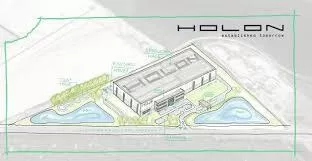
The future of urban mobility is rolling into Florida, and HOLON is leading the charge. The German autonomous vehicle manufacturer is making waves with its first U.S. production facility, set to transform Jacksonville into a hub for electric, self-driving shuttles.
A Facility Poised for Impact
HOLON’s 580,000-square-foot manufacturing facility in Eastport Industrial Park marks Florida’s first dedicated autonomous vehicle production site. The project, a partnership with InLight Real Estate Partners, is on track for a groundbreaking in April 2026, with full operations expected in late 2027.
Once operational, the facility will produce around 5,000 autonomous shuttles per year, creating 150 direct jobs at HOLON and over 800 total jobs through local suppliers and indirect economic activity. The construction phase alone is projected to generate more than $200 million in local economic impact, boosting Jacksonville’s role as a center for advanced mobility innovation.
Shuttle Technology for Tomorrow
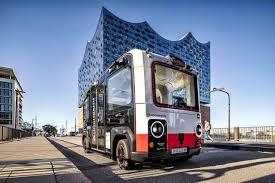
HOLON’s autonomous shuttles, first unveiled at CES Las Vegas in January 2023, are designed for real-world urban and campus mobility. Key specifications include:
Seating for 15 passengers
Top speeds of 37–60 mph, depending on configuration
Range of 290 km on a single charge
Compliance with FMVSS safety standards, Buy America regulations, and ADA accessibility
These vehicles are versatile, capable of ride pooling, scheduled transit, and first-mile/last-mile connectivity, making them a comprehensive solution for cities seeking to reduce congestion, emissions, and reliance on traditional vehicles.
Strategic Partnerships
HOLON is leveraging strong collaborations to ensure smooth U.S. integration:
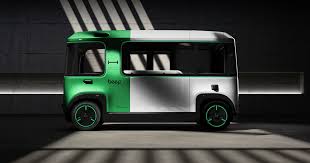
Beep Inc., providing technology and operational support for fleet management
Benteler Mobility, coordinating U.S. production and sales efforts
Lyft, set to integrate HOLON shuttles into urban transit networks starting in late 2026
These partnerships guarantee that the shuttles move efficiently from prototypes to real-world deployment, maintaining a focus on safety, accessibility, and reliability.
From Vision to Reality
The Jacksonville facility represents a major evolution from HOLON’s initial U.S. plans announced in 2024. Key milestones include:
Late 2025: Agreements finalized with InLight Real Estate Partners; facility footprint updated to 580,000 sq. ft.
April 2026: Groundbreaking ceremony scheduled to formally start construction
Late 2026: Pilot deployments with transit and ride-hailing partners
2027: Full-scale production begins, solidifying Jacksonville as a major node in autonomous mobility
Local Impact & Community Benefits
The facility is expected to revitalize the local economy, particularly in Jacksonville’s Eastport Industrial Park area. Beyond job creation, the project will attract ancillary businesses, including suppliers, tech firms, and maintenance services, further strengthening the region’s economic ecosystem. Community engagement programs are also planned to educate local schools and universities about autonomous vehicle technology, fostering the next generation of engineers and mobility experts.
HOLON’s Global Context
HOLON’s Jacksonville expansion complements its established European operations, where shuttles are already deployed in pilot programs and urban trials. By bringing production stateside, HOLON ensures faster deployment in the U.S. market while maintaining international standards of safety, quality, and technological innovation. Executive Petr Marijczuk noted, “Our Jacksonville facility will be a cornerstone of HOLON’s global mission — producing reliable, sustainable autonomous shuttles for cities worldwide.”
Why It Matters
HOLON’s expansion into the U.S. market signals a broader shift toward eco-friendly, efficient urban transit. Thousands of autonomous shuttles will serve cities, airports, and campuses, reducing emissions, easing congestion, and offering safer, more accessible transportation. Jacksonville isn’t just hosting a factory — it’s becoming a cornerstone of next-generation mobility in the United States.
While Jacksonville is shaping up as a hub for autonomous mobility with HOLON’s new shuttle plant, the U.S. EV landscape is also seeing major investments elsewhere. Just down the East Coast, VinFast is set to resume construction on its North Carolina electric vehicle manufacturing campus, signaling a broader wave of automotive innovation hitting the region. Both projects highlight how U.S. cities are becoming key destinations for high-tech vehicle production, from autonomous shuttles to fully electric cars, and underscore the growing momentum of sustainable transportation initiatives across the country.
HOLON Jacksonville Autonomous Shuttle Project – Factsheet
Company: HOLON
Project: First U.S. Autonomous Shuttle Manufacturing Facility
Location: Eastport Industrial Park, Jacksonville, Florida
Facility Size: 580,000 square feet
Groundbreaking: April 2026 (planned)
Expected Operations Start: Late 2027
Production Capacity: ~5,000 autonomous shuttles per year
Vehicle Type: Fully electric, Level-4 autonomous urban shuttle
Vehicle Specs:
Passenger Capacity: 15
Top Speed: 37–60 mph
Range: 290 km per charge
Compliance: FMVSS safety standards, Buy America/Build America regulations, ADA accessibility
Job Creation:
Direct HOLON jobs: ~150
Total economic impact including suppliers: 800+ jobs
Project Developers / Partners:
InLight Real Estate Partners – Facility development
Beep Inc. – Technology and operational support
Benteler Mobility – Production and sales coordination
Lyft – U.S. deployment integration
Key Milestones:
Jan 2023: First shuttle unveiled at CES Las Vegas
2024: U.S. facility plans announced (initial 500,000 sq. ft.)
Oct 2025: Agreements signed; footprint expanded to 580,000 sq. ft.
April 2026: Groundbreaking scheduled
Late 2026: Pilot deployments with U.S. partners
2027: Full-scale production begins
Community & Economic Impact:
Construction: $200+ million economic activity
Workforce development: educational programs for local schools and universities
Long-term: supports Jacksonville as a hub for advanced mobility
Benefits:
Reduce urban congestion
Lower transportation emissions
Enable ride pooling and flexible transit solutions
Establish Jacksonville as a center for autonomous vehicle innovation
Read also: LGES Pauses Construction on part of its $5.5B Battery Facility in Queen Creek
Read also: Natron Energy to Build $1.4B Sodium-Ion Battery Manufacturing Facility in North Carolina
Leave a Reply