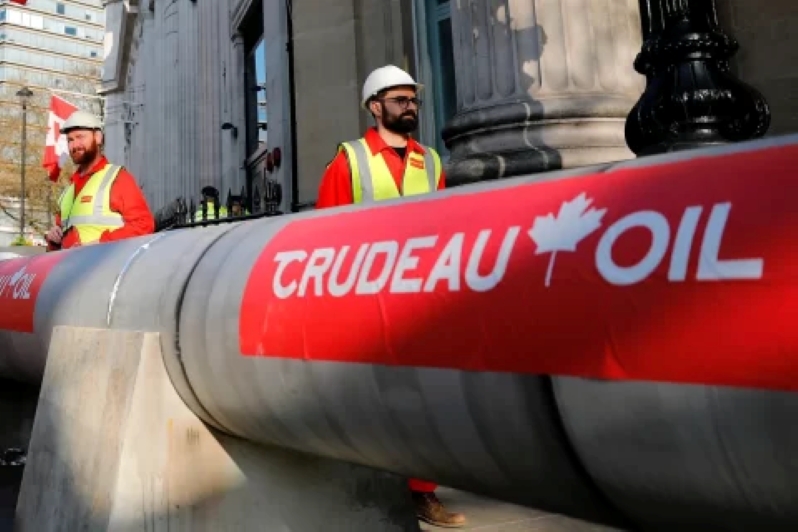
Trans Mountain Pipeline Expansion Project (TMX) is Canada’s most significant oil infrastructure project of the past decade and one of the most important crude export corridors in North America.
Trans Mountain Pipeline’s expanded section started commercial operation in 2024 and has significantly impacted Canada’s ability to ship Western Canadian crude directly to Pacific markets. Stretching from Edmonton, Alberta, to the Westridge Marine Terminal in Burnaby, British Columbia, Trans Mountain Pipeline expansion project nearly tripled the system’s capacity. It also unlocked a new export corridor for oil sands producers and has proven key in strengthening Canada’s presence in Asia-Pacific energy trade.
As of 2026, the project continues to stabilize post-expansion operations, with ongoing optimization of flow rates, marine loading logistics, and system reliability.

The expansion has also become a defining example of state-led infrastructure intervention in energy markets. This follows Canadian government’s acquisition of the pipeline in 2018 to ensure completion after private sector withdrawal.
Additionally, Canada is looking forward to more oil and gas infrastructure investment as it approves the $4 billion Sunrise natural gas expansion project program along Enbridge’s Westcoast pipeline system in British Columbia. A new west coast oil pipeline is also awaiting approval. Backed by the federal and Alberta governments, the project will link Alberta’s oil sands to Canada’s Pacific coast.
Trans Mountain Pipeline Expansion (TMX) Project Fact Sheet
Route: Edmonton, Alberta to Burnaby, British Columbia
Length: 1,150 km
Operator: Trans Mountain Corporation (Crown corporation)
Ownership: Government of Canada
Capacity: 300,000 bpd increased to 890,000 bpd post-expansion
Commodity: Crude oil, primarily oil sands bitumen blends
Infrastructure: Twin pipeline system, pump stations, marine terminal expansion
Export route: Pacific Ocean to Asia-Pacific markets
Expansion project cost: $34 billion
Key infrastructure:
- Westridge Marine Terminal expansion
- More than 12 new pump stations
- Tunneled mountain crossings
- Parallel pipeline looping segments
Project Timeline
1951–1953: Original Trans Mountain pipeline constructed and commissioned
2013: Expansion project first proposed by Kinder Morgan
2016: Federal approval granted with conditions
2018: Government of Canada acquires pipeline for C$4.5 billion
2019–2020: Legal and regulatory challenges continue; Supreme Court clears approvals
2020–2023: Major construction phase across Alberta–BC corridor
2024 (May 1): Trans Mountain Pipeline expansion project enters commercial operation
2024–2025: Commissioning, ramp-up, and system optimization
2026: Full operational stabilization and increased utilization of export capacity
$34 Billion Trans Mountain Pipeline Expansion Opens in Canada After Several Years of Delay
Reported May 5, 2024 – Canada’s energy sector and that of British Columbia celebrated on Wednesday the operations start of Trans-Mountain Pipeline Expansion Project.
Trans Mountain Corp. released a statement on Wednesday that confirmed the movement of oil in the newly expanded pipeline in Canada. The pipeline is currently 70 per cent full as the crude oil addition continues to take place.
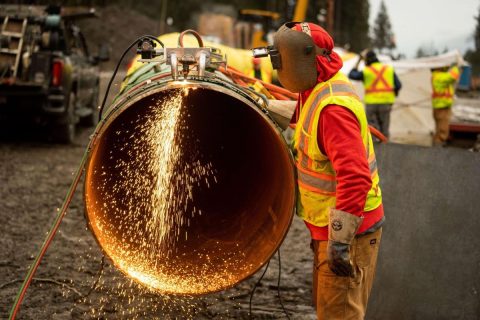
The company revealed that the so-called “Golden Weld”, which is the last piece of construction work that was needed to finalize the construction works at the pipeline, was done on the 11th of April in B.C.’s Fraser Valley, located between both the communities of Hope and Chilliwack.
“It is quite evident that the Trans Mountain pipeline project has indicated that the challenging, and long linear infrastructure can be constructed here in Canada,” said the CEO of Trans Mountain Corp. Dawn Farrell.
“Under the leadership of our project management team and also the contractors of the project, we managed to construct 988 kilometers of new pipeline. The team has also covered a total of 193 kilometers of reactivated pipeline, installed 12 new pump stations, and 19 new storage tanks. Lastly, the team also installed three new berths at the Westridge Marine Terminal in Burnaby.”
“Indeed it is a big day for Canada, to get this mega pipeline project up and functioning.” Said the CEO of Cenovus Energy Inc. Jon McKenzie on a conference call that was held with analysts on Wednesday morning.
Importance of the Trans-Mountain Pipeline Expansion
“The people of Canada are yet to see the general benefit of the Trans Mountain Pipeline project for a long period of time. This is in matters regarding increase in taxes and also the royalties set and the like.” Additionally, Alberta premier Danielle Smith also applauded this major milestone, stating in a press release that the expanded Trans Mountain Pipeline Project will see the dawn of a new era of both prosperity and economy growth of Canada.
The completion of the TMX is also deemed to be quite monumental for Alberta. It will become a game-changer for Alberta as the world shall need more of the Alberta oil in huge quantities.
Capacity of the New Pipeline
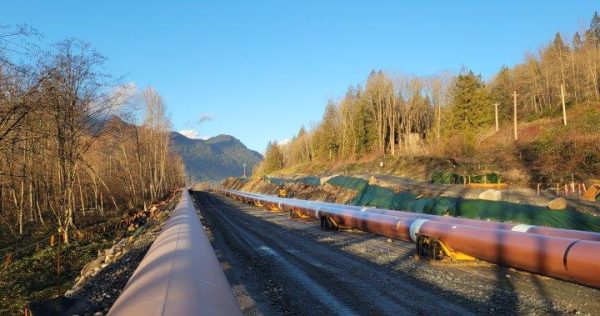
The expansion of the Trans Mountain Pipeline shall increase the shipping capacity of the pipeline remarkably from 300,000 barrels in as single day up to 890, 000 barrels in a day. The expansion project comprised of twinning an already existing pipeline that runs all the way from Alberta up to the B.C. coast. This increased crude oil capacity is expected to foresee an improvement in the products received by the Canadian oil companies.
As the project is being celebrated by the whole of the energy sector of Canada as a big win, it is important to note that it was not achieved easily.
Challenges that Faced the Expansion Project
The expansion of the Trans Mountain Pipeline was first proposed in the year 2012 by Kinder Morgan Canada. It got to encounter quite a number of environmental and Indigenous opposition which almost led to scuttling of the project.

The Canadian federal government bought the pipeline at a price of $4.5 billion in the year 2018 with an effort to get the project past the finish line. Upon the commencement of the construction on the expansion works, the project encountered several delays and budget overruns. This led to the spiraling of its price tag over the course of four years to a whooping $34 billion.
Also read: East African Crude Oil Pipeline (EACOP) Above Ground Installations Commence
World’s first fully sustainable gas pipeline built in France
Technip Energies Appointed as $1 Billion Marsa LNG Terminal Contractor