The Gulf Railway project continues to progress as GCC countries accelerate construction and coordination efforts, with new 2026 developments reinforcing momentum toward a unified regional rail network. Moreover, the project remains a cornerstone of cross-border infrastructure integration, linking Kuwait to Oman while complementing national rail programs such as the Saudi Landbridge project.
Furthermore, the 2,177km network will connect all six Gulf Cooperation Council states, enabling seamless passenger and freight movement across borders. Consequently, the railway is expected to significantly boost trade, logistics efficiency, and regional mobility once operational.
In addition, recent updates indicate renewed political and technical commitment to the program, with GCC leaders targeting completion around 2030 despite earlier delays. Therefore, the project is transitioning from fragmented national delivery toward coordinated regional execution.
Gulf Railway project gains momentum
The Gulf Railway project is increasingly aligned with national rail megaprojects, particularly the Saudi Landbridge project, which strengthens east-west connectivity within Saudi Arabia. As a result, both projects collectively enhance the region’s logistics backbone and support multimodal transport integration.
Moreover, recent rail initiatives, including a proposed Saudi–Qatar high-speed line, demonstrate growing cross-border cooperation within the GCC. Notably, the 785km corridor is expected to reduce travel time between Riyadh and Doha to around two hours, reinforcing the broader Gulf Railway vision.
In the same context, Saudi Arabia has also announced new rail freight corridors linking ports to inland hubs, further complementing regional connectivity objectives. Consequently, these developments strengthen the case for integrating national networks into a unified Gulf system.
Gulf Railway project structure and delivery approach evolve
The Gulf Railway project follows a decentralized implementation model, with each GCC country responsible for constructing its domestic segment. However, coordination challenges previously slowed progress due to funding constraints, differing priorities, and technical alignment issues.
Nevertheless, current updates show improved collaboration among member states, with several segments already under construction or operational at the national level. Therefore, the strategy now focuses on linking these domestic networks through cross-border connections.
Additionally, major milestones include the operational rollout of national systems such as the UAE rail network and planned Oman-UAE links, which will form the first international sections of the wider Gulf Railway system. As a result, phased integration is becoming a practical pathway to full delivery.
Gulf Railway project drives regional economic transformation
The Gulf Railway project is expected to play a transformative role in regional economic development by enhancing trade flows and reducing transport costs. Specifically, the network will facilitate the movement of goods between ports, industrial zones, and inland cities.
Furthermore, the railway is projected to handle millions of passengers and significant freight volumes annually, supporting sectors such as petrochemicals, manufacturing, and tourism. Consequently, it will strengthen the GCC’s position as a global logistics hub connecting Asia, Europe, and Africa.
Equally important, the project aligns with long-term national strategies, including Saudi Arabia’s Vision 2030 and similar development frameworks across the GCC. Therefore, it contributes to economic diversification, job creation, and sustainable transport solutions.
Gulf Railway project encompasses major bi-lateral projects like Oman Rail which is a joint venture with the Etihad Railit Corporation and seeks to link from the UAE national rail network to the Sohar Port in Oman. Further, Saudi Arabia and Kuwait are planning railway connectivity, and the King Hamad Causeway has remained very important and useful for Bahrain and Saudi Arabia.
These relationships should be expected to have a huge impact on trade integration and economic relations in the region. In this respect, the Gulf Railway project is not an isolated venture for the GCC but fits into a strategic image of the member-states for the purpose of creating an enhanced economic structure that is more integrated and sustainable. In enhancing the connectivity aspect, railway will help the national industries and embrace the people with job opportunities to enhance a better economy and make them more resilient.
The project also highlights the efforts that the GCC is seeking to improve the infrastructure as well as to enhance the economic integration in the member countries.
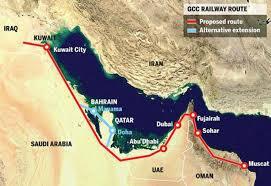
Scope
With the launch of the Gulf Railway project starting from year 2004, the principal goal is to increase better connectivity for transportation within the GCC countries. Several stages and elements can be defined in the discussed project. The implementation is in the hands of each member country, which should build its own segment of the system while referring to the domestic and international channels. For instance, Saudi Arabia, UAE, and Oman have come a long way with Etihad Rail in the UAE being the leading company in the network.
Another major event offering much impetus to the project was the establishment of the GCC Railway Authority that would take responsibility of the construction and management of the railway system. The railway is anticipated to transport people and goods to and from different areas as a solution to the flying and roadway transport which is costly and time-consuming with reference to the movement and exchange of goods in the region.
The beginnings of the Gulf Railway will be in Kuwait City they will extend to Dammam in Saudi Arabia and then bifurcate to Bahrain and Qatar. From Qatar, it links through Salwa to Bahrain and from Bahrain back to Saudi Arabia. The part of the route in the UAE will run from Abu Dhabi to Al Ain, and continues further to Oman and Muscat. This network is developed for improvement of trade and people’s mobility within GCC, with the potential to handle more than 95 million tones of freight and 8 million of passengers per year by 2045.
Read also Saudi Arabia Approves Designs for World’s Tallest Sports Tower in Riyadh
Read also Saudi Arabia’s Vision 2030: On Track to Become the World’s Largest Construction Market
Project Fact Sheet
Project name: Gulf Railway project (GCC Railway)
Estimated cost: $240 billion – $250 billion
Project type: Regional railway network (freight and passenger)
Length: Approximately 2,177 km
Coverage: Kuwait, Saudi Arabia, Bahrain, Qatar, UAE, Oman
Start/End points: Kuwait City (Kuwait) to Muscat (Oman)
Owners: National rail authorities of GCC countries
Key operators:
- Saudi Arabia Railways
- Etihad Rail
- Oman Rail
- Qatar Rail
- Bahrain Rail
- Kuwait Rail
Train speeds: Passenger up to 200–300 km/h; freight 80–120 km/h
Capacity (forecast): Millions of passengers; over 95 million tonnes of freight annually
Delivery model: National delivery with phased regional integration
Current status (2026): Segments under construction; cross-border links advancing
Target completion: Around 2030
Project Team
Regional coordination:
- Gulf Cooperation Council
- GCC Railways Authority
National implementing entities:
- Saudi Arabia Railways – Saudi segment and integration with Landbridge
- Etihad Rail – UAE network and cross-border links
- Oman Rail – Oman domestic and international connections
- Qatar Rail – Qatar segment and future links
- Bahrain Rail – Bahrain segment including causeway links
- Kuwait Rail – Kuwait segment
Key stakeholders:
- National ministries of transport across GCC
- Port and logistics authorities
- International engineering and construction contractors (to be appointed per segment)