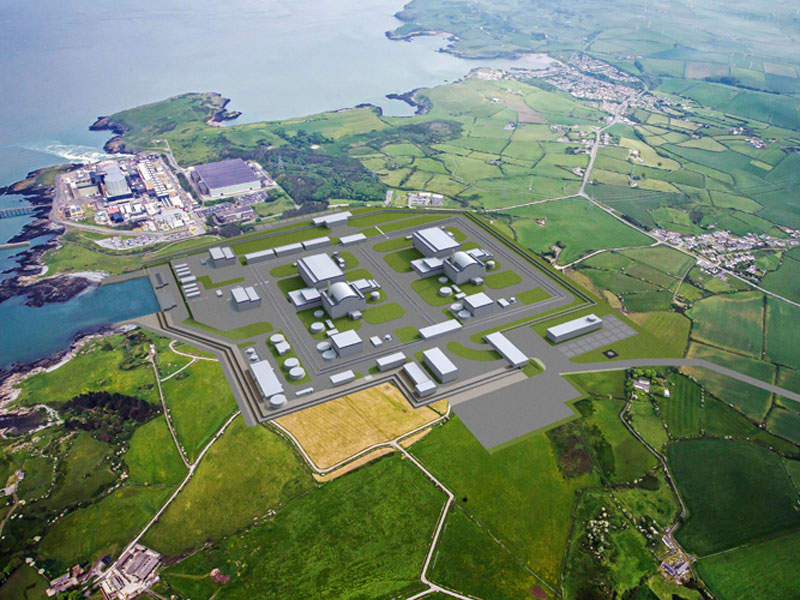
The Wylfa Nuclear power plant site on Anglesey in North Wales now leads the UK’s first small modular reactor (SMR) project as activity shifts toward delivery and regulatory approvals in 2026. Throughout the year, Great British Energy – Nuclear has finalized key planning steps and advanced contractual negotiations with Rolls‑Royce SMR. These moves set the stage for site preparation and licensing work to begin later this year, bringing the long‑anticipated SMR program closer to realization. Moreover, this update reflects broader UK energy strategy shifts that emphasize modular nuclear capacity earlier than traditional large plants like Hinkley Point C and Sizewell C.
Current status and development outlook for the Wylfa Nuclear power plant
The UK government confirmed Wylfa as the chosen location for the country’s first SMR nuclear power station in November 2025. At the core, three Rolls‑Royce SMRs will be sited at Wylfa, with potential expansion up to eight units.
Great British Energy – Nuclear, the public delivery body, is negotiating final terms with Rolls‑Royce SMR and expects contractual closure in 2026.
In tandem, preparatory planning permissions and environmental licensing are underway, supported by national regulators. Meanwhile, policy frameworks now position the SMR program as part of the UK’s Clean Energy Superpower strategy. Consequently, developers aim to begin site mobilization and enabling works later this year.
The target remains to achieve first power from the Wylfa Nuclear power plant SMRs by the mid‑2030s. At the same time, wider supply chain contracts and workforce planning are increasing ahead of core construction.
This updated progress builds on similar projects in the UK such as $406M UK Nuclear SMR Engineering Deal: Amentum-Led Joint Venture Secures Landmark Contract that complements joint ventures advancing national SMR delivery.
Economic, technical and community impacts
The Wylfa Nuclear power plant project promises economic benefit at multiple scales. Three SMRs could generate up to 1.5 GW of baseload power and support thousands of jobs at peak construction. In addition, modular construction strategies emphasize factory fabrication to reduce onsite assembly risk and shorten field schedules.
Local stakeholders and Welsh Government leaders have welcomed the selection of Wylfa, citing long‑term careers and skills development for the region. Importantly, the Wylfa site retains nuclear heritage, which supports community engagement and technical familiarity.
Furthermore, the UK SMR program aims to strengthen domestic supply chain capacity and enable export potential. Nonetheless, the project still must complete regulatory design approvals and secure investment decisions before construction peaks. Thus, while progress has accelerated, delivery milestones remain contingent on approvals and financing.
In May 2024, the UK ministers named the site, which is situated west of Cemaes Bay on the island of Anglesey, off the northwestern coast of Wales, as the preferred site for the project. This came approximately 6 months after the All-Party Parliamentary Group on Nuclear Energy urged the ministers to back Wylfa for the construction of the nuclear power plant.
The cross-party group of MPs and Peers also urged the government to start negotiating as soon as possible to determine which reactor technology is best placed to deliver the project.
Current Status
SInce the purchase of the land from Hitachi who abandoned palns for a plant in 2019 nothing much has happened on the ground. The government needs to secure an operator who will then be able to move head with the project. Ony then will the governments plasn to quadruple power geenration from nuclear energy be closer to reality
The proposed reactor technology for the Wylfa nuclear power plant
Reportedly, the government is already in talks with nuclear reactor technology providers that have expressed their interest in the construction of the nuclear power plant at Wylfa. These companies include Korea Electric Power Corporation (KEPCO or Hanjeon), Westinghouse Electric Corporation and Électricité de France (EDF).

KEPCO is proposing the use of its APR1400 reactor technology in the construction of the Wylfa nuclear power plant. The APR1400 reactor technology has recently been used at the Barakah nuclear power plant, the United Arab Emirates’ first nuclear power station, the first nuclear power station in the Arabian Peninsula, the second of its kind in the Persian Gulf region and the first commercial nuclear power station in the Arab World.
Westinghouse on the other hand, in conjunction with Bechtel Corporation, an American engineering, procurement, construction, and project management company, is proposing the use of its AP1000 reactor technology while EDF is proposing its own EPR units that are deployed at Hinkley Point and Sizewell.
UK’s government’s ambitious plan to generate 24 gigawatts of energy from nuclear by 2050
The development of the Wylfa nuclear power plant is part of the UK’s government ambitious plan to increase its nuclear energy production from 6 to 24 gigawatts (enough to provide a quarter of the UK’s electricity needs) by 2050. This will be the biggest expansion of nuclear power in the country for 70 years. The end goal is to reduce electricity bills, support thousands of jobs and improve UK energy security.
In addition to the construction of the gigawatt nuclear power plant, as part of the plan, the government will also invest up to £300 million in the production of HALEU, the fuel required to power high-tech new nuclear reactors, and £10 million in the development of skills and sites needed to produce other advanced nuclear fuels in the UK.
Furthermore, the government aims to secure 3 – 7GW worth of investment decisions every 5 years from 2030 to 2044 on new nuclear projects.
Also Read
UK to Construct a Major Nuclear Power Plant Marking UK Largest Nuclear Expansion for 70 Years
Balfour Beatty to develop small modular nuclear reactors in the UK
The UK to Develop Eight Additional Nuclear Power Plants
UK to Construct a Major Nuclear Power Plant Marking UK Largest Nuclear Expansion for 70 Years
Project Fact Sheet — Wylfa Nuclear Power Plant SMR Project
Project Name: Wylfa Nuclear power plant – Small Modular Reactor Project
Location: Wylfa Development Area, Anglesey (Ynys Môn), North Wales, UK
Technology: Rolls‑Royce Small Modular Reactors (initial three units; each ~470 MWe)
Ownership / Delivery Body: Great British Energy – Nuclear (GBE‑N)
Site History: Former Magnox nuclear power station site (decommissioned in 2015)
SMR Capacity (Planned): 1.5 GW (initial deployment)
Potential Expansion: Up to 8 units (fleet‑based rollout)
Government Funding: £2.5 billion allocated (plus private finance intended)
Power Target: First electricity by mid‑2030s (subject to approvals)
Delivery Phases: Site licensing; environmental approvals; preparatory works; core construction; commissioning
Strategic Role: First UK SMR deployment; part of net‑zero and energy security strategy
Project Team — Wylfa Nuclear Power Plant SMR Deployment
Owner / Delivery Entity: Great British Energy – Nuclear (GBE‑N)
Reactors / Technology Provider: Rolls‑Royce SMR (Preferred SMR technology partner)
Regulatory Stakeholders:
- UK Office for Nuclear Regulation (ONR)
- Environment Agency (EA) / Natural Resources Wales (NRW)
Construction & Engineering Support (Indicative):
- Owner’s engineer and technical assurance partners (e.g., joint ventures)
- UK and international nuclear supply chain firms
- Specialist nuclear civil and mechanical contractors
Community & Economic Partners:
- Local Welsh Government and Anglesey Council
- Regional skills and training bodies