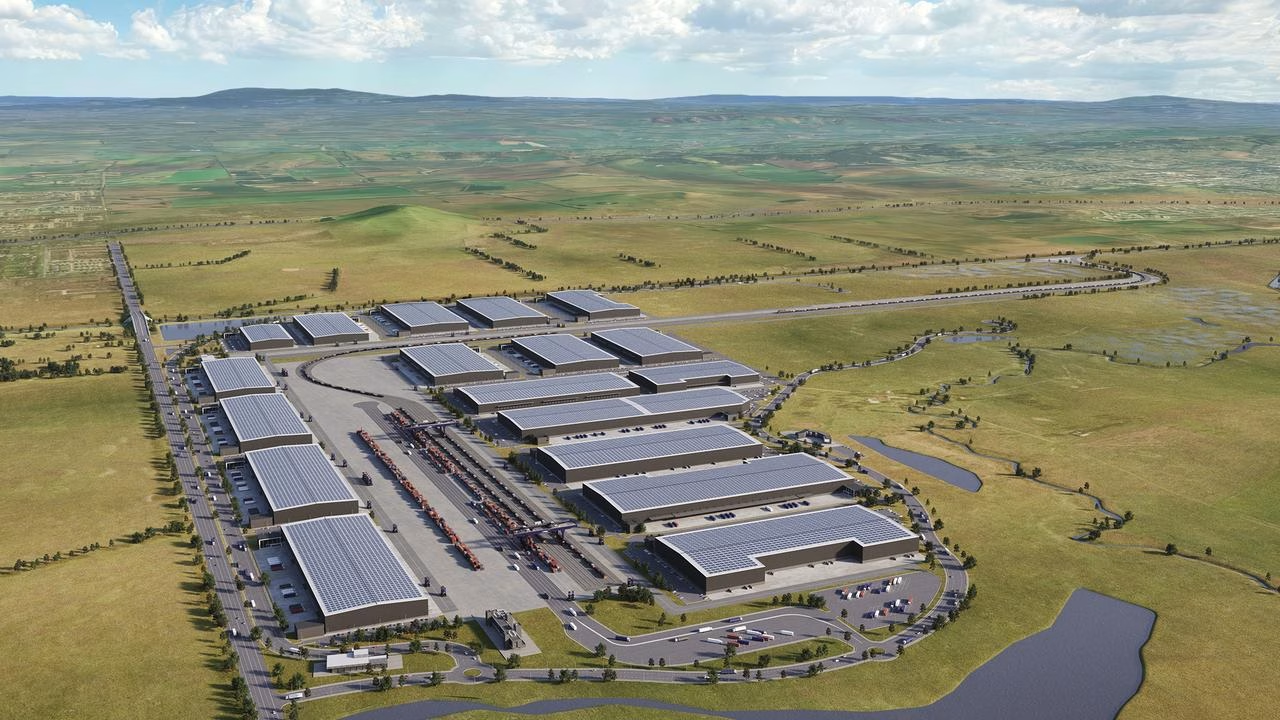
The Beveridge Intermodal Precinct, set to become Australia’s largest rail freight and logistics hub, has officially entered the early stages of construction. The project, spanning 1,100 hectares north of Melbourne, began with a groundbreaking ceremony in December 2025, marking the start of site preparation, approvals finalization, and early works.
Contractors have mobilized on site to establish construction compounds, clear initial areas, and prepare for the main build. Stage 1, led by John Holland Group, will focus on the core rail terminal capable of handling double-stacked freight trains up to 1,800 meters long, providing open-access operations and an initial annual capacity of around 500,000 TEU.
This early phase sets the foundation for subsequent precinct expansion, including co-located warehousing, industrial facilities, and green space preservation, while supporting long-term freight connectivity across the Inland Rail corridor
The project, led by the Federal Government-owned National Intermodal, aims to revolutionize the national supply chain by facilitating a major modal shift from road to rail. Main construction works are scheduled to ramp up early next year, with the initial terminal operations targeted for mid-2028. Once fully operational, the precinct will not only streamline freight logistics but also inject billions into the Victorian and national economies, creating thousands of jobs during both construction and operation phases.
Enhancing Supply Chain Efficiency and Connectivity
The Beveridge Intermodal Precinct is designed to address critical bottlenecks in Australia’s freight network by offering an open-access terminal that fosters competition and lowers transport costs. By enabling 1,800-metre double-stacked trains to operate directly from Melbourne to Perth via Parkes, the facility will drastically reduce transit times and improve reliability for businesses nationwide. The precinct’s strategic location ensures seamless connectivity to key markets, serving as a vital consolidation point for goods moving across the eastern seaboard.
Federal Infrastructure Minister Catherine King highlighted the project’s importance, noting that it will play a key role in marshalling freight from ports and across Victoria for distribution throughout the country. This enhanced connectivity is expected to support industry growth by providing a more resilient and efficient supply chain backbone. This is essential for getting products to shelves and consumers faster and cheaper.
Economic and Environmental Impact
Beyond its logistical capabilities, the Beveridge precinct promises substantial environmental and economic dividends. The project is projected to remove approximately 167,000 truck trips from Australian roads annually. This will lead to a significant reduction in traffic congestion and road wear. The shift from road to rail is expected to cut carbon emissions by an estimated 12.1 million tonnes over the next 25 years. This will further contribute meaningfully to the nation’s decarbonization targets. Environmentally, the precinct will also incorporate renewable energy technologies. This includes potential for large-scale solar installations, and preserve around 500 hectares of land for green wedges and biodiversity.
Economically, the development is a powerhouse, anticipated to generate 8,000 jobs within the precinct itself and support over 17,000 jobs at its peak. Additionally, there is a strong focus on employing local residents from Melbourne’s growing northern suburbs. The Federal Government has also committed an additional $900 million for road upgrades. Further, this includes a new interchange at Camerons Lane, to further support the precinct’s integration into the local transport network.
Current Status of the Project
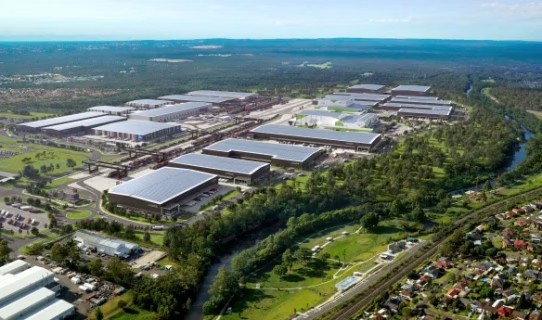
Since the December launch, crews have been conducting site clearing, approvals finalization, and establishing construction zones. Main construction ramped up in early 2026, with John Holland Group appointed to deliver Stage 1 of the intermodal terminal. Stage 1 focuses on building rail infrastructure capable of handling double-stacked freight trains up to 1,800 m in length. Moreover, the terminal will provide open-access operations and initial capacity to process approximately 500,000 TEU per year.
No major delays have been reported, and the project is progressing according to schedule. The broader precinct, covering 1,100 hectares, will expand over time to include warehousing, industrial developments, and green space. Furthermore, adjacent private developments, including a 507-hectare logistics and data center site acquired by C Capital in January 2026, are progressing separately.
Long-term projections estimate 8,000 direct jobs within the precinct, with peak construction and operations supporting over 17,000 positions. Consequently, the project is expected to deliver an economic boost of approximately $14 billion for Victoria and reduce around 167,000 annual truck trips.
The Beveridge Intermodal Precinct complements broader rail infrastructure growth in Victoria. Like the $8.5 billion Melbourne Airport Rail project, it demonstrates the state’s and federal government’s focus on improving rail connectivity, efficiency, and capacity. Furthermore, these projects collectively enhance freight and passenger rail networks, reduce road congestion, and support economic development.
A Future-Proofed Logistics Hub
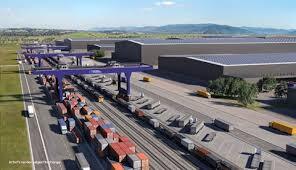
The Beveridge Intermodal Precinct is being built with the future in mind—a forward-looking spirit also seen as Australia’s ARENA backs next-gen lithium-sulfur battery manufacturing with AUD 7.8 million funding. Further, it integrates advanced automation and modern logistics technologies to handle the increasing freight demands of a growing population. National Intermodal is taking a staged approach to delivery. The first stage focuses on establishing the core rail connection and terminal infrastructure by 2028. Furtherly, subsequent stages will expand the facility to include co-located warehousing and a broader industrial precinct, ultimately processing up to 500,000 TEU (twenty-foot equivalent units) per year.
This forward-looking design ensures the terminal can adapt to future freight volumes and technological advancements. ALC CEO Dr. Hermione Parsons welcomed the investment. He emphasizes that the precinct is a critical piece of infrastructure. It will drive productivity and resilience in the face of future freight challenges. Moreover, by combining state-of-the-art infrastructure with strategic planning, the Beveridge precinct is poised to set a new standard for logistics hubs in Australia.
Beveridge Intermodal Precinct Construction: Factsheet
Project Name: Beveridge Intermodal Precinct
Location: Beveridge, Melbourne’s North (VIC)
Total Investment: $1.62 Billion (Federal Government)
Developer: National Intermodal
Contractor (Stage 1): John Holland
Key Features:
Australia’s largest intermodal precinct (1,100 hectares).
Southern terminus for Inland Rail.
Capable of handling 1,800m double-stacked trains.
Capacity: 500,000 TEU per annum (upon full completion).
Timeline:
Construction Start: Late 2025 (Sod turn Dec 2025).
Stage 1 Operations: Target Mid-2028
Economic Impact:
8,000 direct jobs; 17,000+ total jobs supported.
$14 billion economic uplift for Victoria.
Environmental Benefits:
Removes:~167,000 truck trips/year.
Cuts 12.1 million tonnes of CO2 emissions over 25 years.
500 hectares preserved for green space.
Project Team: Beveridge Intermodal Precinct Construction
- Project Owner / Federal Partner: Australian Government
- Delivery Partner: National Intermodal
- Stage 1 Contractor: John Holland Group
- Project Oversight / Advisory: Department of Infrastructure, Transport, Regional Development and Communications
- Logistics / Operations Partner: Inland Rail
- Key Stakeholders / Adjacent Development: C Capital (adjacent private development)
Leave a Reply