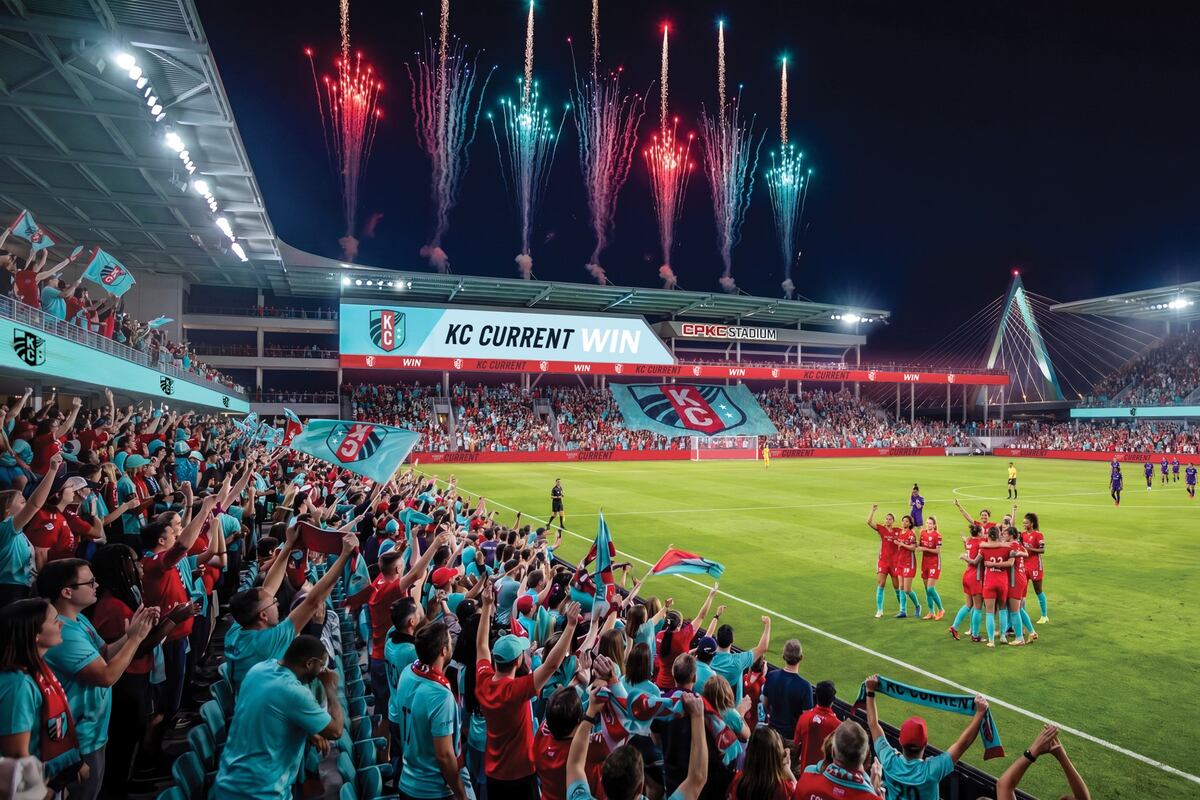
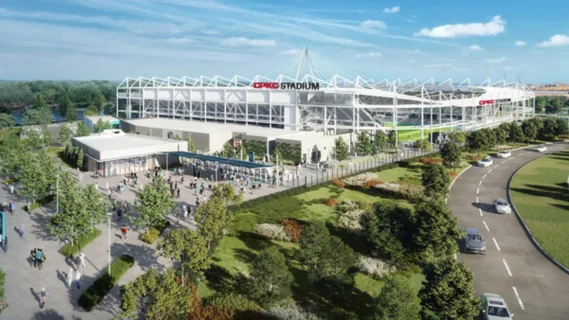
The CPKC Stadium expansion in Kansas City has moved from renderings to real municipal process, with Kansas City Current owners and City Hall now negotiating the terms of a $1.4 billion buildout along the Berkley Riverfront. Mayor Quinton Lucas introduced legislation this week asking the City Council to authorize up to $235 million in special obligation bonds for the project, just over two years after CPKC Stadium opened as the first venue built specifically for a professional women’s soccer team. The plan, designed with architecture firm Gensler, would add 6,500 seats to the stadium, raising capacity from 11,500 to roughly 18,000 by filling in the corners between the existing grandstands rather than stacking a new upper deck. Beyond the bowl itself, the scope stretches across the surrounding 35 acre riverfront campus: a new parking garage, additional retail space, expanded trail connections along the Missouri River levee and further buildout of Current Landing, the mixed use district already under construction next to the stadium. Current owners Chris Long and Angie Long have personally funded the majority of the district to date, and the club says its investment in Kansas City now tops $350 million once the original stadium and training facility are included. City officials describe the financing as a public private partnership routed through a new tax increment financing district rather than a draw on general revenue, with final terms still subject to negotiation and a City Council vote before any construction contract is signed.
Berkley Riverfront Joins a Broader Wave of Kansas City Stadium Investment
The push to enlarge CPKC Stadium lands amid an unusually active stretch for stadium construction across Kansas City. Just two miles south, plans to give the Kansas City Royals a new home have followed a winding path. For much of 2024 and early 2025, a coalition led by developer 3D Development pitched Washington Square Park as the site for a ballpark exceeding $2 billion, arguing the parkland offered better transit access than the team’s Crossroads alternative. That proposal did not survive the search. In April 2026 the Royals instead announced a deal with Hallmark Cards to build a $1.9 billion open air ballpark at Crown Center, anchoring a $3 billion mixed use district expected to open for the 2031 season. Together, the Royals project and the CPKC Stadium expansion point to a city willing to lean on tax increment financing and special obligation bonds to keep professional sports anchored downtown rather than in the suburbs, a strategy Kansas City has also used for the Current Landing riverfront district and the recently completed KC Streetcar Riverfront Extension. Regionally, the closest comparison for a soccer specific venue is Energizer Park in St Louis, but CPKC Stadium remains the only NWSL facility built, and now being expanded, purely for a women’s team, a distinction Forbes has credited with helping push Current revenue past every NWSL rival except Angel City FC.
CPKC Stadium Expansion Timeline and What Comes Next
The proposal is still in its early legislative stage. This week’s committee hearing was limited to an ordinance directing city staff, led by City Manager Mario Vasquez, to begin formal negotiations with the Current rather than approving a final financing package. Lucas has been explicit that no general revenue funds are involved and that the city’s bond commitment tops out at $235 million, leaving the bulk of the $1.4 billion cost to the Current’s ownership group and its development partners. Once terms are settled, the team has indicated it wants to schedule the heaviest construction outside the NWSL season, with work likely starting in the fall of 2027 so crews can build through the winter without disrupting matches. No firm completion date has been made public. Open questions include how the tax increment district’s boundaries will be drawn, how much of Current Landing’s next phase will be finished concurrently, and whether Kansas City’s push to host 2031 Women’s World Cup and Men’s Rugby World Cup matches factors into the council’s final vote. If approved, city leaders expect the expanded stadium and riverfront district to add construction jobs, new households and additional tax revenue to a stretch of the Missouri River that was, within living memory, a dumping ground for demolition debris.


Leave a Reply