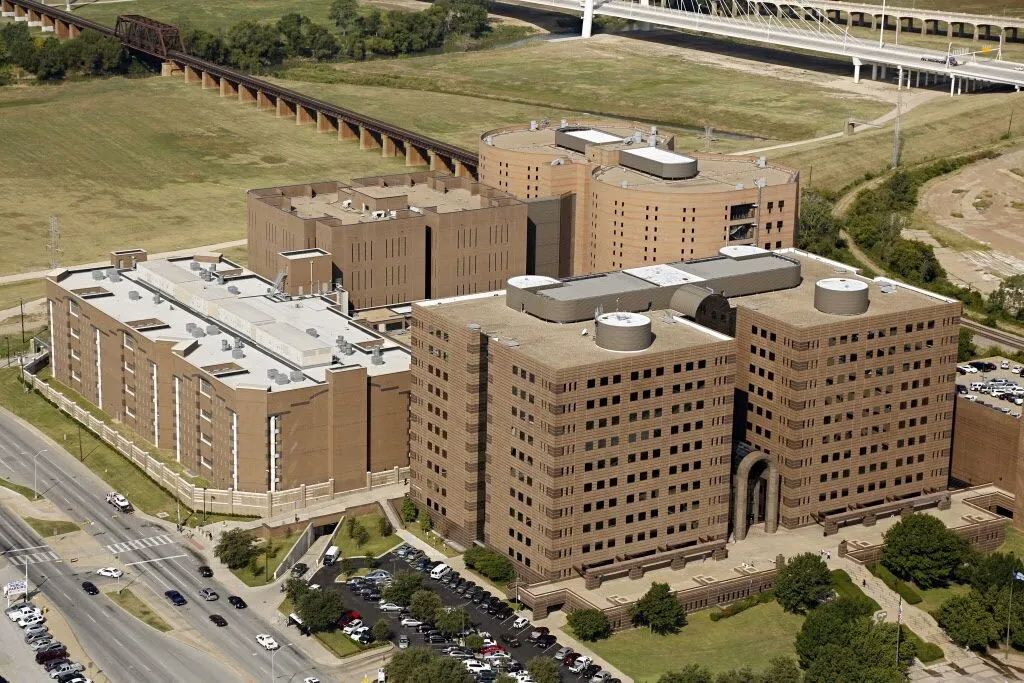
The Dallas County jail replacement project involves a proposed $5 billion plan to replace the existing Lew Sterrett Justice Center in downtown Dallas. The project is intended to address structural concerns, overcrowding, and limitations in providing space for inmates requiring mental health services. The new development would serve as the county’s primary detention facility and form part of its long-term capital planning.
The proposal is being advanced by Dallas County through its Commissioners Court. Preliminary plans indicate the facility would follow a direct-supervision detention model. County officials state the approach is intended to address operational and safety considerations. It also reduces long-term maintenance requirements associated with the current aging infrastructure. Additionally, reflecting a shift toward a more holistic approach to criminal justice that emphasizes rehabilitation and medical stabilization over simple containment.
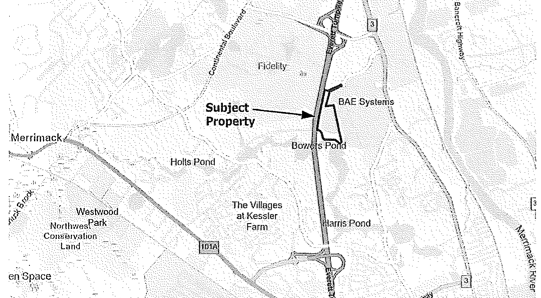
Other than the Lew Sterrett Justice Center by the DOJ, another department that is enhancing its ways to deal with those on the wrong side of the law is ICE with its proposed detention facility in New Hampshire. A proposed $304 million ICE detention facility to be located in Merrimack, New Hampshire is facing significant backlash. The facility is part of enforcement efforts by the U.S. Immigration and Customs Enforcement (ICE) officials.
“We are hoping we can sway public opinion enough that we might be able to stop it,” said Kim Herdman-Shapiro from NO ICE New Hampshire. “We don’t want to basically put people in human warehouses. That’s not the New Hampshire way.” The scope of the project is to convert an existing warehouse on Robert Milligan Parkway. Moreover, ICE notes that once complete it will have around 400-600 beds and house people for an average of three to seven days.
Modernizing the Lew Sterrett Legacy
The proposed facility is being designed to comprehensively address the multifaceted failures of the current jail system by integrating sophisticated medical clinics and dedicated psychiatric wings directly into the housing units to ensure that the roughly 70 percent of inmates currently identified as having mental health issues receive immediate and consistent care.
Utilizing advanced architectural principles to maximize natural light and open sightlines, the new complex will move away from the traditional, restrictive cellblock designs of the 1980s. In their place, flexible pods adaptable to various security levels as the county’s needs. This ambitious overhaul uses approximately 40 acres of land near the current justice center site. This will allow for a phased construction approach that minimizes disruption to existing jail operations. Meanwhile, the massive new structure will rise alongside the downtown Dallas skyline.
Navigating Fiscal and Logistical Hurdles
Securing the $5 billion necessary for a project of this magnitude presents a significant fiscal challenge for Dallas County. A sophisticated combination of municipal bonds and potential state-level funding prevents placing an undue burden on local property taxpayers. Officials are currently evaluating a multi-year procurement timeline. It will involve some of the nation’s leading architectural and engineering firms to ensure that every aspect of the 1.5-million-square-foot facility adheres to the most stringent modern safety and environmental standards.
The sheer scale of the investment has sparked debate regarding the prioritization of county resources. Proponents argue that the escalating costs of maintaining the failing Lew Sterrett complex make the construction of a new facility a fiscal necessity—a drive for modern detention infrastructure also evident as construction kicks off on the $310M women’s correctional facility in Chesterfield, NJ. Currently, the costs exceed tens of millions of dollars in annual emergency repairs
A New Standard for Correctional Infrastructure
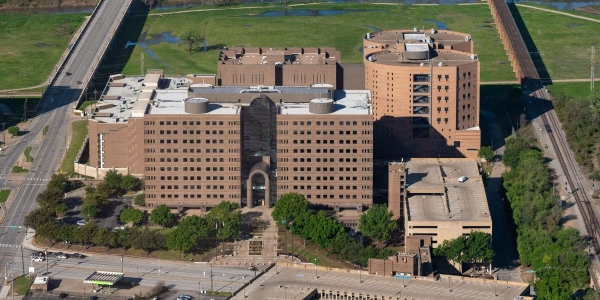
As the project moves into the formal design and environmental review phases, Dallas County aims to set a national benchmark for urban correctional facilities. This will be done by incorporating sustainable building materials and energy-efficient systems. As such, the facility’s carbon footprint reduces over its projected 50-year lifespan.
The development team is committed to a transparent community engagement process to ensure that the facility’s impact on the surrounding urban fabric is carefully managed. The plans include green spaces and improved pedestrian access points around the complex perimeter. This shift toward a campus-style environment marks an evolution in how major metropolitan areas manage public safety. Further, acknowledging that modern detention facilities must serve as complex healthcare and social service hubs rather than mere warehouses for the accused.
Dallas County New Jail Project: Factsheet
Location: Dallas, Texas (Likely adjacent to current Lew Sterrett complex)
Project Type: Replacement Jail and Justice Facility
Estimated Cost: ~$5 Billion
Projected Capacity: 7,000–8,000 beds (targeted for optimization)
Facility Size: Estimated 1.5 million+ square feet
Core Objectives:
Replace the aging Lew Sterrett Justice Center.
Integrate centralized mental health and medical treatment wings.
Implement a direct-supervision architectural model.
Timeline: Preliminary approval Jan 2026; Phased construction expected through the early 2030s.
Economic Impact: Thousands of local construction jobs; substantial reduction in annual county repair expenditures.
Leave a Reply