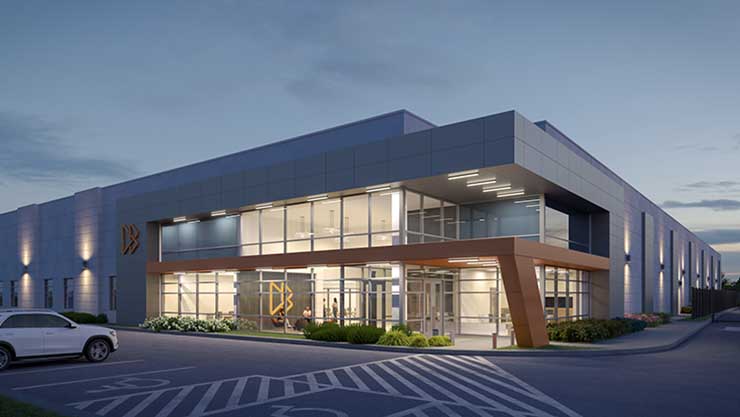
The DataBank Minneapolis data center expansion reflects ongoing investment in hyperscale-ready infrastructure as demand for AI and cloud computing continues to rise across the United States. The facility, located in Brooklyn Park, Minnesota, remains part of a broader strategy by DataBank to strengthen regional edge capacity while supporting compute-intensive workloads.
The MSP3 data center was officially launched in 2021 as the first facility on the Brooklyn Park campus, marking a key milestone in the company’s Minneapolis expansion strategy. The site was designed to support high-density workloads, including enterprise cloud systems and emerging AI applications, while offering scalable power and cooling capacity for future growth.
However, the facility now operates within a rapidly changing national environment, where AI infrastructure growth is increasingly met with regulatory pushback, energy concerns, and community opposition.
Current Status of the DataBank Minneapolis
The MSP3 facility remains operational and continues to serve enterprise and high-performance computing workloads. Since its launch, the site has undergone expansion planning and capacity scaling to meet increasing demand from cloud providers and AI-driven applications.
Key developments include:
- Expanded buildout capacity beyond initial deployment phases
- Increased demand for high-density racks and liquid cooling solutions
- Integration into DataBank’s wider Minneapolis metro network of interconnection hubs
The facility remains strategically positioned within a growing Midwest data center corridor, supported by strong fiber connectivity and regional enterprise demand.
At the same time, the broader industry faces tightening constraints, including energy pricing pressures, hardware shortages, and rising local opposition to large-scale data center expansion.
The Minneapolis facility highlights the tension between infrastructure growth and rising regulatory resistance discussed in the broader commentary on AI data center bans across the United States. As jurisdictions increasingly impose moratoriums and restrictions on new builds, existing facilities like MSP3 represent both the scale of past investment and the challenges of future expansion.
In parallel with the bans trend, utilities and local governments continue reassessing how AI-driven demand impacts electricity pricing, land use, and environmental sustainability. This shift places operational data centers under greater scrutiny, even as demand for compute capacity continues accelerating.
Outlook of the DataBank Minneapolis
The MSP3 data center remains a key asset in DataBank’s Midwest portfolio, but its long-term expansion outlook is increasingly shaped by national policy debates. As AI data center bans grow across multiple jurisdictions, future development decisions may shift toward regulatory-friendly regions with stronger grid capacity and community acceptance.
The Minneapolis case therefore illustrates a broader industry pivot: from rapid expansion to constrained, policy-sensitive infrastructure planning.
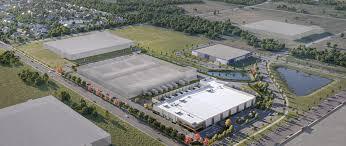
Details on the Minneapolis DataBank complex
In the following growth phases, the master plan for this DataBank complex enables up to an additional 170,000 square feet of data center space and up to an additional 18MW of electricity, offering adequate expansion potential in this vital market. The first deployment in this safe, Tier III-designed facility delivers 1.5MW of critical load power capacity and can increase to 3MW in the first data hall in the future, with a total of 9MW of critical IT load over all three data halls.
Also Read: The Talamore Senior Living Woodbury development begins in Minnesota
“DataBank continues to see Minneapolis as a terrific place for corporate and technology workloads,” stated DataBank CEO Raul Martynek. “The increased capacity provided by MSP3 makes it a suitable site for hyperscale cloud and webscale application and content providers wishing to establish a strong market edge presence.”
“The desire for more localized data center infrastructure is increasing, and edge regions such as Minneapolis are seeing greater demand. DataBank is constructing strategic increments that can fit a broader range of situations, while also allowing for interconnection with partners and cloud infrastructure platforms,” Structure Research Ltd.’s Managing Director, Philbert Shih, stated.
In addition, the business has announced the construction of a new data center facility in Northern Virginia, where it expects to add up to 40 megawatts of capacity in Data Center Alley in Ashburn. The IAD3 building will dramatically increase DataBank’s footprint in one of the most key interconnection markets, where it presently runs an 18 MW facility acquired through the zColo portfolio purchase last year. In its initial phase, IAD3 will provide 4MW of power and is slated to come online in the first quarter of 2023.
Project Fact Sheet
Project Name: MSP3 Data Center (Brooklyn Park Campus)
Location: Brooklyn Park, Minneapolis Metro, Minnesota, USA
Operator: DataBank
Launch Year: 2021
Facility Size: 86,000 sq. ft. gross space
Critical IT Load: 9 MW scalable capacity
Cooling Design: High-density air and liquid cooling options
Connectivity: Carrier-neutral, multi-network interconnection
Primary Use Cases: Cloud hosting, enterprise workloads, AI compute, CDN infrastructure
Campus Expansion Potential: Additional development capacity planned on Brooklyn Park site
Project Team
Developer / Operator: DataBank
Executive Leadership: DataBank corporate leadership team
Construction & Engineering: DataBank infrastructure development division
Campus Planning Partner: Scannell Properties (original land acquisition context)
Utilities Partner: Regional power provider (Xcel Energy infrastructure support)
Regulatory Oversight: Minnesota state and Brooklyn Park local planning authorities



Leave a Reply