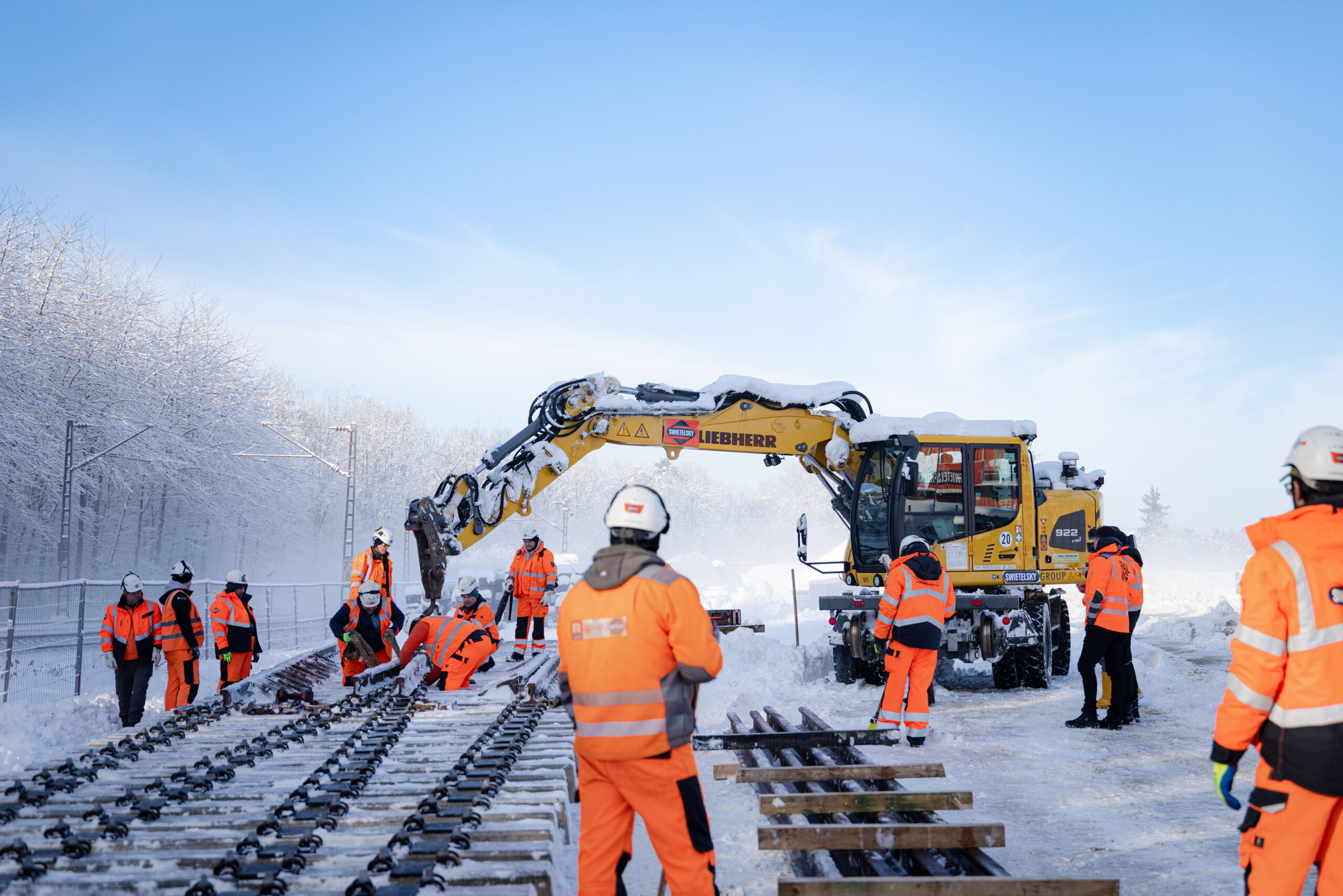
Deutsche Bahn (DB) has officially initiated the heavy construction phase on two of Germany’s most critical rail arteries: the Hamburg-Berlin high-speed line and the Emmerich-Oberhausen route. This mobilization marks the tangible start of DB’s “Generalsanierung” (general renovation) strategy, a pivotal shift from decades of piecemeal “rolling repairs” to radical, full-corridor overhauls. By fully closing these sections for concentrated periods, DB aims to condense five years of maintenance into a few months, directly addressing the infrastructure failures that have dragged national punctuality below 64%. This strategic pivot is not just about replacing steel and concrete; it is an attempt to stabilize the entire central European rail grid, as these routes serve as the primary veins for both long-distance passenger travel and the massive freight volumes moving south from the North Sea ports.
Engineering the Digital Backbone: Hamburg-Berlin
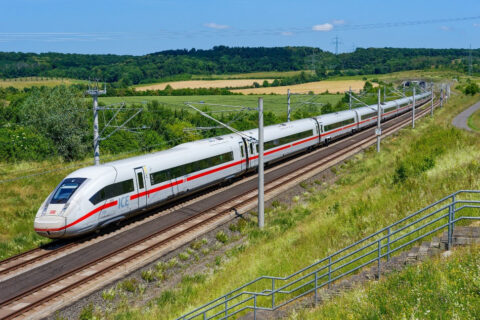
On the Hamburg-Berlin line—Germany’s busiest city connection carrying 30,000 passengers daily—the scope of work goes far beyond simple track renewal. The jobsite is dominated by the installation of the European Train Control System (ETCS) Level 2, a digital signaling technology that replaces physical trackside signals with cab-based data streams. For the passenger, this technical upgrade allows trains to run at closer intervals (shorter headways), effectively increasing the line’s capacity without laying new rails. Construction crews are simultaneously replacing 100 turnouts (switches) and installing high-performance noise barriers. This “bundled” approach means that when the line reopens, it will be a “high-performance corridor” capable of sustaining 230 km/h speeds with significantly higher resilience against signal failures, a frequent cause of past delays.
DB Corridor Renovations: Factsheet
Project Name: Generalsanierung (General Renovation) Program
Operator: Deutsche Bahn (DB InfraGO)
Key Routes:
Hamburg-Berlin (280 km)
Emmerich-Oberhausen (73 km)
Strategic Goal: Transform aging tracks into a “High-Performance Network” by 2030.
Hamburg-Berlin Scope:
Technology: Installation of ETCS Level 2 (Digital Signaling).
Civil Works: Renewal of 100 switches, track bed cleaning, noise barriers.
Impact: Increases capacity and speed (230 km/h); reduces signal failures.
Emmerich-Oberhausen Scope:
Key Contractors:
Eiffage (ARGE Oberhausen-Emmerich)
DB Engineering & Consulting (Planning & Supervision)
Contracted Construction & Engineering Firms (for the final segment between Hamburg-Rothenburgsort and Büchen)
Rhomberg Sersa Rail Holding GmbH – railway construction specialist.
Eurovia GmbH – civil engineering and construction work.
Axians GA Netztechnik GmbH – network and rail technology.
Knapp Engineering GmbH – engineering services.
CRS grüntechnik GmbH – green infrastructure and project support.
SPL Powerlines Germany GmbH – power supply and overhead system works.
SPITZKE SE – track construction and rail infrastructure.
Joint Venture: Schweerbau GmbH & Co. KG, Joseph Hubert GmbH & Co. KG, and Wiebe Holding GmbH & Co. KG – infrastructure and civil engineering group.
Civil Works: Construction of a third track (freight separation).
Infrastructure: Grade separation (bridge building), electrification upgrades.
Context: Part of the Rotterdam-Genoa European Freight Corridor (Rhine-Alpine).
Investment Context: Part of the €45 Billion railway expansion fund.
Why Now? To reverse historic lows in punctuality and accommodate rising freight demand from North Sea ports.
Unlocking the European Freight Artery: Emmerich-Oberhausen
Simultaneously, heavy civil works have ramped up on the Emmerich-Oberhausen line, the German leg of the vital “Betuwe Line” connecting the Port of Rotterdam to Genoa, Italy. The critical engineering objective here is the addition of a third track to a 73-kilometer section that has long been a bottleneck for European freight. By separating fast passenger services from heavy cargo trains, DB is eliminating the “catch-up” delays that plague mixed-traffic corridors. The construction involves complex geotechnical engineering to stabilize the embankment for the new heavy-haul track and the replacement of multiple level crossings with grade-separated bridges.
This project is essential for integrating the Dutch high-speed freight network with the German industrial heartland, facilitating the modal shift of cargo from the A3 motorway to the rails. This specific upgrade is just one component of a massive national overhaul, as Deutsche Bahn seeks €150 billion to modernize Germany’s aging rail system. In an interview with T-Online, CEO Richard Lutz outlined a staggering investment plan where €80 billion would target the repair of existing infrastructure, while the remaining funds would support network expansion, station enlargements, and digital control systems to reverse years of underinvestment and declining reliability.
Leave a Reply