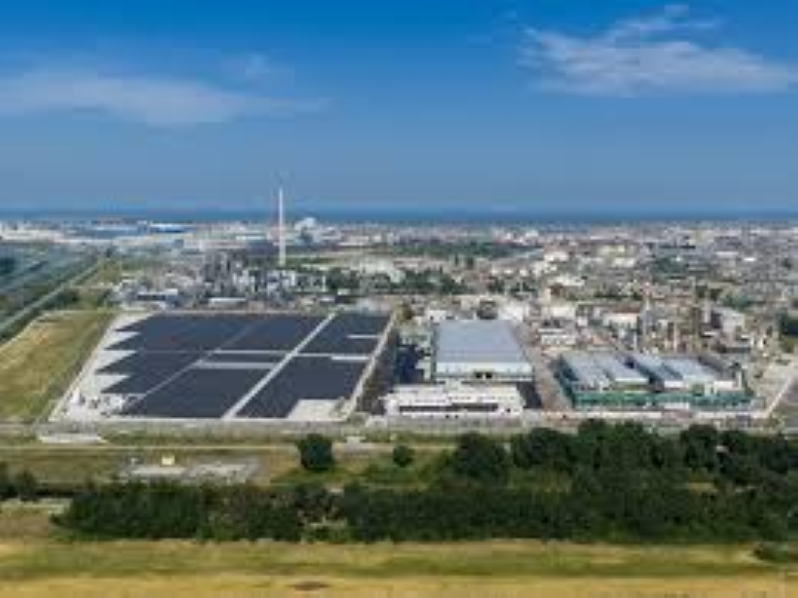
Italian energy major Eni, in partnership with multi-utility company Hera, has officially launched a new environmental hub in the Ca’ Ponticelli area of Ravenna, Italy. The initiative, driven by their respective subsidiaries Eni Rewind and Herambiente, represents a total investment of €100 million. It also stands as a major model for industrial regeneration and ecological transition.
Ravenna Environmental Hub, Italy
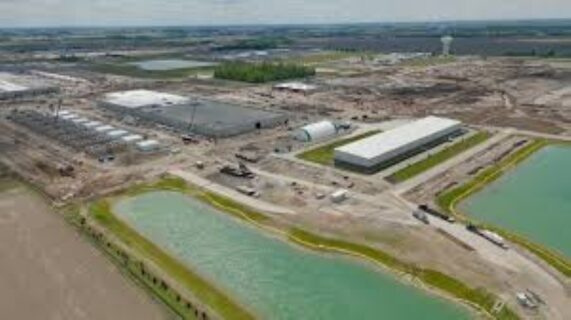
The hub covers a 26-hectare decommissioned site within the Ravenna industrial district. The site has been successfully restored and repurposed following extensive environmental remediation activities carried out by Eni Rewind, the landowner. The new facility is designed to help address Italy’s structural shortage of specialized industrial waste management plants, with a focus on maximizing material recovery and reducing reliance on landfills.
At the core of the hub is the HEA platform, a multifunctional facility developed by a joint venture between Herambiente Servizi Industriali (HASI) and Eni Rewind. Representing one of the most significant integrated industrial waste projects in Italy, the HEA platform replaces an older, historic HASI storage facility in Ravenna. The new Ravenna environmental hub site introduces advanced pretreatment technologies and expanded capacity. It also features enhanced operational flexibility to handle up to 60,000 tons of both solid and liquid special waste per year from industrial and remediation activities.
What else is at Eni’s Ravenna Environmental Hub in Italy
The platform features a multi-line configuration capable of performing a wide range of operations. It includes storage, repackaging, shredding, and mixing. Its primary goal is boosting efficiency and expanding circular economy supply chains. Because Ravenna is one of Italy’s largest hubs for special waste production, the local facility will heavily reduce the need to transfer industrial waste to outside regions or foreign countries.
Additionally, the Ravenna environmental hub hosts a dedicated biorecovery plant operated by Eni Rewind. This facility is capable of treating up to 80,000 tons per year of hydrocarbon-contaminated soils through a biological aerobic biodegradation process. Once treated, the soil can be safely reused as backfill in remediation projects, significantly minimizing the extraction and use of virgin materials. The hub also incorporates an on-site chemical laboratory managed by Labanalysis Environmental Services. The on-site lab is used to monitor and support operations.
Renewable Energy and Ecological Transition
Another defining feature of Eni’s Ravenna environmental hub is its integration of utility-scale renewable energy generation. The hub also has storage technology. This effectively transforms the site from a standard industrial waste facility into a high-tech center for the ecological transition.
Spanning 11 hectares of the site, a 6 megawatt-peak (MWp) solar farm built by Eni’s renewable subsidiary, Plenitude, has been operational since 2024. The facility utilizes more than 10,000 bifacial monocrystalline silicon panels mounted on mobile tracking structures. The tracking devices follow the sun throughout the day. To respect the strict environmental guidelines of the repurposed location, these heavy arrays are also secured by an innovative ballast design. They are anchored directly on top of the impermeable safety capping layer sealing the former petrochemical ground.
Additionally, to solve the inherent issue of solar intermittency and optimize local grid distribution, the hub has incorporated a dedicated battery energy storage system (BESS). In April 2026, the development teams completed the installation of an experimental, new-generation vanadium flow battery system connected directly to the solar grid.
Unlike conventional batteries, flow batteries utilize liquid chemical components stored in external tanks to scale capacity independently of power output. This creates a highly adaptable and durable storage solution. Italy is also undertaking other legacy battery storage initiatives such as the 499MWh GreenVolt BESS project that won the country’s historic MACSE capacity auction.
The combination of tracking solar arrays and advanced chemical storage ensures that when the broader circular economy platforms begin full combined operations in July 2026, the entire Ravenna environmental hub will serve as a live laboratory for industrial decarbonization in Italy.
Ravenna Environmental Hub (Polo Ambientale di Ravenna) Project Fact Sheet
Location: Ca’ Ponticelli area, Ravenna industrial district, Emilia-Romagna, Italy
Total Financial Investment: €100 million
Site Footprint: 26 hectares
Core Objective: Industrial environmental remediation, localized special waste management and utility-scale renewable energy generation on a single repurposed site.
Primary Facilities Installed
HEA Platform: Multi-line pre-treatment and storage plant for solid/liquid industrial waste. Capacity: 60,000 tons/year.
Biorecovery Plant: Aerobic biodegradation facility for hydrocarbon-contaminated soils. Capacity: 80,000 tons/year.
Total Processing Capacity: Up to 140,000 tons per year.
Plenitude Solar Farm: 6 MWp tracking solar array spanning 11 hectares with over 10,000 bifacial panels.
Advanced Storage Facility: Experimental next-generation vanadium flow battery system completed in April 2026.
Analytical Facility: On-site certified chemical laboratory run by Labanalysis Environmental Services.
Operational Status: Solar facility active since 2024. Waste platforms and integrated battery storage systems are scheduled to begin full combined operations in July 2026.



Leave a Reply