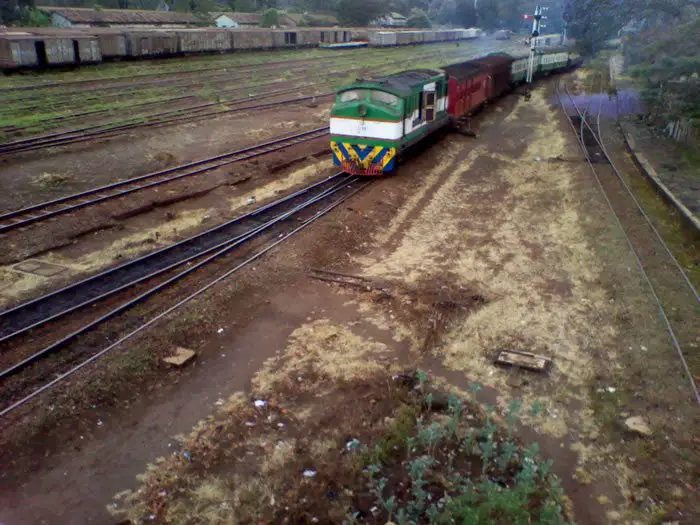
The East Africa Railway construction project continues to gain renewed momentum as governments across the region accelerate efforts to reduce logistics costs and improve trade efficiency. The infrastructure programme focuses on expanding and rehabilitating standard gauge rail corridors linking key ports, industrial hubs, and landlocked economies. Additionally, the project aligns with wider East African Community (EAC) integration goals aimed at lowering the cost of doing business across borders.
Moreover, recent developments in 2026 show renewed construction activity on several stalled or delayed railway lines across Kenya, Uganda, and Tanzania. Consequently, regional planners are prioritizing rail as a backbone for freight transport transformation. Furthermore, updated railway master plans emphasize seamless connectivity between Indian Ocean ports and inland production zones.
In addition, the East African Railway Master Plan supports both new standard gauge lines and rehabilitation of legacy rail infrastructure. Therefore, governments aim to shift freight movement from road to rail to reduce congestion, fuel costs, and transit delays.
East Africa Railway Construction Project Expands Corridor Connectivity and Freight Capacity
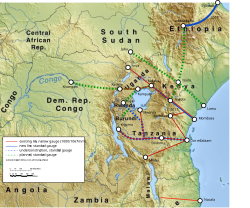
The East Africa Railway Construction Project is expanding across multiple strategic corridors, including extensions in Kenya, Uganda, and Tanzania. Additionally, Kenya has moved forward with preparations for the Naivasha–Kisumu–Malaba SGR extension, a key link designed to improve access to Uganda and the wider Great Lakes region.
Furthermore, Uganda is advancing its own standard gauge railway plans, including financing discussions and preparatory works for lines connecting Malaba to Kampala. These projects aim to integrate with Kenya’s network to ensure uninterrupted freight movement across borders.
Moreover, construction timelines emerging in early 2026 indicate phased rollout strategies across the region. Consequently, governments are prioritizing sections with the highest trade impact first. Additionally, survey works, land acquisition, and feasibility updates are being fast-tracked to support execution.
In addition, the Central Corridor SGR remains a major parallel development linking Tanzania, Rwanda, Burundi, and eastern Democratic Republic of Congo. The corridor is designed to significantly reduce logistics costs for landlocked economies while improving export competitiveness.
East Africa Railway Construction Project and Cost Reduction Strategy for Regional Trade
The East Africa Railway Construction project is increasingly positioned as a cost-reduction strategy for regional trade and logistics systems. Additionally, transport authorities argue that rail freight can significantly reduce cargo movement expenses compared to road transport.
Moreover, freight inefficiencies across East Africa have long contributed to high consumer prices and reduced export competitiveness. Therefore, the railway programme directly targets bottlenecks in port clearance, inland transport delays, and cross-border logistics fragmentation.
Furthermore, Kenya’s transport policy framework highlights rail modernization as essential to improving freight share and reducing operational costs in the logistics sector. Additionally, ongoing investments in stations, intermodal hubs, and freight terminals support this transformation.
Consequently, East Africa is moving toward an integrated rail network designed to link major seaports such as Mombasa and Dar es Salaam with inland economic zones. Furthermore, trade volumes are expected to rise as transit times reduce and supply chain predictability improves.
2026 Status Update on East Africa Railway Construction Project
As of 2026, the East Africa Railway Construction Project is in a mixed execution phase, with some sections under active construction and others undergoing financing finalization or redesign. Additionally, Kenya and Uganda are accelerating coordination to ensure interoperability between their respective SGR systems.
Moreover, new financing packages and government budget allocations are unlocking previously stalled segments. Consequently, several corridor sections are expected to enter construction between 2026 and 2028.
Furthermore, regional integration discussions are focusing on standardizing rail operations, improving customs coordination, and enhancing freight scheduling systems. Therefore, the long-term objective remains a seamless “port-to-inland” rail transport network across East Africa.
This development directly connects to the $1.7bn Awash–Kombolcha–Hara Gebeya Rail: Ethiopia Relaunches 392-km Electrified Heavy Rail Project. These East Africa railway projects are expected to reduce the cost of doing business in the region, reinforcing the strategic importance of integrated rail infrastructure in boosting regional competitiveness and trade efficiency.
Project Fact Sheet
Project name: East Africa Railway Construction Project (Standard Gauge Railway Network Expansion and Rehabilitation)
Region: East Africa (Kenya, Uganda, Tanzania, Rwanda, Burundi, DRC links)
Sector: Transport and logistics infrastructure construction
Primary objective: Reduce freight costs and improve regional trade connectivity
Core systems: Standard Gauge Railway (SGR) network and rehabilitation of existing lines
Key corridors: Northern Corridor, Central Corridor, Great Lakes extensions
Status (2026): Mixed-phase execution (active construction, financing, and planning stages)
Design focus: Freight efficiency, passenger mobility, and port-to-inland integration
Expected impact:
- Lower logistics costs
- Improved export competitiveness
- Reduced road congestion
Key institutions involved: EAC member states, national rail corporations, development finance institutions
Project Team
Regional coordination: East African Community
Northern Corridor SGR development: Kenya Railways Corporation
National rail rehabilitation and SGR integration projects: Uganda Railways Corporation
Central Corridor rail development and upgrades: Tanzania Railways Corporation
Cross-border rail planning and logistics integration: Rwanda Transport Development Agency
Corridor alignment and infrastructure coordination: Burundi Ministry of Transport
Regional extension planning: Democratic Republic of Congo transport authorities
Financing and technical advisory support: African Development Bank (AfDB)
Engineering and construction delivery support (selected corridors): China Civil Engineering Construction Corporation (CCECC)
Railway construction and systems integration in selected projects: Turkish EPC contractors (various)
Feasibility studies, master planning, and technical advisory support: International consultants (including CPCS Transcom Limited)


Leave a Reply