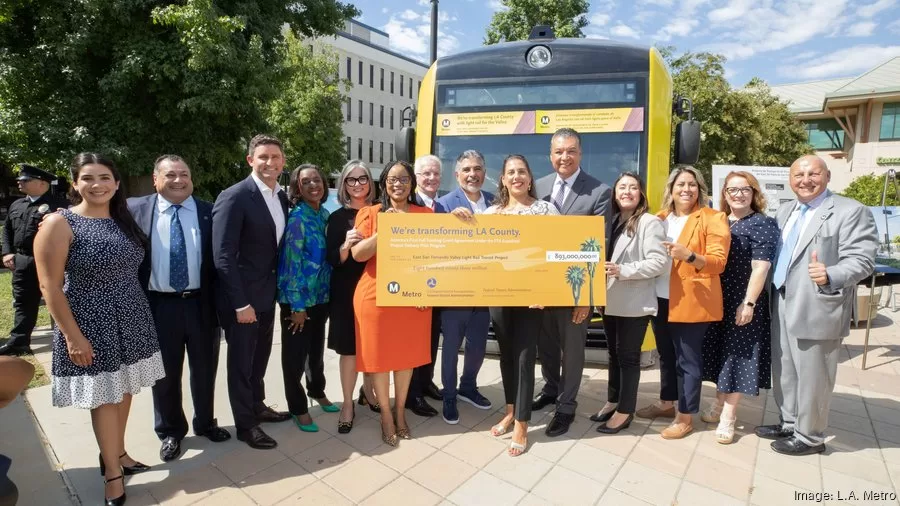
The East San Fernando Valley Light Rail Transit (ESFV LRT) Project is progressing through early construction, with Metro focusing on extensive utility relocations to prepare the corridor for major rail infrastructure. Active work includes underground adjustments to power, gas, and drainage systems, scheduled to continue through 2028. Meanwhile, Van Nuys Boulevard is experiencing continuous directional street closures between Arminta Street and Sherman Way from January through June 2026 to accommodate the utility and preparatory work. Heavy civil construction, including station builds and track installation, is slated to begin in late spring 2026, while Metro plans to award the contract for design and manufacture of the Light Rail Vehicles (LRVs) in summer 2026.
The project, with an approved budget of $3.573 billion, is supported by an $893 million federal grant executed in late 2024. Phase 1 encompasses a 6.7-mile line with 11 stations running along the Van Nuys Boulevard median from the G Line (Orange) Van Nuys Station to San Fernando Road, with revenue service targeted for October 29, 2031. To support the local community during construction, Metro operates a Business Interruption Fund (BIF) for impacted small businesses and a Business Solution Center, which offers marketing and technical support. Quarterly community meetings also provide regular project updates, with the next sessions scheduled for February 10 and 12, 2026.
Phase 1
While Phase 1 is under construction, Metro has completed the environmental study for the northern segment. In late 2025, officials recommended a $200 million alternative to the originally planned 2.5-mile light rail extension. Instead of extending the tracks to Sylmar, the plan now focuses on building a new Pacoima Metrolink infill station at Van Nuys Boulevard and San Fernando Road, creating a direct transfer point between the new light rail and the Metrolink Antelope Valley Line
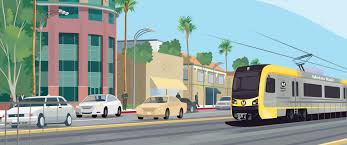
Built along Van Nuys Boulevard, the light rail line will connect transportation across the San Fernando Valley, including Metrolink, Amtrak, the Metro G and B lines, and other planned Metro transit projects now in the works.
The light rail line will be the first local-stop, commuter-rail service on Van Nuys Boulevard in more than 70 years.
Scope and timeline of the East San Fernando Valley Light Rail Transit Project
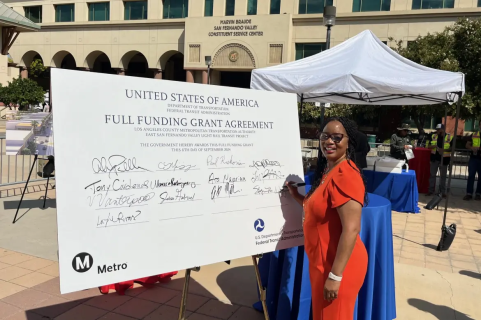
The Federal Transit Administration will provide the grant through a Full Funding Grant Agreement under its Expedited Project Delivery Pilot Program.
At the time, then Acting Federal Transit Administration Administrator Veronica Vanterpool envisioned ESFV rail riders “zipping through this corridor… seeing traffic congestion around you.” She enumerated the project’s broad suite of benefits – from improving mobility for transit riders, expanding access, increased economic activity, and improving air quality including reducing greenhouse gas emissions.
Job Creation
Through construction and operation, the project is expected to add more than 18,000 direct and indirect jobs to the Valley. Metro also plans to implement a local hire program to channel jobs to the community.
As an added consideration for the local community’s diverse demographic, Metro added a Cultural Competency requirement to the project contract, a comprehensive plan outlining workforce training and business opportunities to support the communities that reside along this corridor.
Approximately 19% of households in the eastern portion of the San Fernando Valley do not own a car and depend on public transportation, whereas 8.8% of households rely on transit in L.A. County as a whole.
Read also: $16 Billion Gateway Tunnel Project Under Hudson River Gets Final Green Light
At the time of the federal grant award, Congressman Tony Cárdenas, who spent years collaborating with Senator Alex Padilla and others to secure funding for the East San Fernando Valley Light Rail Project, hailed the nearly $900 million investment as “transformational” for the district.
“Speaking at the time of the grant’s finalization, Congressman Tony Cárdenas emphasized that the project represented a commitment spanning decades. ‘This is about much more than just transportation,’ Cárdenas stated. ‘It is a promise to our community that we will uplift our families by connecting them to better jobs, schools, and essential services. By providing these opportunities, we are ensuring that every resident has a fair chance at a brighter future.’”
East San Fernando Valley Light Rail Transit Project’s Funding
ESFV rail funding comes from three main sources: Metro Measure M sales tax, California TIRCP (Transit and Intercity Rail Capital Program) grant, and today’s federal FFGA.
In late 2022, Metro kicked off an early $9 million phase of pre-construction (mainly utility relocation). In early 2023, the state awarded $600 million for the project. Design and engineering work is ongoing via a Progressive Design Build (PDB) contract. Full construction is expected to get underway this calendar year, and is anticipated to finish in 2031.
The East San Fernando Valley Light Rail Transit Project is in early construction, with Metro focusing on utility relocations along Van Nuys Boulevard and preparing for station builds and track installation later in 2026. Similar to Phase 2B2 of the Foothill Gold Line, which spans 2.3 miles from Pomona to Claremont and is now under a $60 million Parsons contract for design and engineering, the ESFV LRT expands light rail access across Los Angeles County, improving connectivity, easing congestion, and providing reliable transit
Read also: Brightline West Las Vegas to Southern California to begin construction on Monday
East San Fernando Valley Light Rail Transit Project Factsheet
Location: Van Nuys Boulevard, San Fernando Valley, Los Angeles, CA
Lead Agency: Los Angeles County Metropolitan Transportation Authority (Metro)
Total Budget: $3.6 billion
Grant Funding: $893 million from U.S. Department of Transportation (DOT)
Size:
- Length: 6.7 miles
- Number of New Stations: 11
Overall Completion: 2031
Construction Start: 2024
Job Creation: 18,000+ direct and indirect jobs
Leave a Reply