
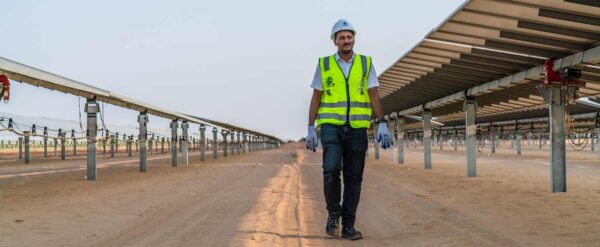
Egypt’s Benban Solar Park continues to operate as one of the largest solar installations globally. This reflects the country’s long-term commitment to expanding renewable energy capacity. The project, located in Upper Egypt near Aswan, has maintained stable operations since commissioning. Moreover, it continues to supply significant clean electricity to the national grid.
The solar park forms part of Egypt’s broader strategy to diversify its energy mix and reduce dependence on fossil fuels. With a total installed capacity of approximately 1.65 GW, the facility aggregates multiple solar plants developed by international and regional investors under a unified framework. Furthermore, its success demonstrates how coordinated policy support and private sector participation can deliver large-scale infrastructure efficiently.
More recent developments, including Egypt’s 5.6GW renewable energy PPAs covering wind, solar, and battery storage projects, build directly on the model established by Benban. Consequently, these newer agreements expand capacity while integrating storage solutions to address intermittency and enhance grid reliability, marking the next phase in the country’s clean energy transition.
Project Development and Structure
The Benban Solar Park was developed through a series of individual photovoltaic plants clustered within a single site. The government, through the New and Renewable Energy Authority, allocated land and facilitated regulatory approvals. The Egyptian Electricity Transmission Company acted as the sole offtaker under long-term power purchase agreements.
Developers adopted a feed-in tariff (FiT) model, which attracted a wide range of international investors. Multilateral institutions also supported the project through financing and risk mitigation instruments. Thus, enabling timely execution despite its scale and complexity.
Investment Impact and Industry Significance
The project significantly increased Egypt’s renewable generation capacity. Moreover, it established a replicable framework for future developments. It also contributed to job creation during construction and supported local supply chains.
Furthermore, Benban positioned Egypt as a leading renewable energy hub in Africa. It demonstrated that large-scale solar projects could be delivered competitively in emerging markets with the right regulatory environment and investor confidence.
The experience gained from Benban has informed subsequent initiatives, including hybrid renewable projects that combine solar, wind, and battery storage technologies. These newer models improve grid flexibility and align with evolving energy demands.
Operational Performance and Outlook
Since becoming operational, the solar park has delivered consistent performance, benefiting from high solar irradiance levels in Upper Egypt. Furthermore, grid integration has remained stable, supported by ongoing transmission upgrades.
Looking ahead, Egypt continues to build on the success of Benban by scaling up renewable investments and introducing more advanced energy solutions. The integration of storage systems and diversified generation sources reflects a shift toward a more resilient and balanced energy system.
Also read:World Bank approves US $486m to boost electricity transmission in Nigeria
Project Fact Sheet: Benban Solar Park
Location: Benban, Aswan, Egypt
Total Capacity: ~1.65 GW
Project Type: Utility-scale solar PV park (cluster model)
Number of Plants: 30+ individual solar projects
Development Model: Feed-in Tariff (FiT)
Offtaker: Egyptian Electricity Transmission Company
Regulatory Authority: New and Renewable Energy Authority
Financing: Multilateral development banks and private investors
Status: Operational
Project Team: Benban Solar Park
Owners / Government Authorities
- New and Renewable Energy Authority – Land allocation, regulatory oversight, and project facilitation
- Ministry of Electricity and Renewable Energy – Policy direction and sector supervision
Offtaker
- Egyptian Electricity Transmission Company – Sole buyer under long-term power purchase agreements (PPAs)
- Developers / Sponsors (Independent Power Producers – IPPs)
- Scatec – Lead developer and equity investor across multiple solar plants
- ACWA Power – Developer and long-term project sponsor
- EDF Renewables – Partner in solar plant development
- Enel Green Power – Developer and operator of several PV plants
Financing Institutions / Sponsors
- International Finance Corporation (IFC) – Lead arranger and lender
- European Bank for Reconstruction and Development – Co-financier
- Asian Infrastructure Investment Bank – Participating lender
- Additional international and regional commercial banks
EPC Contractors / Subcontractors
- Sterling and Wilson Renewable Energy – EPC contractor across multiple solar plants
- TBEA Xinjiang Sunoasis – Engineering, procurement, and construction services
- Elsewedy Electric – Local EPC and electrical infrastructure works
- Multiple local subcontractors supporting civil, mechanical, and installation works
Partners / Supporting Stakeholders
- Egyptian Cabinet – Policy backing and investment facilitation
- Multilateral development partners – Risk mitigation, advisory, and financial structuring support


Leave a Reply