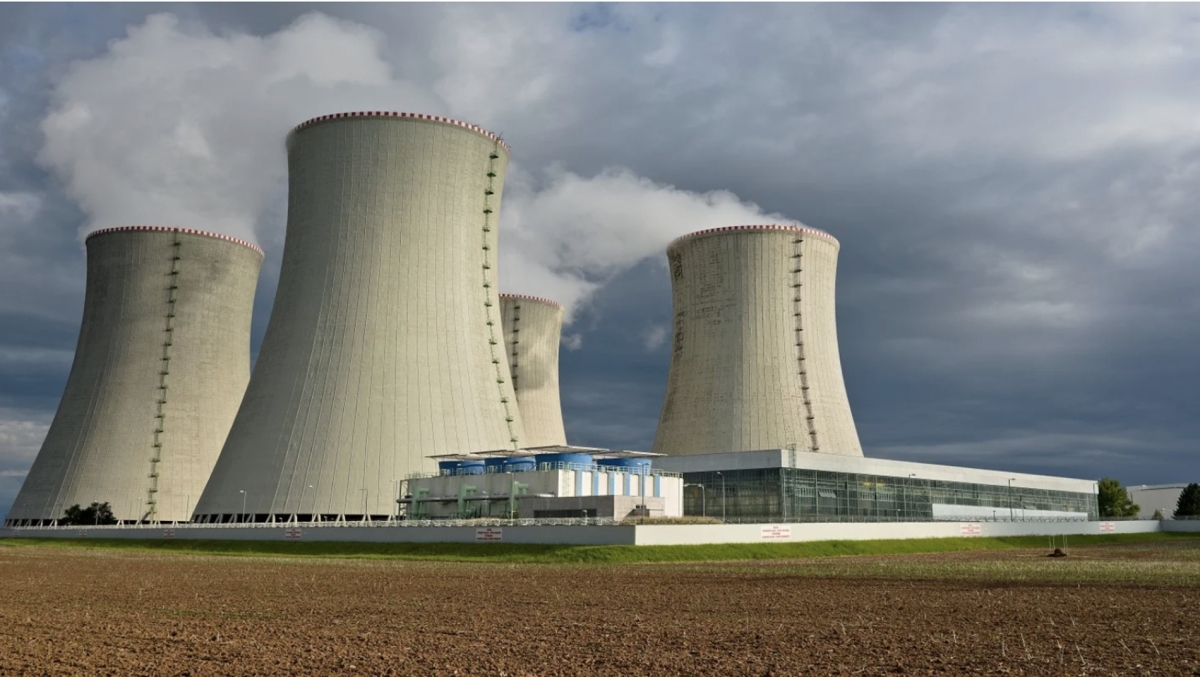
Egypt and Russia have reaffirmed their commitment to keeping one of the world’s most consequential nuclear construction projects, the El Dabaa Nuclear Power Plant, firmly on schedule. During a meeting in Cairo on 10 April 2026, Egypt’s Minister of Electricity and Renewable Energy, Mahmoud Esmat, emphasized the importance of enhanced coordination between Egyptian and Russian institutions to ensure timely delivery of the El Dabaa Nuclear Power Plant, located on Egypt’s northern Mediterranean coast. Esmat held talks with a Russian parliamentary delegation led by Nikolai Shulginov, chairman of the State Duma Committee on Energy, with discussions covering implementation progress, phase timelines, and preparations for transitioning between construction stages. The plant is being developed under a 2015 agreement between Egypt and Russia, with final contracts signed in 2017, at an estimated cost of USD 25 billion, largely financed through a Russian state loan on concessional terms. Once completed, the facility will consist of four nuclear reactors with a combined capacity of 4,800 megawatts, with the first reactor scheduled to begin operations in 2028 and the remaining units planned to follow by 2030. The latest diplomatic engagement reflects both sides’ awareness that delivery confidence, not just technical progress, is now the central challenge on a project of this scale and geopolitical sensitivity.
Africa’s Nuclear Moment and What El Dabaa Means for the Continent
El Dabaa’s significance extends well beyond Egypt’s borders, and it is worth situating the project within the broader African energy landscape to understand what is at stake. El Dabaa will be Egypt’s first nuclear power plant and the first on the African continent since South Africa’s Koeberg was built nearly 40 years ago. That fact alone places El Dabaa in a category of infrastructure that Africa has not seen in a generation. Across the continent, several nations, including Kenya, Nigeria, Ghana, and Rwanda, have at various stages expressed interest in developing nuclear energy, but none have advanced to active construction. Egypt’s ability to bring El Dabaa to operational status on time will either validate the nuclear pathway for African nations or, if delayed, reinforce scepticism about whether such projects can be delivered effectively in the region. The complication worth noting openly is that Rosatom is simultaneously managing nuclear projects in Turkey, Bangladesh, Belarus, Hungary, and elsewhere, and the competitive pressure on equipment manufacturing and skilled personnel is real. Over 30,000 people are currently working on the El Dabaa site, a scale of mobilisation that is impressive but that also reflects the complexity of managing four units being built nearly concurrently. Egypt is betting that the VVER-1200 reactor, already proven in Russia and Belarus, will deliver reliability at El Dabaa that eluded first-of-a-kind nuclear builds elsewhere in the world.
This massive investment in baseload nuclear capacity is being balanced by a simultaneous push into large-scale renewables, most recently seen with the commencement of construction this month on Infinity Power’s 200 MW wind project in Ras Ghareb. Moving into full-scale implementation in April 2026, the $153 million Gulf of Suez facility—developed in partnership with Masdar and POWERCHINA—is a flagship initiative under Egypt’s NWFE program. Expected to be operational by late 2027, the wind farm will provide clean electricity to over 300,000 homes, illustrating Egypt’s strategy of utilizing both nuclear stability and rapid renewable deployment to cement its role as a regional energy hub.
Project Fact Sheet
Project name: El Dabaa Nuclear Power Plant (El Dabaa NPP)
Location: El Dabaa, Matrouh Governorate, Mediterranean coast of Egypt, approximately 320 km northwest of Cairo
Owner/Client: Nuclear Power Plants Authority (NPPA) of Egypt
Total project cost: USD 25 billion (approximately EGP 1.3 trillion)
Financing: Approximately 85% financed through a Russian state loan on concessional terms
Reactor technology: Four VVER-1200 reactors, Generation III+ pressurised water reactor (AES-2006 design)
Installed capacity: 4,800 MW total (1,200 MW per unit)
Projected electricity contribution: Up to 10% of Egypt’s total electricity generation; up to 50% of Egypt’s power generation capacity
Unit 1 first concrete: July 2022
Unit 2 first concrete: November 2022
Unit 3 first concrete: May 2023
Unit 4 first concrete: January 2024
Key 2025 milestone: Reactor pressure vessel for Unit 1 installed November 2025, in a ceremony attended virtually by Presidents Putin and el-Sisi
Key 2025 milestone: Reactor pressure vessel welding completed for Unit 2 upper half
First unit target operations date: 2028
Full operational capacity (all four units): 2030
Design lifespan: 60 years (new materials technologies targeting 100-year service life)
Site area: 250 square kilometres west of Alexandria
Jobs created: Up to 50,000 during construction and operations phases
Safety credentials: Designed to withstand a 400-tonne aircraft impact and earthquakes up to intensity 9 on the Richter scale; fully IAEA post-Fukushima compliant
Project Team
Client/Owner
- Nuclear Power Plants Authority (NPPA), Egypt — Project owner; submitted construction permit applications for all four units
Regulatory Authority
- Egyptian Nuclear and Radiological Regulatory Authority (ENRRA) — Issued construction permit for Unit 1 (June 2022) and Unit 2 (October 2022)
General Designer and General Contractor
- Rosatom Engineering Division (ASE JSC / Atomstroyexport) — General designer and EPC contractor; responsible for engineering, procurement, and construction of all four units; will also supply nuclear fuel for the plant’s entire operational life and assist in operations and maintenance for the first 10 years
Subcontractors
- Korea Hydro and Nuclear Power (KHNP) — Contracted in 2022 to construct 82 ancillary buildings and related structures (contract value approximately USD 2.25 billion)
- Doosan Enerbility (South Korea) — Subcontracted to build the turbine buildings and related structures (contract value approximately USD 1.2 billion)
- Arab Contractors Company (Egypt) — Signed cooperation agreement with Rosatom for involvement in the project
Turbine and Generator Supply
- Arabelle (GE Steam Power) — Supplying half-speed steam turbines for each unit
- Gigatop — Supplying 4-pole hydrogen and water-cooled generators
Legal Adviser
- Gowling WLG — Acting as legal adviser in the negotiation of all project contracts since November 2015, covering EPC, nuclear fuel supply, spent fuel, and operations support
Consultancy
- Worley (Australia) — Provided professional services consultancy
- GCR (Bulgaria) — Assisted Worley in reviewing licensing and technical documentation, including preliminary and probabilistic safety analysis
Key Government Representatives
- Mahmoud Esmat — Minister of Electricity and Renewable Energy, Egypt
- Nikolai Shulginov — Chairman, State Duma Committee on Energy, Russia
- Alexey Likhachev — Director General, Rosatom
- Moustafa Madbouly — Prime Minister of Egypt
Leave a Reply