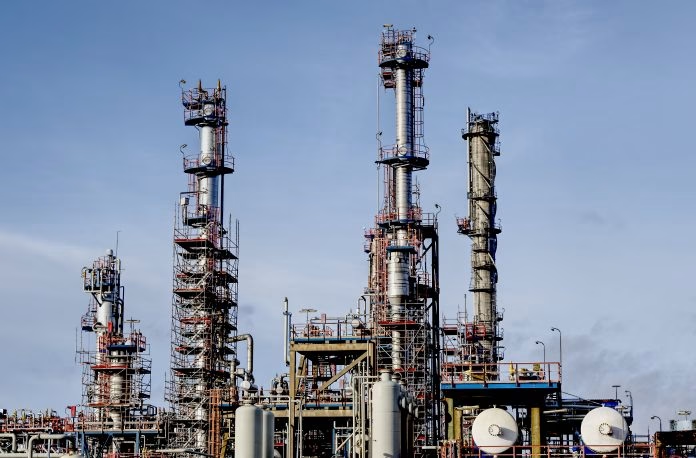
The Ondo Refinery is a $50 billion mega-project spearheaded by Backbone Infrastructure Nigeria Limited (BINL) in a joint venture with the Ondo State Government. This refinery is is set to become Africa’s second largest oil refinery with a projected capacity of 500,000 barrels per day. Located within the Sunshine Free Trade Zone in the coastal Ilaje region, the refinery is strategically positioned to leverage Nigeria’s massive gas reserves for industrialization, including the production of methanol and blue ammonia. While the Trans-Saharan Gas Pipeline (TSGP) originates further south in the Niger critical domestic “anchor” in Nigeria’s broader energy master plan. As the TSGP moves gas northward toward Europe, coastal projects like the Ondo Refinery ensure that a significant portion of Nigeria’s natural gas is captured and processed locally to provide feedstock for the 2026 industrial expansion, thereby strengthening the national energy security that underpins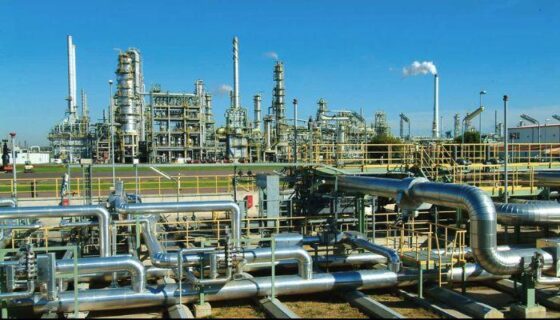 such massive export-oriented pipelines.
December 8, 2025
The implementation of $50 billion Ondo Refinery in Nigeria is taking shape as energy consortium secures the needed funds for the project. The aim of the new structure is was steer the development of the refinery. The project is a proposed 500,000-barrel-per-day refinery planned for Ondo State. The announcement, made this week in Abuja, confirms who is backing the refinery.
Furthermore, it explains the commitments that have been secured, where the facility will be built and when current milestones were achieved. The new company, Sunshine Joint Venture Infrastructure Limited, has been incorporated to take charge of the refinery’s execution. The new move brings together two companies whose contributions have been valuable. First one is Backbone Infrastructure Nigeria Limited which initiated the project. On the other hand, there is Canadian-headquartered NEFEX Holding Limited. NEFEX’s operational experience across the Middle East, Europe, and North America is also now being folded into the effort.
Project Factsheet
Significance:
- 500,000 bd refinery, 50bn–to be the second-largest in Africa following Dangote.
- Significant progress made when partners establish new joint venture.
- Moreover, expected to reduce the fuel imports in Nigeria by a significant margin and transform West African supply chains.
Key Partners:
- Sunshine Joint venture infrastructure Ltd was set up to spearhead the implementation.
- Backbone Infrastructure Nigeria Ltd – initiator of the project.
- NEFEX Holding Ltd (Canada)
Project Highlights:
- Proposed location: Ilaje Deltas, Ondo State.
- Will manufacture 500,000 barrels in a day- one of the biggest industrial projects in the continent of Africa with a private sector.
- Furthermore, intention is to make Nigeria self-dependent on petrol, diesel and aviation fuel.
Current Status:
- Agreement on JV finalized in Abuja.
- Land surveying, mapping and environmental studies being done.
- Community involvement is continuing; issues are displacement, mangrove loss and fishing effects.
Regional Context:
- Comes when African countries hasten refining capacity additions (Angola, Uganda, Senegal).
- In 2024, Nigeria imported fuel at the cost of $14bn
- The project will significantly help cut on the cost.
Significance of Ondo Refinery in Nigeria
The significance of Ondo refinery as an oil project in Nigeria is expected to be of an unprecedented scale. The refinery’s scale of implementation places it among Africa’s largest private-sector industrial ventures. It may also well be one of Africa’s major refinery oil projects, a monumental feat. Once operational, it would be second only to the $20 billion Dangote Refinery in Lagos, which began phased operations in 2023. The planned 500,000-barrel processing capacity rivals national output levels seen in major African economies. For instance, Ghana’s sole refinery has a capacity of just 45,000 barrels per day, while South Africa’s largest units range between 100,000 and 180,000 barrels. The enormous output of the plant is expected to reshape supply patterns across West Africa.
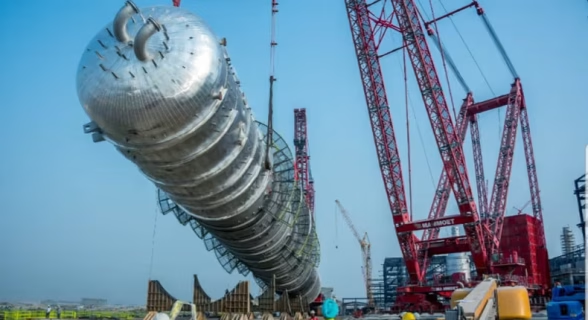
It also comes at a time when refined fuel imports remain stubbornly high despite the region producing more than 4 million barrels of crude daily. For Nigeria, the implications reach far beyond fuel supply. Years of underinvestment and repeated shutdowns at the country’s state-owned refineries have left Africa’s biggest oil producer in disarray. The nation has also had to rely on imported petrol, diesel and aviation fuel despite their massive reservoirs and output. In 2024 alone, Nigeria spent over $14 billion on refined product imports, draining foreign exchange reserves and widening fiscal pressure on the naira. A refinery with half-a-million barrels per day of throughput would cut import needs sharply and stabilize domestic fuel markets. It also srengthens the country’s position in regional trade.
Current Scope of Implementation on the Mega Refinery Project in Ondo State
In terms of scope of implementation on the Ondo refinery in Nigeria, communities around the project site are already adjusting to the early phases of development. Survey teams have been active across Ilaje and neighboring coastal districts. Furthermore, land mapping and environmental assessments are underway. Despite this, residents have raised concerns about various factors. These include potential displacement, mangrove loss and pressure on local fishing grounds, which provide livelihoods for thousands of households. Project partners say these issues will be addressed through compensation mechanisms and environmental safeguards.
Across Africa, the refinery’s progress is being watched closely by countries evaluating their own refining strategies. For instance, Angola, which operates the 65,000-barrel-per-day Luanda refinery, is building two additional plants. The aim of this is to reduce fuel imports. On the other hand, Uganda has revived discussions on a smaller refinery to complement its Lake Albert oil development. Senegal is also considering upgrades to its SAR refinery to meet rising local demand. These implementations highlight a significant major shift in the African continent as nations aim to tap to refineries as an economic alternative.
Leave a Reply