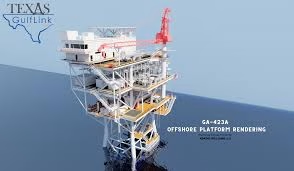
In February 2026, the U.S. Maritime Administration (MARAD) issued a final license for Sentinel Midstream’s Texas GulfLink, a deepwater port off Freeport, Texas, designed to export up to 365 million barrels of crude oil annually. The facility sets a new environmental benchmark for U.S. Very Large Crude Carrier (VLCC) operations by utilizing advanced, 96% efficient vapor capture technology to significantly reduce emissions. By integrating Best Available Control Technology (BACT) and eliminating carbon-intensive “reverse lightering,” the project redefines industry standards for offshore infrastructure. This development enhances the competitiveness of American energy while advancing environmental stewardship in global energy markets.
In September 2025, the U.S. Environmental Protection Agency (EPA) issued a Clean Air Act (CAA) permit for the proposed Texas GulfLink (TGL) deepwater port, a crude oil export terminal to be built about 30 miles southeast of Freeport, Texas.
The permit provides for the first U.S. use of vapor capture and control technology on an offshore support ship. The system will reduce volatile organic compound emissions during Very Large Crude Carriers (VLCCs) loading at the port. The same methods have been in operation on shuttle tankers in the North Sea for over 20 years with more than 96% efficiency.
This achievement is an innovative application of vapor control technology that sets a new benchmark for environmental performance,” said Jeff Ballard, Sentinel Midstream CEO and project developer. He credited the EPA with its collaboration in advancing what the company calls Best Available Control Technology.
When commissioned, the offshore terminal will be able to load up to 85,000 barrels per hour, or up to 365 million barrels each year, directly into VLCCs berthed on a single-point mooring buoy.
Permit Details
The permit, a combined synthetic minor New Source Review (NSR) preconstruction and Title V operating permit, sets down monitoring, recordkeeping, and reporting requirements. These are semiannual and annual certifications of federal air quality standard compliance. The five-year valid permit must be renewed at least six months before expiration for continued operations.
On May 21, 2025, the draft permit was released by EPA and public comments were accepted until June 27. The process ended with the signing on September 11, 2025, the agency publicly announcing on September 15 that it had approved.
Project Background and Timeline
Sentinel Midstream first unveiled Texas GulfLink proposals in February 2019 and filed its deepwater port license application late in 2019 to the U.S. Maritime Administration (MARAD) and U.S. Coast Guard. The project has achieved significant milestones so far, including:
Nov. 2020: Release of the Draft Environmental Impact Statement.
Aug. 2024: Release of the Final Environmental Impact Statement.
Feb. 14, 2025: MARAD releases its Record of Decision, allowing the project to proceed.
Sept. 11, 2025: EPA makes the Clean Air Act permit.
Feb. 3, 2026: Final Deepwater Port License issued by MARAD
Economic Impact
The port construction is projected to create almost $1.1 billion in gross product and thousands of jobs in the U.S. economy with direct and indirect effects, based on a 2020 study conducted by The Perryman Group. The U.S. is betting big on energy infrastructure, highlighted by Woodside’s $17.5 billion Louisiana LNG project now moving forward in Calcasieu Parish, among other ongoing and planned projects.
The Texas GulfLink Deepwater Port is part of a growing portfolio of offshore export facilities in the Gulf of Mexico, which also includes the ST LNG offshore terminal off Matagorda, Texas, reflecting continued investment in deepwater energy infrastructure.
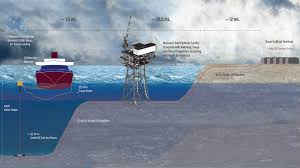
Texas GulfLink Deepwater Port: Project Factsheet
Project Overview
Developer: Sentinel Midstream
Location: 30 miles southeast of Freeport, Texas
Type: Crude oil export facility / deepwater port
Capacity: 85,000 barrels per hour (365 million barrels annually)
Recent Milestone
Feb. 3, 2026: Final Deepwater Port License issued
September 11, 2025: EPA issued Clean Air Act (CAA) permit, publicly announced September 15, 2025
Key Innovation
First U.S. deployment of vapor capture and control technology on offshore support vessels:
Reduces volatile organic compound (VOC) emissions during VLCC loading
Technology proven in North Sea operations for 20+ years
Achieves >96% efficiency
Recognized as Best Available Control Technology (BACT)
Technical Specifications
Loading Method: Single-point mooring buoy system for Very Large Crude Carriers (VLCCs)
Permit Type: Combined synthetic minor New Source Review (NSR) and Title V operating permit
Validity: 5 years (renewal required 6 months before expiration)
Economic Impact
Construction Phase (2020 Perryman Group study):
Projected gross product: $1.1 billion
Expected job creation: Thousands (direct and indirect)
Environmental Controls
Semi-annual and annual compliance certifications
Monitoring, recordkeeping, and reporting requirements
Federal air quality standards compliance
Advanced vapor control technology implementation
Leave a Reply