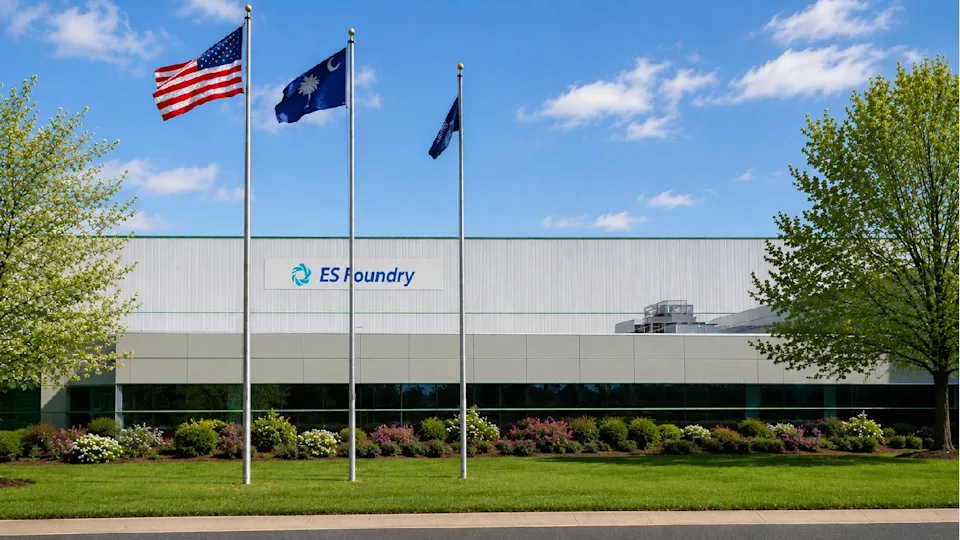
The ES Foundry Greenwood solar cell facility in South Carolina has completed a 2 GW expansion that lifts its annual production capacity to 3 GW, with the first cell already coming off the new line. Announced in July 2026, the milestone triples the plant’s original output and cements ES Foundry as one of the largest pure play solar cell makers in the United States. The Greenwood site produces crystalline silicon bifacial cells built on passivated emitter and rear contact, or PERC, technology, aimed at both utility scale and distributed generation buyers. ES Foundry, an American manufacturer led by founder and chief executive Alex Zhu, opened the plant in January 2025 inside a converted former Fujifilm building of more than 400,000 square feet, then reached full 1 GW operation by the end of that year. The company had signalled in December that the 2 GW addition would be ready by July, and it delivered on that timeline. ES Foundry said the expansion supports more than 400 advanced manufacturing jobs in Greenwood County, on top of the roughly 500 strong workforce the site had already built. Crucially for customers, American made cells let panel makers and developers claim the extra 10 percent domestic content bonus under the federal Investment Tax Credit, a commercial edge that has driven demand toward homegrown supply since the plant first opened.
South Carolina Solar Cell Manufacturing Enters a Higher Gear
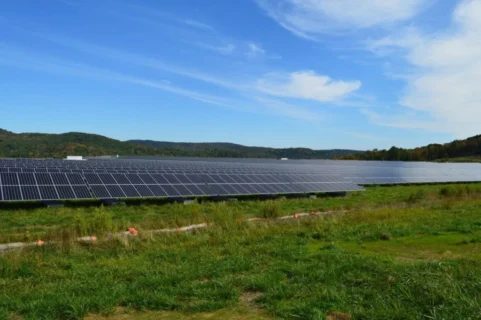
The expansion lands as the United States races to rebuild a solar cell base that all but vanished over the past decade. Wood Mackenzie analysts estimated the country held only about 3 GW of operational solar cell capacity earlier this year, a figure they expect to climb toward 20.5 GW by the end of 2027 as new lines come online. ES Foundry is not alone in the Southeast push, with Suniva running a 1 GW cell factory in South Carolina and targeting 5.5 GW by mid 2027, while Qcells now turns out cells at its Cartersville plant in neighbouring Georgia. That cluster matters because cells are the hardest link in the solar chain to onshore, sitting between imported wafers and domestically assembled modules. Demand for those cells is visible in projects like the Cider Solar Farm in New York, a 2,500 acre, US$950 million development that will become the state’s largest once complete in late 2026 and precisely the kind of utility scale buyer that benefits from domestic content credits. South Carolina has a direct stake in the outcome, since the Carolinas Clean Energy Business Association projects the state’s solar economic impact will rise nearly fourfold, from US$306.6 million in 2024 to close to US$1.4 billion by 2035. By choosing a shuttered industrial campus and rehiring former Fujifilm and Ascend Performance Materials staff, ES Foundry has turned a legacy closure into a working symbol of that shift.
ES Foundry Greenwood Timeline and What Comes Next
With the 2 GW line now live, attention turns to how quickly ES Foundry can fill it. Zhu framed the achievement around execution rather than promises, arguing that the market needs operating capacity and proven domestic suppliers able to serve customers immediately rather than fresh announcements. The company has chosen PERC over the newer TOPCon architecture partly because the older technology sidesteps the intellectual property disputes now clouding several TOPCon suppliers. Open questions remain around policy, since the value of the domestic content bonus depends on the continued shape of federal clean energy incentives, and around wafer supply, which the United States still largely imports. ES Foundry has already signed a first multi year contract exceeding 1 GW with a top tier module manufacturer, giving the expanded plant an early anchor. If domestic demand holds, the Greenwood site is positioned to become a cornerstone of a supply chain that industry body SEIA wants to reach 50 GW of American solar production by 2030.
Project Fact Sheet
- Project Name: ES Foundry Greenwood Solar Cell Facility, 2 GW Expansion
- Location: Greenwood, Greenwood County, South Carolina, United States
- Project Value: Not publicly disclosed
- Client / Owner: ES Foundry
- Key Components: 2 GW production line addition, lifting total capacity to 3 GW of bifacial PERC crystalline silicon solar cells
- Facility Size: More than 400,000 square feet, in a converted former Fujifilm manufacturing building
- Technology: Passivated emitter and rear contact bifacial cells for utility scale and distributed generation
- Procurement Model: Private investment, with output qualifying customers for the 10 percent domestic content Investment Tax Credit adder
- Expansion Completed: July 2026, with the first cell off the new line
- Jobs Created: More than 400 additional manufacturing roles, adding to a workforce of about 500
- Strategic Impact: Ranks ES Foundry among the largest US pure play solar cell makers and strengthens the domestic solar supply chain
Project Team
- Client / Owner: ES Foundry
- Founder and Chief Executive: Alex Zhu
- Prior Site Occupant: Fujifilm, former owner of the Greenwood building
- Local Partner: Greenwood County economic development office
- Industry Body: Solar Energy Industries Association
- Main Contractor: Not publicly disclosed
Frequently Asked Questions
What does the ES Foundry Greenwood facility produce? The ES Foundry Greenwood facility produces crystalline silicon bifacial solar cells using PERC technology, supplying both utility scale and distributed generation projects across the United States.
How much did the ES Foundry Greenwood expansion cost? ES Foundry has not publicly disclosed the capital cost of the expansion, though it tripled annual capacity from 1 GW to 3 GW and added a new production line.
How many jobs will the ES Foundry Greenwood facility create? The expansion supports more than 400 additional manufacturing jobs in Greenwood County, on top of a workforce of roughly 500 already at the site.
When was the ES Foundry Greenwood expansion completed? The 2 GW expansion was completed in July 2026, when the first solar cell came off the newly installed production line.
Where is the ES Foundry Greenwood solar cell facility located? It sits in Greenwood, South Carolina, inside a converted former Fujifilm building of more than 400,000 square feet.

Leave a Reply