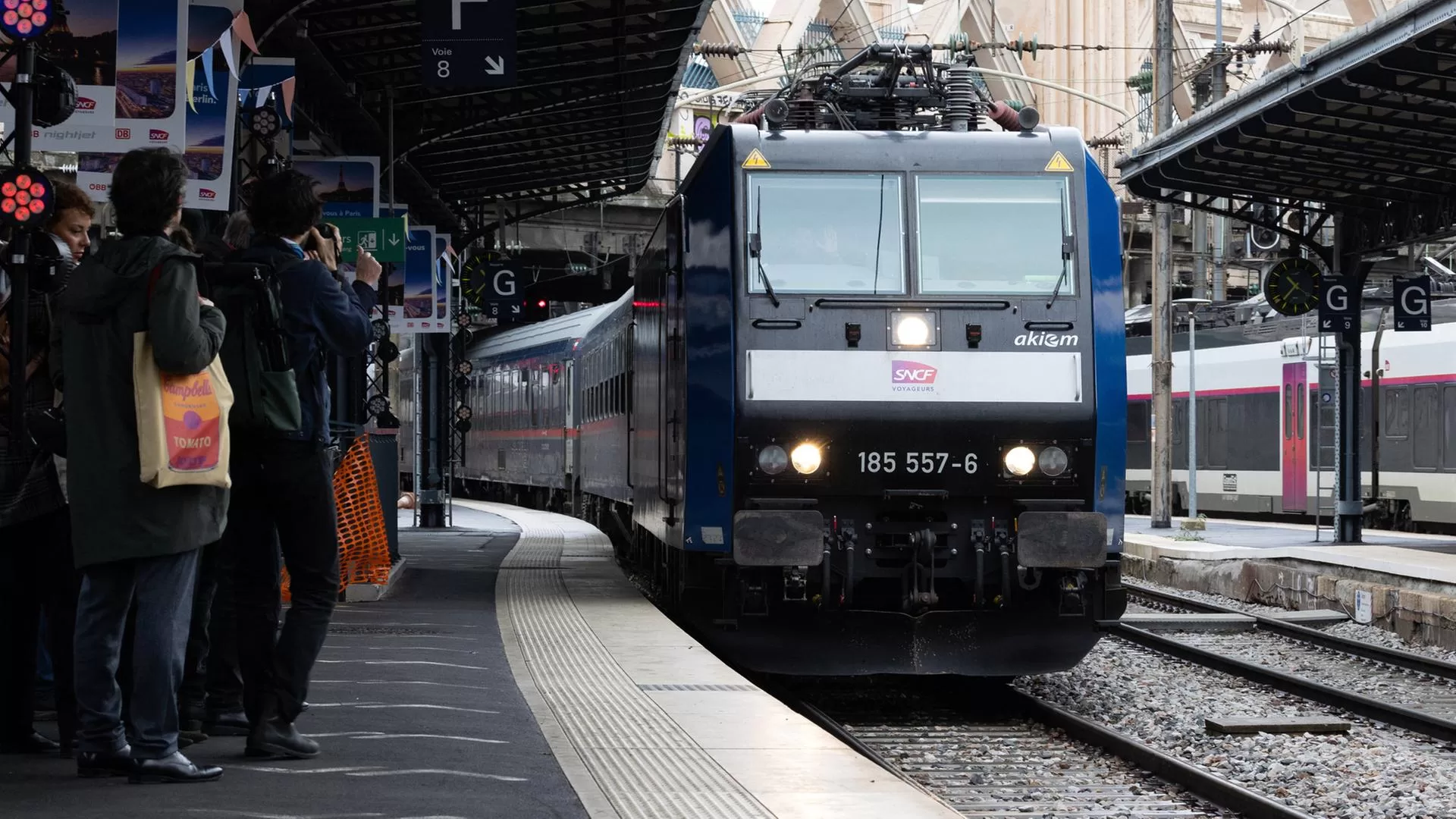
ÖBB’s next-generation Nightjet is reshaping overnight rail travel across Europe — but the celebrated night-train revival has run into turbulence, as the same period that brought sleek new trains has also forced the Austrian operator to cut some of its best-known routes. The result is a network advancing and contracting at the same time: more comfort on the corridors that survive, fewer corridors overall.
New trains, scaled-back fleet
The new-generation Nightjet, developed by Siemens Mobility under the “Viaggio Next Level” name, has been carrying passengers since December 2023 and marks the first wholesale renewal of Europe’s ageing night-train fleet in decades. ÖBB initially ordered 33 of the new trainsets, but that order has since been reduced to 24 units, with the freed-up funding redirected into daytime services. ÖBB says it is investing over €500 million in the new trains — by its account, more than any other railway company in Europe — with all 24 due in service by mid-2026.
Each seven-car set is a permanently coupled unit carrying up to around 260 passengers, made up of two sleeping cars, three couchette cars, a multifunction car and a seating car. Thanks to newly developed bogies the trains ride more smoothly than their predecessors, and they are approved for speeds of up to 230 km/h.
Inside the “hotels on wheels”
The standout innovation is the “Mini Cabin” — a compact private sleeping pod in the couchette cars that offers solo travellers their own lockable space at a relatively low price, a direct response to changing travel habits. Alongside them, redesigned sleeping cars now offer Comfort Plus compartments with private en-suite bathrooms and showers, while digital NFC room access, USB and wireless charging, onboard Wi-Fi, dedicated bike and sports-equipment space and an accessible cabin round out the upgrades. Designed by UK consultancy PriestmanGoode with ÖBB, the interiors lend the fleet a more modern, hotel-like feel.
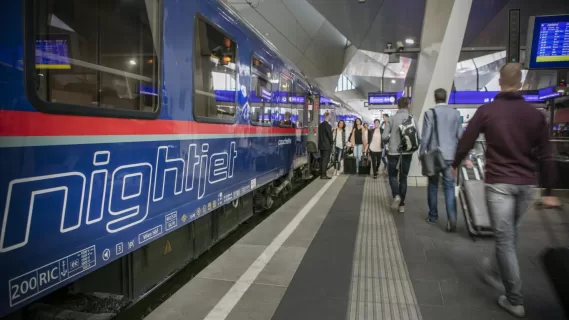
ÖBB’s Nightjet delivers a leap in comfort even as the wider network contracts.
A gradual, cross-border rollout
The new trains are being introduced corridor by corridor rather than all at once, and as of 2026 already run on a range of routes across Germany, Austria, Switzerland, Italy and the Netherlands. From December 2025, ÖBB and Swiss operator SBB began running the new sets on all Zürich–Hamburg services, the inaugural train christened “City of Zürich.” We reaced out to ÖBB-Holding AG, they said that the Vienna–Zurich service was switched to the new rolling stock in June 2026, extending the next-generation fleet onto another of the network’s key cross-border corridors.
Subsidy cuts force route closures
After years of expansion, the dominant story of the 2026 timetable is retrenchment. The most prominent casualty is the Paris network: ÖBB discontinued its Paris–Vienna and Paris–Berlin Nightjets after the French government pulled its subsidy ahead of schedule. The Munich and Vienna services to La Spezia — gateway to the Cinque Terre — were also dropped from the 2026 timetable. Across the continent, a 2026 night-train map compiled by advocacy group Back-on-Track recorded five new overnight connections added but ten removed, several of them popular ÖBB Nightjet lines. Campaigners point to a familiar set of obstacles: limited investment in rolling stock, track-capacity and signalling differences between countries, and the fragility of routes that depend on government subsidy.
The shifting fortunes were on show at the earlier launch of the new fleet, when senior dignitaries — including Austria’s Climate Protection Minister, the Italian Ambassador and then-ÖBB CEO Andreas Matthä — gathered at Vienna Central Station to wave off the first Vienna–Rome service. “With the new generation Nightjet services, we have created a game-changer for night train travel in Europe,” Matthä said at the time, hailing the leap in comfort and privacy. A EU Commission representative, Christian Wigand, also praised Brussels’ role, noting that “a strong European rail network helps citizens get from A to B quickly, safely, and in an environmentally friendly way.”
Also read:
The Asia-Europe Connectivity Project: Iraq’s Mega $17 Billion “Development Road” Project
Private operators step into the gap
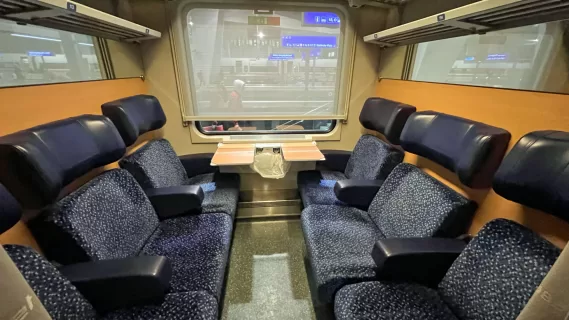
The new-generation interiors, designed by PriestmanGoode, lend the fleet a hotel-like feel.
Where ÖBB has pulled back, independent operators are moving in. Belgian-Dutch start-up European Sleeper is relaunching a Paris–Berlin link via Brussels from March 2026, and in June 2026 began connecting Amsterdam and Brussels to Milan three times a week via Cologne, Bern, Brig and Stresa, with a Brussels–Barcelona service also in development. Their arrival underscores both the strength of demand for night travel and the difficulty of sustaining it on subsidy alone.
The bottom line
Europe’s night-train moment is real, but uneven. ÖBB’s new Nightjet delivers a genuine leap in comfort and privacy, and remains the backbone of the continent’s overnight network. Yet with the fleet trimmed from 33 to 24 trains and marquee routes falling away as public funding tightens, the revival now depends as much on stable financing and private-operator momentum as on the trains themselves.
Also read:
Construction of Europe’s First Semiconductor Plant Breaks Ground: A Monumental Achievement
Project Factsheet: ÖBB Nightjet New Generation
Operator: ÖBB (Austrian Federal Railways), with partners including SBB (Switzerland), Deutsche Bahn (Germany) and NS International (Netherlands)
Train manufacturer: Siemens Mobility (“Viaggio Next Level”)
Interior design: PriestmanGoode with ÖBB
Investment: Over €500 million in new trains
Fleet: 24 next-generation trainsets (reduced from an original order of 33), all due in service by mid-2026
In service since: December 2023
Train configuration: Seven permanently coupled cars (two sleeping, three couchette, one multifunction, one seating); capacity up to ~260 passengers
Top speed: Up to 230 km/h
Key features: “Mini Cabin” sleeping pods, Comfort Plus en-suite sleeper compartments, NFC room access, USB/wireless charging, onboard Wi-Fi, accessible cabin, bike and sports-equipment space
Coverage: Routes across Austria, Germany, Switzerland, Italy and the Netherlands, rolled out gradually corridor by corridor
Recent additions: Zürich–Hamburg (new-generation from December 2025); Vienna–Zurich (switched to new rolling stock June 2026)
Recent cuts: Paris–Vienna and Paris–Berlin discontinued; Munich/Vienna–La Spezia withdrawn (2026 timetable)
Context: Part of a broader European night-train revival now constrained by subsidy withdrawals, with private operators such as European Sleeper expanding into vacated routes

Leave a Reply