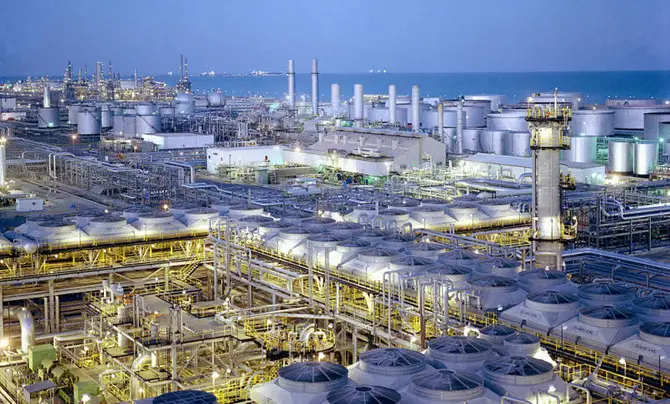
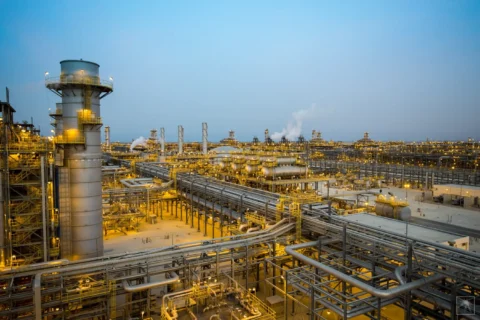
The Fadhili Gas Plant expansion construction project continues advancing in 2026 as Saudi Arabia pushes forward with one of its most significant gas infrastructure upgrades. The US$7.7 billion development, awarded in EPC packages, is expanding processing capacity from 2.5 billion to around 4 billion standard cubic feet per day. Construction activity remains ongoing across engineering, procurement, and early site execution works, with completion still targeted for 2027. The project supports Saudi Aramco’s long-term gas growth strategy and reinforces the Kingdom’s shift toward expanded non-associated gas production for domestic power and industrial demand.
Fadhili Gas Plant Expansion Project Construction Status Update 2026
As of 2026, the Fadhili Gas Plant expansion construction project is in active execution, with multiple EPC contractors progressing through engineering completion, fabrication, and construction mobilization phases. Major work packages involving gas processing trains, sulphur recovery units, and utilities integration are underway across different contract scopes. The project remains aligned with its planned 2027 completion timeline, although execution complexity continues to drive phased delivery across facilities and offsite infrastructure.
Furthermore, the expansion adds approximately 1.5 billion cubic feet per day of new processing capacity, significantly strengthening Saudi Arabia’s integrated gas system. It also supports downstream industries by increasing sulphur recovery and enhancing feedstock availability for petrochemical production.
Latest status update (August, 2026)
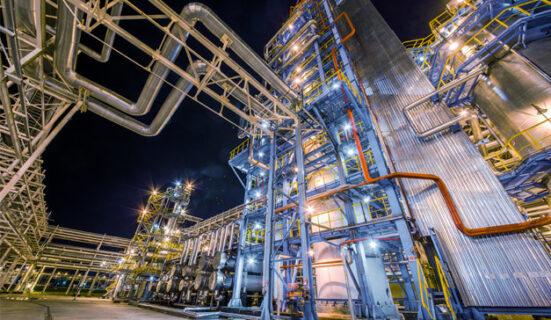
The Fadhili Gas Plant expansion project remains under construction after Saudi Aramco awarded $7.7 billion in EPC contracts in April 2024. Construction activities are progressing across the gas processing expansion, with engineering, procurement, fabrication and site works advancing toward the project’s scheduled completion in November 2027. The expansion will increase the plant’s gas processing capacity from 2.5 billion to 4.0 billion standard cubic feet per day (bscfd), adding 1.5 bscfd of new processing capacity and approximately 2,300 metric tonnes per day of sulphur production.
The project forms a key part of Aramco’s strategy to increase its gas production by more than 60% by 2030 compared with 2021 levels. As construction continues, the expansion is expected to strengthen Saudi Arabia’s domestic gas supply, support lower-carbon energy initiatives and provide additional feedstock for the country’s growing petrochemical sector.
The expansion also comes as major offshore energy projects continue advancing across the Gulf. In the UAE, the ADNOC Offshore construction project recently moved forward after a $1.75 billion ultra-mega EPCIC contract award, highlighting the region’s sustained investment in offshore production infrastructure and long-term energy security. Read more about the ADNOC Offshore construction project.
Fadhili Gas Plant and other EPC Linkages
The Fadhili Gas Plant expansion construction project also reflects broader regional EPC market dynamics, where large-scale energy infrastructure developments continue to generate downstream contracting opportunities. In this context, the recently awarded $500 million Target Engineering EPC contracts demonstrates how EPC contractors are actively benefiting from sustained oil and gas investment cycles across the Gulf.
Both projects highlight parallel investment momentum in gas processing infrastructure and EPC delivery capability. While Fadhili represents a mega-scale national infrastructure expansion, Target Engineering’s multi-contract awards show how mid-to-large EPC players are capturing project packages within the same regional value chain. Together, they underscore sustained demand for engineering, procurement, and construction services across Saudi Arabia and the wider GCC energy sector.
Fadhili gas plant expansion project progresses toward 2027 completion
The Fadhili gas plant expansion project remains under active construction, with completion targeted for November 2027. Furthermore, engineering, procurement, and construction activities are advancing across multiple packages. Construction works began in 2024, while contractors continue executing civil, mechanical, and pipeline installations. Additionally, subcontract awards in 2025 confirmed steady on-site progress.
The expansion will increase processing capacity from 2.5 billion to about 4 billion cubic feet per day. Consequently, it will significantly boost Saudi Arabia’s domestic gas supply. At the same time, the project will add approximately 1.5 billion cubic feet per day of new processing capacity. Therefore, it directly supports Saudi Aramco’s target to increase gas output by over 60% by 2030.
Strategic role of the Fadhili gas plant expansion project
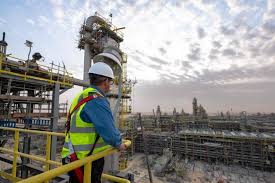
The Fadhili gas plant expansion project forms a key part of Saudi Arabia’s Master Gas System growth strategy. Moreover, it strengthens the shift toward cleaner energy sources and industrial diversification. In addition, the project will increase sulphur recovery capacity by around 2,300 tonnes per day. Consequently, it will enhance environmental performance and reduce emissions.
The expansion also supports downstream industries by ensuring stable gas supply for power and petrochemical sectors. Furthermore, it contributes to long-term economic growth and energy security. Notably, the project continues progressing despite regional uncertainty affecting other developments. For instance, the $3.3 billion Kuwait gas project has been placed on hold due to geopolitical tensions, highlighting uneven progress across Gulf energy construction.
Construction outlook remains stable despite regional contrasts
The Fadhili gas plant expansion project demonstrates resilience in execution. Meanwhile, Saudi Arabia continues advancing multiple gas megaprojects simultaneously. Additionally, ongoing investments in gas infrastructure underline a broader shift away from crude oil for domestic power generation. Therefore, projects like Fadhili remain critical to national energy planning. Even so, supply chain pressures and contractor coordination remain key execution challenges. However, current progress indicates that timelines remain largely intact.
About Fadhili Gas Plant
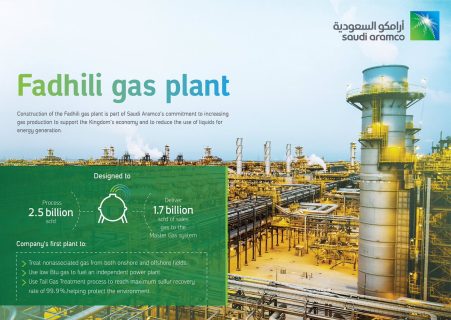
The gas-fired combined heat and power plant was built by Fadhili Plant Cogeneration Company (FPCC) at an estimated cost of US$ 13.3bn. Its construction began back in 2016. The works were carried out in three sections which included the construction of a gas processing unit, the construction of utilities and offsite facilities such as nitrogen, steam, power and water systems, and the construction of a sulphur recovery system.
Currently, the facility comprises a total of five gas turbines with associated heat recovery steam generators and two steam turbines with air-cooled condensers that enable a high fuel utilization factor of up to 81.1%.
It processes an estimated 2bcf/d of non-associated gas from the Hasbah offshore gas field and 500mmcf/d of gas from the Khursaniyah onshore gas field producing 1.5bcf/d of sales gas and 4,000 metric tons a day of sulphur. It also produces 470mmcf/d of gas that is supplied to a nearby co-generation power plant that was constructed alongside the Fadhili Gas Plant.
The cogeneration power plant was developed as per a build, own, operate and transfer system (BOOT) agreement that is valid for a period of 20 years by a joint venture between Saudi Aramco (30%), ENGIE (40%), and Saudi Electricity Company (60%).
Engie is a French multinational utility company that operates in the fields of electricity generation and distribution, natural gas, nuclear, renewable energy and petroleum. Noteworthy, the company is active in both upstream and downstream activities. Saudi Electricity Company on the other hand is the Saudi electric energy company responsible for the generation, transmission and distribution of electric power in Saudi Arabia.
The cogeneration power plant has a capacity of 1,500MW, 400MW of which is supplied to the Fadhili Gas Plant while the rest (1,100MW) is supplied to the national grid.
Also Read
Aramco multi-billion Offshore works Projects in Saudi Arabia
Samsung E&A awarded US$7.4 bn Aramco gas project
Offshore Oil Project Takes Shape For World’s Longest Oil and Gas Well; Abu Dhabi
Fact Sheet
Project name: Fadhili Gas Plant Expansion Construction Project
Project value: $7.7 billion
Client: Saudi Aramco
EPC contractors: Samsung Engineering, GS Engineering & Construction, Nesma & Partners
Sector: Oil and gas infrastructure (gas processing expansion)
Location: Eastern Province, Saudi Arabia
Capacity increase: 2.5 bscfd to ~4.0 bscfd
Additional output: ~1.5 bscfd incremental gas processing capacity
Sulphur production: Expanded output capacity (approx. 2,300 metric tons/day additional)
Status (2026): Under active EPC execution
Completion target: 2027
Scope: Gas processing trains, sulphur recovery units, utilities, offsites, and integration works
Strategic objective: Expand domestic gas supply and reduce crude burn for power generation
Project Team
Project owner: Saudi Aramco
EPC contractors:
- Samsung Engineering Co.
- GS Engineering & Construction
- Nesma & Partners
Engineering scope: EPC consortium engineering teams (multi-package execution model)
Procurement: EPC contractor procurement divisions and international suppliers
Construction contractors: Main EPC contractors and appointed subcontractors
Mechanical works: Package-based mechanical installation teams under EPC contractors
Electrical works: Electrical installation subcontractors under EPC scope
Instrumentation & control: Specialist automation and control system vendors
Sulphur recovery units: GS Engineering & Construction-led execution package
Gas processing trains: Samsung Engineering-led EPC package scope
Utilities & offsites: Nesma & Partners-led execution scope
Commissioning teams: Integrated EPC commissioning and startup specialists
HSE management: Saudi Aramco and EPC contractor safety divisions
Quality assurance: Contractor QA/QC departments across all packages
Logistics & supply chain: Regional and international equipment suppliers
