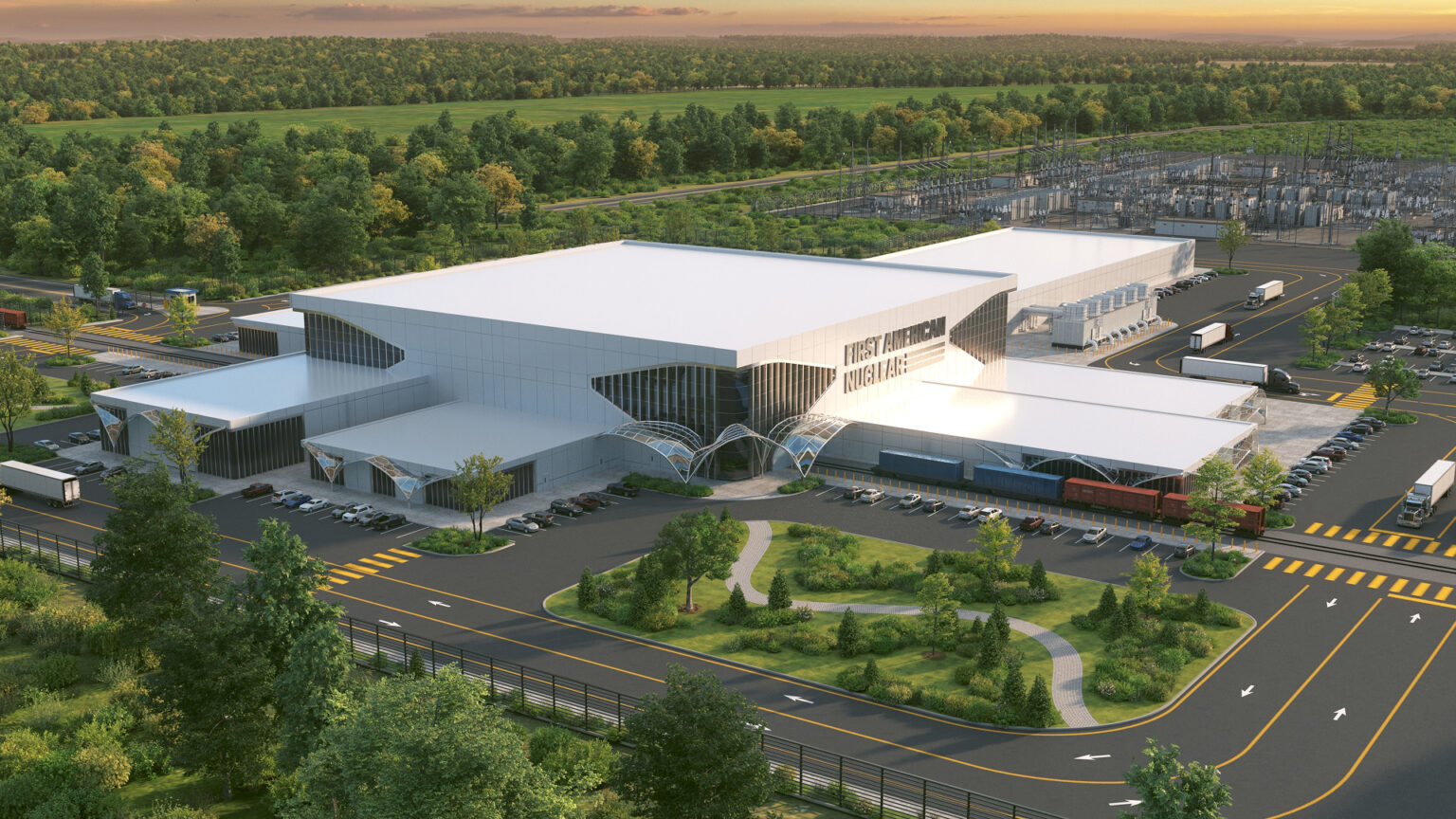
A new step has been taken toward licensing a next-generation nuclear reactor in the United States after First American Nuclear submitted a regulatory engagement plan for its EAGL-1 small modular reactor to the Nuclear Regulatory Commission.
The filing formally begins pre-application engagement with the regulator and marks progress toward a future construction permit for the project.
First of it kind
EAGL-1 is a fast-spectrum small modular reactor design based on a liquid metal fast reactor system using lead-bismuth coolant. The design targets an electrical output of about 240 megawatts per unit and is intended for clustered deployment of multiple reactors at a single site.
The reactor is designed to operate within existing U.S. licensing rules. A review conducted under a Department of Energy-supported program by Pacific Northwest National Laboratory concluded that the concept could be licensed under current regulatory criteria, pending further technical development.
The system uses a non-pressurized configuration with passive decay heat removal and is designed to eliminate the need for operator intervention in shutdown cooling scenarios. The fuel design uses high-assay low-enriched uranium dioxide.
The company is also developing a lead-bismuth test loop intended to provide physical performance data for regulators during the review process.
The project incorporates a separation between the nuclear steam supply system and the balance of plant, which includes turbines and electrical generation equipment. The balance of plant is designed to use commercially available components.
A bridge power approach allows initial electricity generation using conventional gas-fired systems while the nuclear licensing process is ongoing. The system is designed to transition to nuclear operation once approval is granted.
EAGL-1 design
The EAGL-1 design targets an electrical output of approximately 240 megawatts per unit, with planned deployment in multi-reactor clusters of four to six units. At full configuration, a single site could generate enough electricity to supply up to 1.5 million homes, positioning the project within the utility-scale segment of the nuclear market rather than smaller pilot applications.
The reactor system is designed for factory fabrication and shipment as pre-assembled modules, with the nuclear steam supply system fully assembled and tested prior to delivery. The balance of plant will rely on commercially available components, a configuration intended to standardize construction, reduce on-site complexity, and support repeatable deployment across multiple locations.
The project involves collaboration with engineering and academic partners, including AtkinsRéalis and Purdue University, along with support from state-level industrial development programs in Indiana.
The regulatory engagement plan includes a phased submission schedule covering safety criteria, fuel qualification, thermal hydraulics, and risk assessment, supported by regular technical meetings with the NRC.
Additionally; the development reflects broader momentum in U.S. nuclear innovation, with several independent projects progressing through regulatory and construction pathways across different states, including developments such as Kairos Power’s Hermes 2 reactor project in Oak Ridge, Tennessee.
EAGL-1 SMR Project – Key Facts
- Project name: EAGL-1 Small Modular Reactor (SMR)
- Developer: First American Nuclear
- Regulator: Nuclear Regulatory Commission
- Project status: Pre-application regulatory engagement submitted
Technology
- Reactor type: Liquid metal fast reactor (LMFR)
- Coolant: Lead-bismuth alloy
- Capacity: ~240 MWe per unit
- Fuel type: High-assay low-enriched uranium (HALEU) dioxide
- Configuration: Non-pressurized, passive safety system
Design & Safety
- Passive decay heat removal (no operator action required)
- “Walk-away safe” design philosophy
- No intermediate heat transfer loop required
- Core design eliminates risk of coolant-air/water chemical reactions
- Designed for licensing under existing NRC framework
Construction & Deployment
- Factory-built modular reactor system
- Reactor systems shipped as pre-tested assemblies
- Balance of plant uses commercial off-the-shelf equipment
- Designed for multi-unit clusters (4–6 reactors per site)
Energy & Operations
- Intended output supports 1.5 million homes (per multi-unit cluster)
- “Bridge Power” system allows initial gas-fired electricity generation before nuclear operation
- Transition model from gas power to nuclear once licensed
Development Partners
- AtkinsRéalis – engineering support
- Purdue University – testing and research collaboration
- Supported by U.S. DOE-linked research programs and GAIN initiative
Regulatory Milestone
- Submission of regulatory engagement plan opens NRC pre-application phase
- Structured schedule of technical white papers planned
- Includes thermal hydraulics, fuel qualification, and safety case development


Leave a Reply