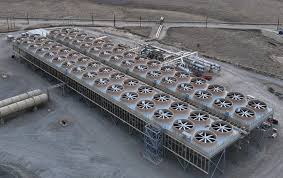
Geothermal developer Fervo Energy has closed $421 million in non-recourse debt financing for the first phase of its flagship Cape Station project in Utah, marking a major milestone for next-generation geothermal energy.
Announced on March 19, the oversubscribed financing signals Cape Station’s transition from early-stage and bridge funding to a long-term project capital structure. The company said the deal highlights the growing bankability of enhanced geothermal systems (EGS) as a utility-scale infrastructure asset.
Cape Station in Beaver County, Utah will help meet rising electricity demand from data centers, artificial intelligence, industrial activity, and broader electrification. The project will begin delivering power to the grid in 2026. And ramp up to around 100 MW by early 2027, and eventually scale to 500 MW.
The facility is fully contracted through power purchase agreements with Southern California Edison, Shell Energy, and several community choice aggregators.
Financing package
Fervo said the financing package includes a $309M construction-to-term loan, a $61M tax credit bridge loan, and a $51M letter of credit facility. The funds will cover remaining construction costs for the first phase and support credit requirements tied to project counterparties.
“Non-recourse financing has historically been considered out of reach for first-of-a-kind projects,” said David Ulrey, chief financial officer at Fervo Energy. “Cape Station disrupts that narrative… we have shown that EGS is a highly bankable asset class.”
RBC Capital Markets acted as financial advisor and coordinating lead arranger, alongside Barclays, BBVA, HSBC, MUFG, and Société Générale. Additional lenders included JPMorgan Chase, Bank of America, and Sumitomo Mitsui Trust Bank.
Legal advisory roles were handled by White & Case LLP for Fervo and Norton Rose Fulbright for the lenders.
Sean Pollock, managing director of project finance at RBC Capital Markets, said demand for reliable, clean power is accelerating, positioning EGS as a future core asset class for infrastructure investors.
Industry experts view the Cape Station project as a test case for scaling geothermal energy using advanced drilling techniques and AI-enabled exploration. Potentially opening the door to broader deployment of firm, carbon-free power across the United States.
The momentum behind geothermal energy is accelerating beyond a single project, as industry players scale up investment and partnerships across the United States. Alongside Fervo Energy’s Cape Station financing, major collaborations are also emerging, including plans develop one of the world’s largest geothermal projects in California. A signal that geothermal is rapidly gaining ground as a key pillar of the clean energy transition.
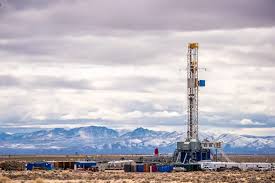
Factsheet: Cape Station Geothermal Project
- Developer: Fervo Energy
- Location: Beaver County, Utah, United States
- Technology: Enhanced Geothermal Systems (EGS)
- Total financing (Phase 1): $421 million
- $309M construction-to-term loan
- $61M tax credit bridge loan
- $51M letter of credit facility
- Financial advisor & lead arranger: RBC Capital Markets
- Other lead arrangers: Barclays; BBVA; HSBC; MUFG; Société Générale
- Additional lenders: JPMorgan Chase; Bank of America; Sumitomo Mitsui Trust Bank
- Legal advisors: White & Case LLP (sponsor); Norton Rose Fulbright (lenders)
- Initial capacity target: ~100 MW (by early 2027)
- Long-term capacity: Up to 500 MW
- First power: Expected 2026
- Offtakers (PPAs): Southern California Edison; Shell Energy; community choice aggregators
Project significance:
Demonstrates bankability of EGS and supports growing demand for firm, clean power from AI, data centers, and industrial sectors
Leave a Reply