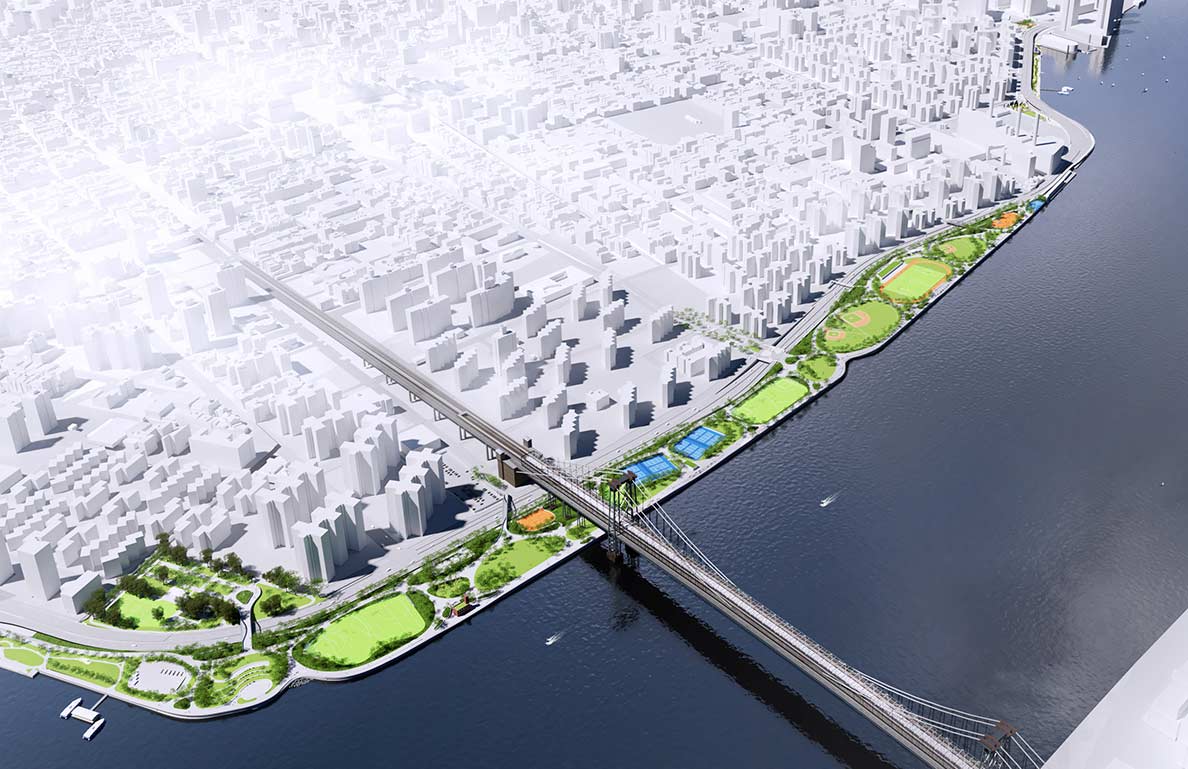
New York City’s East Side Coastal Resiliency (ESCR) project represents one of the most ambitious urban flood protection initiatives in the United States, designed to safeguard over 110,000 residents from the increasingly severe threat of coastal storms and rising seas. Spanning 2.4 miles along Manhattan’s Lower East Side, the project combines innovative engineering, adaptive design, and urban planning to deliver a continuous system of flood protection, while simultaneously enhancing public parks, recreational facilities, and waterfront access.
The ESCR project was conceived in response to the growing risk of climate change-related flooding, particularly following Superstorm Sandy in 2012, which caused extensive damage along the East River waterfront. Recognizing the need for resilient infrastructure, New York City authorities initiated ESCR as part of a broader strategy to enhance coastal defenses in vulnerable neighborhoods. The project leverages a combination of elevated parkland, floodwalls, berms, and 18 movable floodgates to create a flexible, continuous barrier that can be activated in the event of storm surges. This adaptive approach ensures protection for residents while preserving normal waterfront access during everyday conditions.
Construction start
Construction of the ESCR project officially began in November 2020 at Asser Levy Playground, with major construction accelerating in April 2021. Early planning and engineering phases involved extensive design work to integrate flood protection with community and environmental considerations. The project’s design accommodates the city’s projected “worst-case” 100-year storm scenario for 2050 and allows for an additional two feet of elevation if sea levels rise faster than anticipated. ESCR is complemented by the Brooklyn Bridge-Montgomery Coastal Resilience (BMCR) project, which runs south of ESCR and is being built to extend flood protection along the East River, creating a combined protected coastline of 3.22 miles.
Phase 1
The ESCR project is divided into two primary phases. Phase 1, also known as the northern section, extends from East 15th Street to East 25th Street. This section reached substantial completion in October 2024, two months ahead of schedule and $10 million under budget, at a total cost of $163 million. Key accomplishments in this phase include the installation of 12 floodgates, the reconstruction and reopening of Murphy Brothers Playground, Asser Levy Playground, and Stuyvesant Cove Park, along with the creation of elevated multi-use parkland, new sports facilities, dog runs, picnic areas, and landscaping that integrates over 600 new trees and 21,000 shrubs. The northern section also features ADA-accessible bridges, including the Delancey Street Pedestrian Bridge and Corlears Hook Bridge, ensuring that waterfront access remains inclusive for all residents.
Phase 2
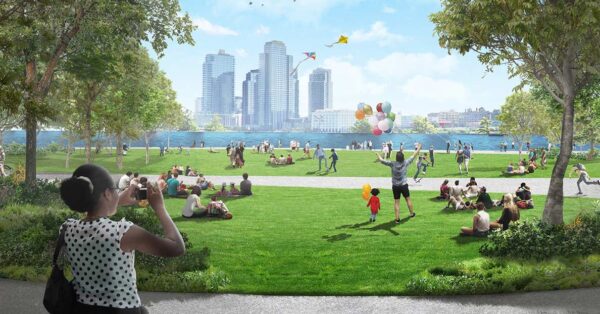
Phase 2, the southern section, encompasses East River Park, running from Montgomery Street to East 15th Street. This portion remains under active construction and is slated for completion by late 2026. The work includes elevating the entire East River Park by approximately eight feet, reconstructing playgrounds, ballfields, sports courts, amphitheaters, and installing the final six floodgates. These gates, a combination of swinging and sliding mechanisms, are designed to remain open during normal conditions, ensuring continued waterfront access, and close when storms or flood events are anticipated. The southern section’s construction is critical to the functionality of the entire ESCR system, as the project will not achieve full operational flood protection until this final phase is complete.
Floodgates
The movable floodgates are a central feature of the ESCR project. The first gate, a 32,000-pound, 42-foot-long swinging gate, was installed at Stuyvesant Cove Park in February 2022, marking a significant milestone in the city’s flood resiliency efforts. This installation was followed by the massive 79-foot sliding gate at Asser Levy Playground later that year. To date, all 12 gates in the northern section are operational, while the remaining six gates in the southern section are scheduled for installation during the ongoing Phase 2 construction. The gates were manufactured by Linita Design & Mfg. Corp. in Lackawanna, New York, reflecting a collaboration between local manufacturers and city agencies.
The ESCR project incorporates extensive neighborhood engagement and public communication strategies. The city has appointed two full-time Community Construction Liaisons (CCLs) to manage communications and respond to resident inquiries in the northern and southern sections. Joyce Xin, fluent in Mandarin, serves the southern portion, while Nadine Harris manages the northern section. Both are accessible via phone and email and maintain distribution lists for construction updates. This proactive outreach ensures that residents are informed about closures, construction schedules, and park improvements throughout the project footprint.
Like the East Side Coastal Resiliency project in New York, the Bolivar Roads Gate System along the Texas Gulf Coast represents a massive investment in storm surge protection. Both projects integrate engineering innovation with community and environmental considerations, safeguarding residents, critical infrastructure, and ecosystems while allowing continued access to waterways.
Funding
From a financial perspective, ESCR represents a significant investment in New York City’s resilience infrastructure, with a total cost of $1.45 billion for the ESCR project alone. Phase 1 was completed under budget, demonstrating careful fiscal management, and Phase 2 is expected to adhere to similar standards. Combined with the BMCR companion project, which adds additional flood protection south of ESCR, the total investment approaches $2 billion. The project is managed by the New York City Department of Design and Construction (DDC), in coordination with the Department of Parks and Recreation (Parks), the Department of Environmental Protection (DEP), and the Mayor’s Office of Climate and Environmental Justice. Key leaders overseeing the project include DDC Commissioner Thomas Foley, NYC Parks Acting Commissioner Liam Kavanagh, Chief Climate Officer Rohit Aggarwala, and Mayor Eric Adams.
Community and Recreational Improvements Along the East River
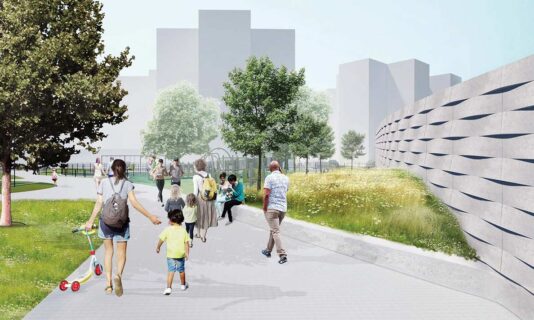
The ESCR project is distinguished not only by its engineering and technical sophistication but also by its attention to community benefits. Reconstructed and elevated parks, such as Murphy Brothers Playground, Asser Levy Playground, Stuyvesant Cove Park, and East River Park, provide enhanced recreational spaces, sports facilities, and green infrastructure while serving as integral elements of flood defense. The project incorporates over 2,000 new trees along the reconstructed parklands, selected for resilience against salt spray, extreme weather, and changing precipitation patterns. Recreational amenities, including tennis courts, basketball courts, soccer fields, multi-use turf areas, playgrounds, picnic and barbecue areas, and comfort stations, have been thoughtfully integrated into the protective infrastructure. These enhancements ensure that the Lower East Side community benefits from increased open space, improved aesthetics, and new recreational opportunities even before full flood protection is operational.
ESCR also addresses critical urban infrastructure needs. The project upgrades existing sewer systems along the East River waterfront to improve stormwater management and reduce flooding during precipitation events. The reconstructed bridges and entryways provide universal accessibility, replacing steep and narrow ramps with gently sloping access points. This integration of resilient infrastructure and public amenities demonstrates a holistic approach to urban planning, where flood protection, environmental restoration, and community recreation coexist.
The adaptive design of ESCR positions the city to respond to future climate uncertainties. The system is capable of accommodating an additional two feet of elevation should sea levels rise more rapidly than current projections. The project was developed in consultation with the New York City Panel on Climate Change (NPCC), an independent scientific body providing data and guidance to city policymakers. This proactive approach ensures that the ESCR infrastructure will remain effective for decades, safeguarding lives, property, and the economic vitality of the Lower East Side.
Community engagement and artistic initiatives
Community engagement and artistic initiatives have been central to the ESCR experience. The city launched a “Call for Student and Community Art” initiative, allowing local students and artists to display artwork on banners surrounding construction sites. Selected students receive awards, while all participants are acknowledged with certificates of participation. This initiative exemplifies the city’s commitment to combining resilience infrastructure with cultural enrichment and community involvement.
The broader significance of ESCR extends beyond the Lower East Side. It serves as a model for urban flood protection in densely populated areas facing rising seas and intensifying storms. Its combination of raised parkland, floodwalls, berms, and movable gates offers a flexible, multi-layered defense system adaptable to changing climate conditions. The project’s integration of community amenities, ecological restoration, and accessibility improvements demonstrates how climate adaptation can coexist with urban livability and neighborhood enhancement.
ESCR also sets a precedent for collaborative governance and project execution. By coordinating multiple city agencies, local contractors, manufacturers, and community stakeholders, the project demonstrates the importance of partnerships in achieving large-scale urban infrastructure goals. This approach allows New York City to deliver protective infrastructure that not only meets engineering standards but also reflects community priorities and environmental considerations.
Current status
As of early 2026, ESCR has completed its northern section, installed the majority of floodgates, reopened major park areas, and advanced into the southern section, where construction is ongoing. The project remains on schedule for full completion by late 2026, at which point the full 2.4-mile protective line of elevated parkland, berms, floodwalls, and movable gates will be operational. Residents will benefit from a robust flood defense system designed to protect lives, property, and public infrastructure, while enjoying improved recreational and green spaces along the East River waterfront.
The East Side Coastal Resiliency project represents a landmark investment in climate adaptation, urban infrastructure, and community enhancement. With innovative engineering, a phased construction approach, extensive floodgate installation, elevated parks, upgraded recreational facilities, and strong community engagement, ESCR is transforming the Lower East Side’s waterfront into a model of resilience and livability. By combining protection, accessibility, and recreation, New York City is preparing its neighborhoods for the challenges of climate change, demonstrating how a densely populated urban environment can simultaneously safeguard residents, restore ecosystems, and enhance quality of life. Once fully completed in late 2026, ESCR will stand as a testament to the city’s commitment to future-proofing its communities against rising seas, storm surges, and the broader impacts of a changing climate.
Project Fact Sheet: East Side Coastal Resiliency (ESCR)
The East Side Coastal Resiliency project is a $1.45 billion climate defense initiative designed to protect Manhattan’s East Side from the dual threats of sea-level rise and coastal storm surges.
Project Overview
Total Length: 2.4 miles of integrated flood protection.
Boundaries: Montgomery Street in the south to East 25th Street in the north.
Protection Goal: Built to withstand a 100-year storm surge based on 2050s sea-level rise projections.
Impact: Directly protects over 110,000 residents, including 28,000 in NYCHA housing.
Core Infrastructure
Floodwalls: A mix of concrete walls and raised parkland (levees).
Floodgates: 18 movable gates total.
First Installed: Stuyvesant Cove Park (Feb 2022).
Largest Gate: 79-foot, 45-ton roller gate at Asser Levy Playground.
Drainage: Significant upgrades to the local sewer system, including a new interceptor gate and massive storage pipes to prevent “backup” flooding during storms.
Community & Ecology
Parkland: Total reconstruction of East River Park, raised by 8–10 feet.
Recreation: New basketball/tennis courts, turf fields, BBQ areas, and ADA-accessible pedestrian bridges (Delancey Street and Corlears Hook).
Urban Forest: Planting of 2,000 new trees (selected for salt tolerance) and over 20,000 shrubs to create a more resilient ecosystem.
Current Timeline (as of Feb 2026)
Phase 1 (North): Substantially complete (East 15th to 25th St).
Phase 2 (South): Active construction in the northern section of East River Park.
Full Completion: Scheduled for late 2026.
Key Agencies
Design & Construction: NYC Department of Design and Construction (DDC).
Partners: NYC Parks, NYC Mayor’s Office of Climate & Environmental Justice.
Also Read US$20 million to be spent to renovate Lockwood Mill, New York
Leave a Reply