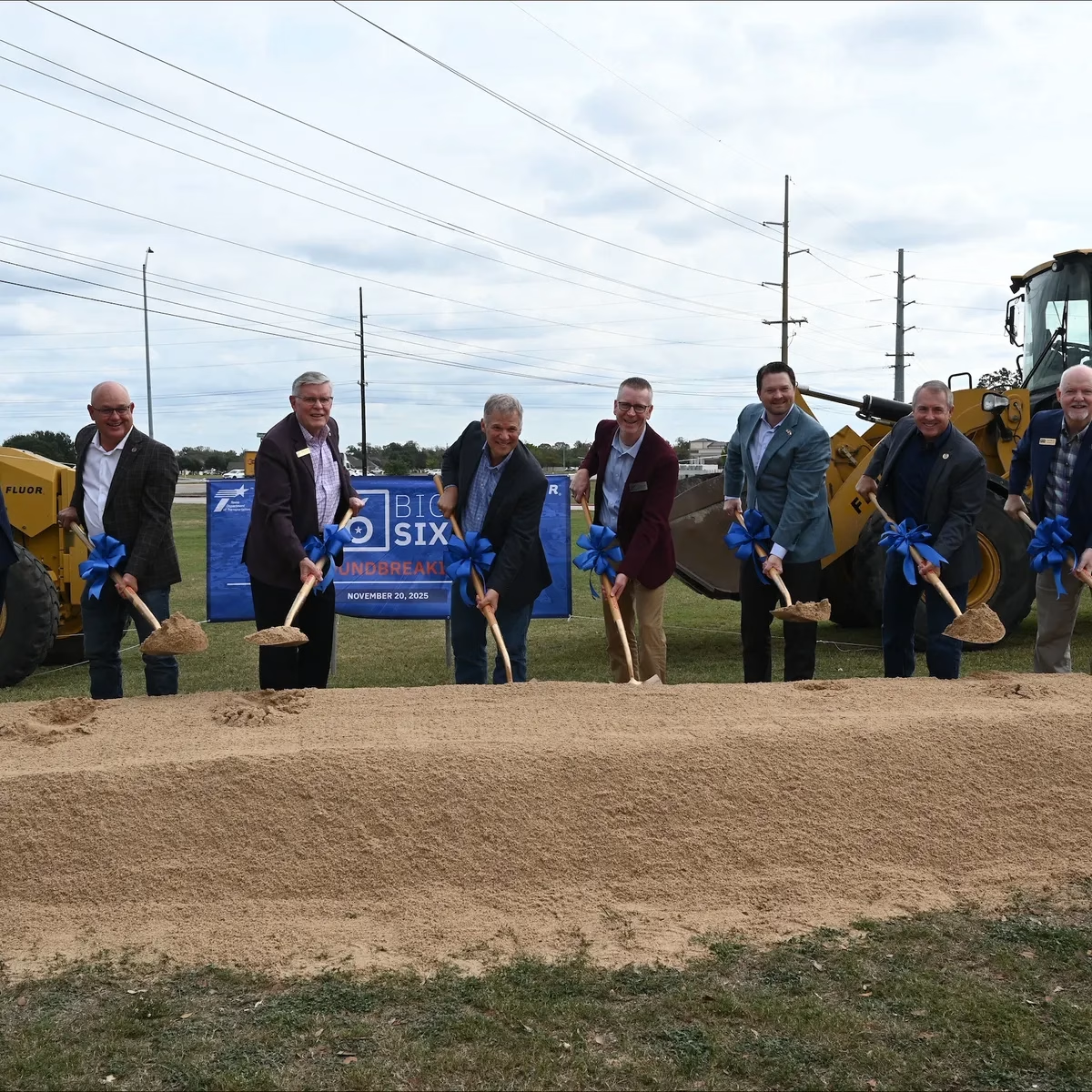
Fluor Corporation has officially initiated construction on a major $671 million infrastructure project designed to reconstruct and widen a critical segment of State Highway 6 located in Bryan and College Station, Texas. The Irving-based general contractor confirmed the commencement of work following a groundbreaking ceremony held on November 20, marking the beginning of a five-year construction timeline that will transform mobility across the region. This extensive project targets a highly trafficked 12-mile corridor that serves as a vital artery linking Texas A&M University with surrounding Brazos County communities and the broader Texas Triangle region.
The development is a strategic component of the Texas Highway Freight Network and the Texas Highway Trunk System, underscoring its importance not only for local commuters but also for the efficient movement of freight and as a designated hurricane evacuation route. With construction now underway, Fluor anticipates that the substantial upgrades will be completed and fully operational by the end of 2030, delivering long-term relief to one of the state’s expanding transportation hubs.
Enhancing Regional Connectivity and Safety
The primary scope of the State Highway 6 project involves a comprehensive expansion of the existing roadway infrastructure to accommodate the surging population growth and economic activity within the College Station area. The engineering plan calls for widening the north-south corridor from its current configuration of two lanes in each direction to three lanes, effectively increasing traffic capacity by fifty percent to reduce bottlenecking during peak travel hours. Shawn West, president of Fluor’s infrastructure business, emphasized that this expansion is critical for creating a safer and more efficient route for the thousands of motorists who utilize this stretch daily.
By modernizing the roadway geometry and installing updated safety features, the project aims to significantly lower accident rates and improve emergency response times along this key evacuation corridor. This initiative reflects a broader trend in Texas infrastructure development where capacity enhancements are prioritized to keep pace with the state’s rapid demographic shifts and the resulting pressure on legacy transportation networks.
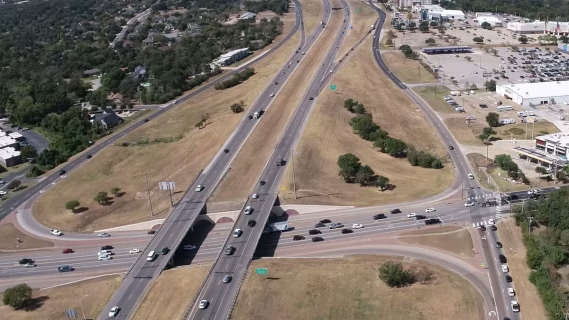
State Highway 6 Expansion Factsheet
Location: Bryan / College Station, Texas (Brazos County)
General Contractor: Fluor Corporation
Project Type: Highway Reconstruction & Widening
Total Investment: $671 Million
Timeline:
Groundbreaking: November 20, 2025
Completion: End of 2030
Scope of Work:
Length: 12 miles
Expansion: Widening from 4 to 6 lanes (2 to 3 in each direction)
Capacity: 50% increase in lane capacity
Strategic Importance:
connects Texas A&M University to regional hubs.
Part of Texas Highway Freight Network & Trunk System.
Designated Hurricane Evacuation Route.
Key Stakeholders: TxDOT, Fluor Corporation, Brazos County
Strategic Portfolio Growth for Fluor
Securing and executing this contract represents a continuation of Fluor’s deep-rooted involvement in delivering large-scale surface transportation projects across the state of Texas. The State Highway 6 rebuild adds another high-profile engagement to the company’s growing regional portfolio, which already includes major undertakings such as the I-635 LBJ East and I-35E projects in Dallas. While some previous projects have faced financial challenges, this new award signals a renewed confidence in Fluor’s ability to manage complex civil engineering tasks within the competitive Texas market.
The groundbreaking comes at a time when nonbuilding construction starts, particularly in the highway sector, are seeing a robust nationwide increase of nearly 23% year-over-year, providing a stable revenue stream for contractors amidst a softening private commercial sector. This shift suggests that public infrastructure investment will remain a primary driver of industry activity through the remainder of the decade, with firms like Fluor positioned to capitalize on state-funded expansion programs.
Navigating the Texas Triangle Logistics
The reconstruction of State Highway 6 is strategically pivotal for the logistics and freight industries that rely on the seamless flow of goods through the “Texas Triangle”—the region anchored by Dallas-Fort Worth, Houston, and San Antonio. Amid a national push for improved connectivity that recently saw the California Governor sign AB 697 to accelerate Highway 37 upgrades, this designated component of the Texas Highway Freight Network will facilitate smoother transit for heavy trucks that are essential to the regional supply chain, reducing idle times and fuel consumption associated with traffic congestion.
The improvements are expected to bolster the economic resilience of the Bryan-College Station metropolitan area by ensuring that its connectivity infrastructure matches the caliber of its educational and research institutions. Furthermore, the project’s designation as a hurricane evacuation route highlights the dual-purpose nature of modern infrastructure planning, where capacity upgrades are inextricably linked to disaster preparedness and public safety resilience. As construction crews mobilize along the 12-mile stretch, the focus remains on maintaining traffic flow while executing a complex widening operation that will serve the community for decades to come.
Leave a Reply