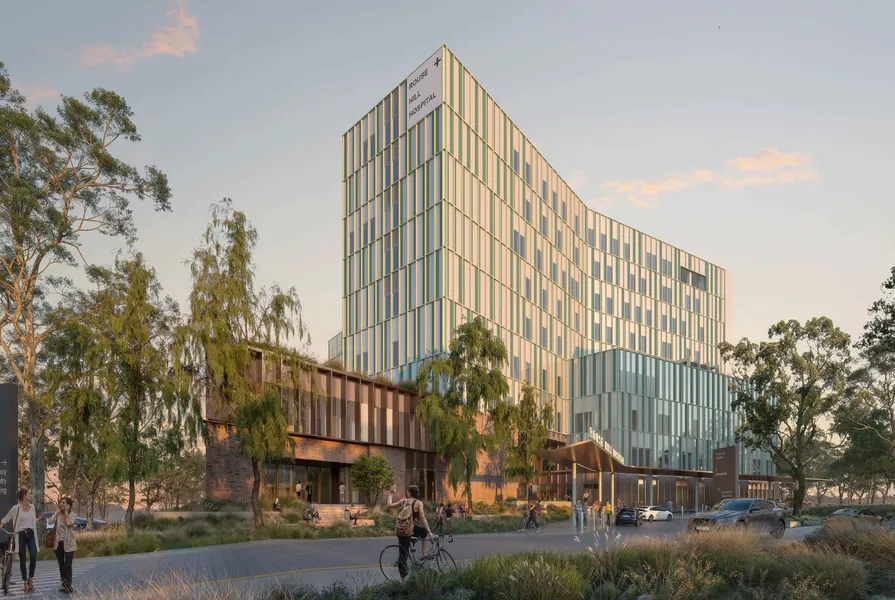
After years of delays, political wrangling, and scope revisions, construction has officially commenced on the $910 million Rouse Hill Hospital in North West Sydney. The arrival of heavy machinery on the greenfield site at the corner of Commercial and Windsor Roads marks the end of a long wait for the Hills District, a region that has exploded in population while lacking a dedicated public hospital. The NSW Minns Labor Government, in partnership with the Federal Government, has fast-tracked the project to address the critical service gaps forcing residents to travel to the overburdened Westmead, Blacktown, and Nepean hospitals. This mobilization represents the start of a complex delivery phase for a campus that will serve as the new healthcare anchor for Sydney’s sprawling North West Growth Area.
Scope: A “Digital-First” Campus with Full Maternity
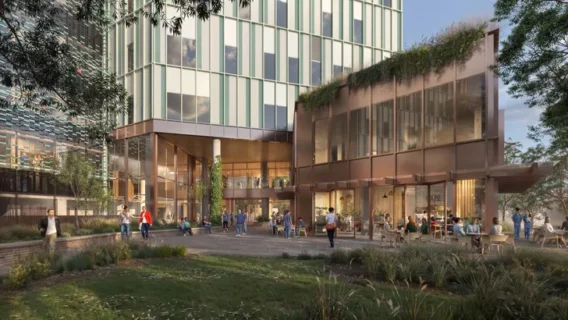
The project has evolved significantly from its initial concept, growing into a comprehensive health precinct that directly addresses community demands. Unlike earlier proposals that were criticized for limited capabilities, the finalized scope includes a full Emergency Department (ED), an Urgent Care Centre, and comprehensive maternity services. This includes birthing suites and a dedicated maternity inpatient unit, a feature secured through an additional funding injection to ensure local families have access to birthing options close to home. Architecturally, the design by HDR introduces a “Care Arcade,” a covered thoroughfare that integrates retail, cafes, and patient services, blending the hospital environment with the civic atmosphere of the nearby Rouse Hill Town Centre. The facility is also being billed as a “digital-first” hospital, designed with infrastructure to support “Hospital in the Home” services and advanced telehealth, allowing it to treat more patients than its physical bed count suggests.
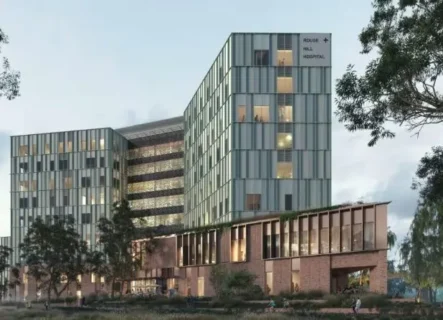
Rouse Hill Hospital: Factsheet
Project Name: Rouse Hill Hospital Development
Location: Cnr Commercial & Windsor Roads, Rouse Hill, NSW
Client: Health Infrastructure NSW (Western Sydney Local Health District)
Total Investment: $910 Million (AUD)
Main Contractor (ECI): Lendlease
Architect: HDR
Project Manager: TSA Management
Project Management Services: Turner & Townsend
Key Services: Emergency Department, Maternity, Urgent Care, Ambulatory Care, Rehabilitation
Timeline Start: Feb 2026 (Early Works)
Timeline Completion: 2029 (Target)
Job Creation: ~1,200 Construction Jobs
Jobsite Impact: ECI Mobilization and Early Works
Translating this vision into reality involves a sophisticated construction strategy led by Lendlease, who has been engaged as the Early Contractor Involvement (ECI) partner. The current phase focuses on enabling works, including bulk earthworks to level the undulating site, heritage salvage operations to preserve Indigenous artifacts, and the installation of high-voltage trunk infrastructure. The location presents unique challenges as it is bordered by the heavy traffic of Windsor Road and the Metro line, requiring the construction team to execute complex materials handling plans to avoid gridlocking the town center. The building’s façade and landscaping are deeply influenced by Connecting with Country principles developed in consultation with Dharug Traditional Custodians, referencing the local geology of rocks, water, and gentle hills.
Economic Stimulus and Timeline
The project is a major economic engine for Western Sydney and is expected to support over 1,200 direct construction jobs at its peak. Mobilization creates immediate demand for civil plant operators, while the upcoming main works phase will require a workforce of specialized trades, from medical gas plumbers to clinical systems integrators. While early works are now underway, the main hospital structure will rise over the next three years, with a target completion date set for 2029. Once operational, it will not only provide acute care but also serve as a teaching and research hub, fostering partnerships with universities to train the next generation of Western Sydney healthcare workers.
This commitment to bolstering healthcare infrastructure extends beyond metropolitan hubs to critical regional corridors, as evidenced by the $558M Albury Wodonga Hospital blueprint recently unveiled. This major cross-border redevelopment will consolidate acute services at the Albury campus, delivering a new clinical services building with expanded ICU and surgical capacity, while simultaneously advancing upgrades to the Wodonga facility to meet the growing demands of the Murray River community.
Leave a Reply