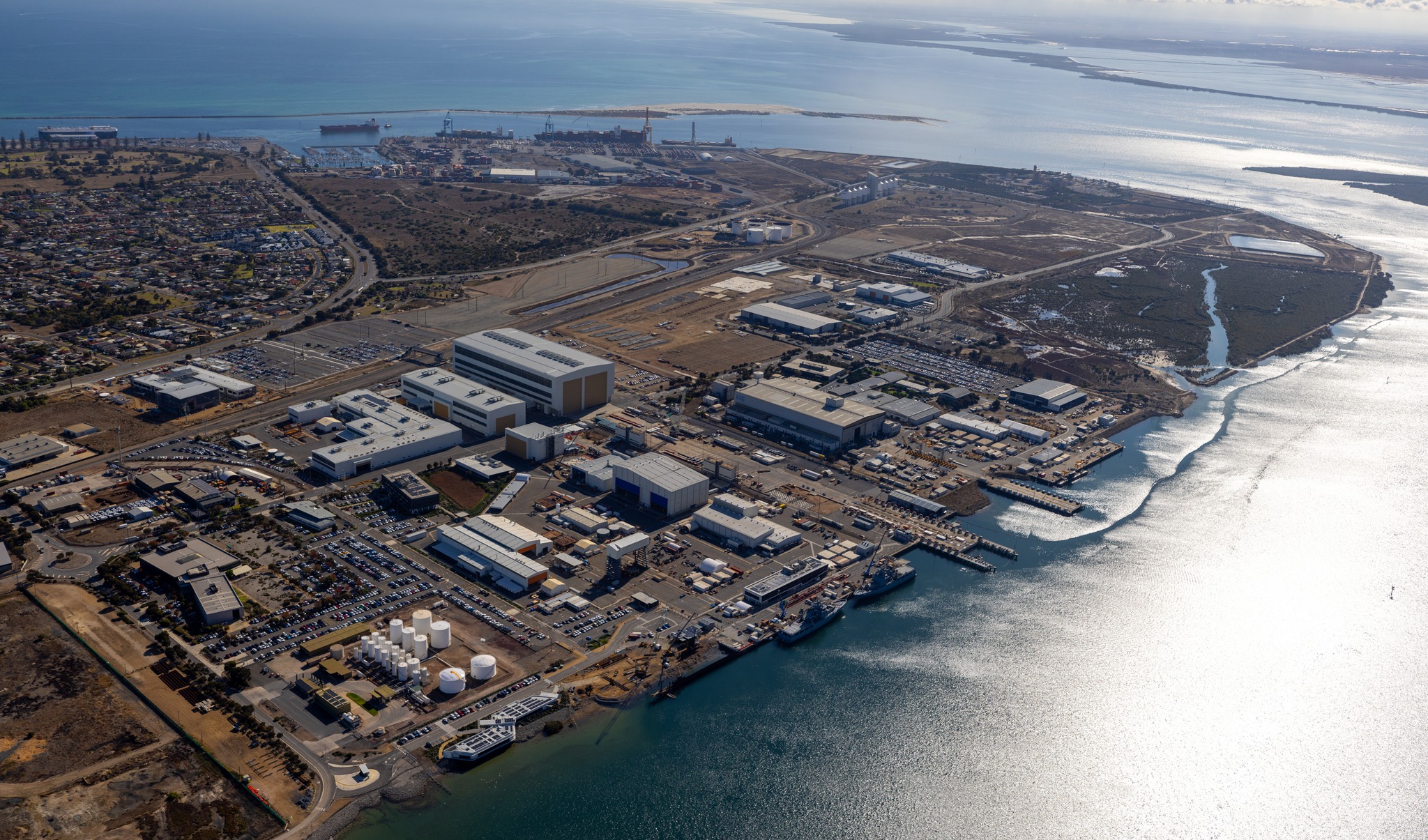
The Australian Government has officially unlocked billions in funding to transform the Osborne Submarine Yard in South Australia into a world-class facility capable of manufacturing nuclear-powered submarines. This massive capital injection is the physical manifestation of the AUKUS security pact, pivoting the nation’s defense strategy from conventional diesel-electric boats to long-range, nuclear-propulsion capabilities. The investment is not merely for a single building but for an entire industrial precinct designed to build the SSN-AUKUS class—a hybrid design leveraging British hull technology and American vertical launch systems.
Civil Engineering for Nuclear Standards
The “Jobsite Impact” at Osborne is unprecedented in Australian construction history. The project, overseen by Australian Naval Infrastructure (ANI), requires the site to meet rigorous nuclear safety and security standards. This involves deep-foundation civil works to support the immense weight of the pressure hull fabrication halls and the specialized “land level transfer” systems used to move completed submarine sections. The scope includes the construction of a new Submarine Construction Yard (SCY), which will be nearly three times larger than the existing facility used for the Collins-class maintenance.
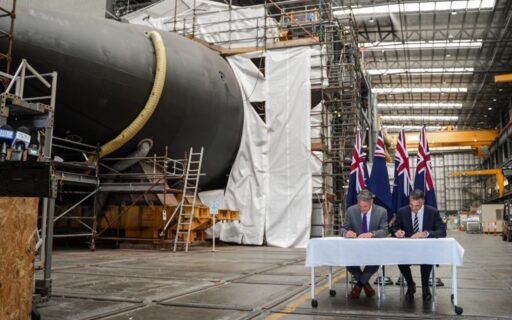
Osborne Naval Shipyard Expansion: Factsheet
Project Name: SSN-AUKUS Submarine Construction Yard (SCY)
Location: Osborne, South Australia (Adelaide)
Owner/Developer: Australian Naval Infrastructure (ANI)
Key Partners (Submarine Builders):
Total Program Cost: Multi-billion AUD investment (Part of the $268-$368bn AUKUS pathway).
Construction Scope:
New Hull Fabrication Halls.
Outfitting and Consolidation Halls.
Land Level Transfer Facility (Shiplift upgrades).
Nuclear-certified security and radiological infrastructure.
Workforce:
~4,000 direct jobs during yard construction.
~4,000-5,500 direct jobs for submarine shipbuilding.
Strategic Goal: Sovereign capability to build and maintain SSN-AUKUS nuclear-powered submarines.
Timeline:
Site Works: Commenced 2023/2024.
Major Construction: Ramping up 2026.
First Submarine Construction Start: Late 2020s.
First Delivery: Early 2040s.
Contractors will be tasked with pouring massive, seismically reinforced concrete slabs and erecting high-bay steel structures capable of housing overhead gantry cranes with heavy-lift capacities exceeding 200 tonnes. Furthermore, the site requires specialized radiological control facilities and secure perimeter infrastructure that exceeds standard military specifications.
The AUKUS Industrial Alliance
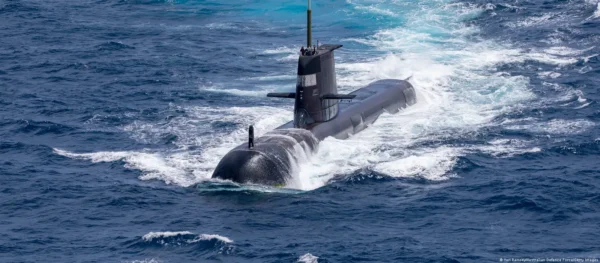
Mobilization for this generational build brings together a triad of industrial giants. ASC (formerly Australian Submarine Corporation) and British defense prime BAE Systems have been selected as the joint builders for the submarines themselves, but the infrastructure enabling them is a project in its own right. The expansion creates an immediate demand for specialized trades, requiring a workforce that will peak at over 4,000 workers just for the yard’s construction. To feed this pipeline, the state government is simultaneously ramping up the “Skills and Training Academy” to retrain welders, electricians, and engineers in nuclear-specific competencies.
This facility is the critical “first rivet” in a program that will run through the 2040s, eventually delivering a fleet that reshapes the strategic balance of the Indo-Pacific. This resurgence of naval industrial capacity is also accelerating in the United States, where Hanwha has unveiled a $5 billion expansion plan for Philly Shipyard in Pennsylvania. Acquired by the South Korean conglomerate for $100 million, the yard is set for a massive overhaul including the construction of two new docks and three quays, aiming to ramp up annual production from fewer than two vessels to as many as 20, thereby revitalizing American commercial and naval shipbuilding capabilities.
Leave a Reply