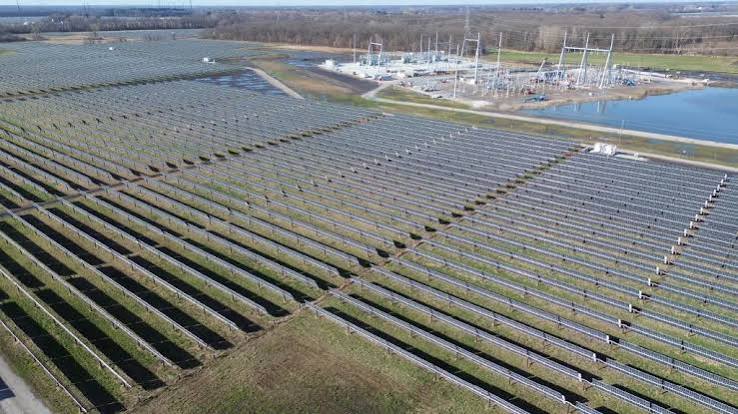
Google, MN8 Energy and Eos Energy Enterprises are partnering on a $350 million clean-energy project in West Virginia that will combine utility-scale solar with lithium-ion and long-duration battery storage to supply additional capacity to the PJM grid.
The Mammoth Solar project in Kanawha County will include 86 MW of solar generation, 70 MW/280 MWh of lithium-ion battery storage and a 10 MW/100 MWh long-duration energy storage system from Eos Energy.
MN8 Energy will own and operate the project, while Google will purchase its energy, capacity and clean-energy attributes under the agreement announced September 2, 2026. The companies said the integrated project will support electricity demand associated with Google’s data centers in the region, including a planned Google facility in West Virginia.
West Virginia project combines solar with two storage technologies
The Mammoth Solar project is designed around three separate components that will operate as an integrated energy resource.
The 86 MW solar facility is expected to begin commercial operations in 2028. The 70 MW/280 MWh lithium-ion battery system is scheduled to follow in 2029, while Eos’ 10 MW/100 MWh long-duration storage system is expected to enter service in 2030.
The Eos system will provide 10 hours of storage duration. That gives the project a longer-duration storage component capable of extending the availability of electricity generated by the solar facility beyond the operating window of shorter-duration storage.
The companies describe the configuration as a way to combine different storage technologies within a single resource, with lithium-ion batteries providing shorter-duration storage and the zinc-based system extending energy availability for longer periods.
The project will also mark Google’s first deployment of Eos Energy’s Z3 technology. Eos manufactures the system in the United States, with its operations based in Pennsylvania.
Google to purchase project’s energy and capacity
Google will purchase the project’s energy, capacity and clean-energy attributes under the agreement with MN8.
The arrangement forms part of Google’s wider effort to add new electricity resources to the grids serving its operations as the company expands its digital infrastructure. Google has also been pursuing long-duration energy storage as part of its strategy for supporting grids with increasing amounts of renewable generation.
The West Virginia development is particularly significant because it connects a large electricity customer with a new generation-and-storage resource rather than relying on solar generation alone.
The project will add clean, dispatchable capacity to the PJM Interconnection, which serves West Virginia and much of the Mid-Atlantic and Midwest.
Eos deploys 10-hour zinc-based storage
For Eos, the project represents the company’s first deployment of its Z3 technology for Google and the first project under the MN8-Eos Master Supply Agreement announced in 2025.
Under that earlier agreement, MN8 agreed to potentially deploy as much as 750 MWh of Eos’ American-made long-duration storage across renewable-energy projects. The companies identified applications involving large electricity users, including data centers, commercial and industrial facilities and manufacturing operations.
The West Virginia project now provides a specific deployment under that broader relationship.
Eos’ 10 MW/100 MWh system will use zinc-based battery technology and provide a 10-hour discharge duration. The company says the technology supports long-duration applications where storage requirements extend beyond conventional shorter-duration battery systems.
The project will also represent West Virginia’s first commercial-scale long-duration energy storage deployment, according to MN8, Google and Eos.
$350M investment planned for reclaimed coal mine
MN8 estimates that the project will require up to $350 million in capital investment.
The company plans to build the project on a reclaimed coal mine in West Virginia, bringing renewable generation and energy storage to a site with a long history in the state’s energy sector.
MN8 estimates that the development will generate approximately $4 million in property-tax revenue for the county and local schools during the first 20 years of operations. The company also expects the construction phase to create approximately 200 jobs, followed by additional full- and part-time employment during operations.
Those figures are company estimates rather than completed economic results, and the project’s future tax and employment impacts will depend on its eventual construction and operation.
Project links renewable power to growing data center demand
The project arrives as technology companies increasingly seek new power resources alongside the expansion of data center infrastructure.
Google’s West Virginia announcement specifically identifies a planned data center in the state among the digital infrastructure that the project is intended to support. The company has increasingly pursued combinations of new generation, storage and grid solutions as electricity demand from data centers grows.
The strategy is not limited to West Virginia. Across the U.S., developers and technology companies are increasingly pairing large-scale computing projects with dedicated generation, storage and transmission investments.
As data center operators expand their electricity footprint, they also face another critical infrastructure challenge: water. A hyperscale AI data center campus in West Texas, for example, has turned to Gradiant for a turnkey potable water supply and wastewater treatment system designed for zero discharge to surface water.
Mammoth Solar project factsheet
- Project: Mammoth Solar
- Location: Kanawha County, West Virginia
- Owner/operator: MN8 Energy
- Solar capacity: 86 MW
- Lithium-ion battery storage: 70 MW/280 MWh
- Long-duration storage: 10 MW/100 MWh
- Total planned storage: 380 MWh
- Long-duration technology: Eos Energy Z3 zinc-based system
- Long-duration storage duration: 10 hours
- Estimated capital investment: Up to $350 million
- Solar commercial operation: Expected in 2028
- Lithium-ion storage operation: Expected in 2029
- Long-duration storage operation: Expected in 2030
- Estimated construction jobs: Approximately 200
- Estimated first 20-year property-tax revenue: Approximately $4 million
- Offtaker: Google
- Grid: PJM Interconnection
- Site: Reclaimed coal mine

Leave a Reply