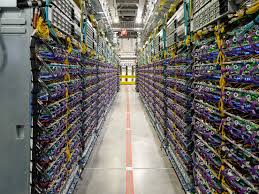
Google has announced plans to build a new data center in Hermantown, Minnesota, in a move that local officials and utility leaders say could bring significant long-term investment to northern Minnesota.
The company selected Hermantown, a city near Hermantown, citing the region’s cool climate, skilled workforce and access to a resilient power grid operated by Minnesota Power. The project marks the beginning of what officials describe as a long-term partnership between Google, the city and the regional utility.
Hermantown City Administrator John Mulder said the project has the potential to expand the local commercial tax base and provide economic benefits for the city, St. Louis County and local schools. He added that the project remains subject to additional public review and regulatory steps.
Electric Service Agreement with Google
Minnesota Power confirmed it has reached an Electric Service Agreement with Google to supply electricity to the facility. Under Minnesota law, the agreement is structured so that existing customers will not bear the costs of connecting and serving the new large customer. Instead, Google will cover the infrastructure costs associated with meeting its energy needs.
The planned data center will support a range of online services operated by Google, including Workspace, Search, YouTube and Maps. Data centers form the backbone of digital services used by individuals, businesses and government agencies.
As part of the agreement, Minnesota Power and Google said they plan to add 700 megawatts of new clean energy resources to the system. The additions include 300 megawatts of wind energy and 400 megawatts of battery storage. According to the utility, the new assets will help advance Minnesota’s carbon-free energy standard and improve grid resilience without increasing costs for current customers.
The collaboration also includes efforts to develop demand flexibility measures designed to reduce strain on the grid during peak usage periods. Minnesota Power said it currently supplies more than 60% of its energy from renewable sources as it works to meet the state’s carbon-free requirements.
Energy impact funding
Google will contribute $5 million in energy impact funding to support Minnesota Power’s affordability and efficiency programs for low- to moderate-income residential customers. In addition, the data center is expected to contribute millions of dollars annually to Minnesota’s statewide energy efficiency and weatherization program under a 2025 state law governing large data centers.
The Electric Service Agreement will be filed with the Minnesota Public Utilities Commission for regulatory review and approval. The commission oversees electricity rates and utility operations in the state.
If approved, the project would add a major new industrial customer to Minnesota Power’s system and represent a significant expansion of digital infrastructure in the region. Officials said further details, including construction timelines, will be subject to regulatory proceedings and local planning processes.
While the Hermantown project moves forward, Minnesota has also seen several high-profile data center proposals delayed or canceled in recent years amid shifting market conditions and infrastructure challenges. Industry analysts note that large-scale digital infrastructure projects remain sensitive to energy availability, regulatory processes and economic trends. Whether the Hermantown development proceeds as planned will ultimately depend on how those factors evolve in the months ahead.
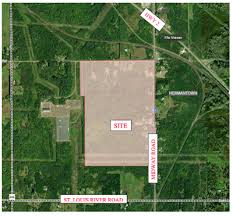
Project Factsheet: Google Data Center – Hermantown, MN
Project overview
Developer: Google (subsidiary of Alphabet, Inc.)
Location: Hermantown, Minnesota
Partner: Minnesota Power (subsidiary of ALLETE)
Purpose: Support for Search, Workspace, YouTube, and Maps
Key factors: Cool climate, skilled workforce, and grid access
Energy and sustainability
Wind power: 300 megawatts of new wind energy
Battery storage: 400 megawatts of new battery storage
Grid impact: Use of demand flexibility to reduce peak strain
Current status: Minnesota Power already exceeds 60% renewable energy
Economic and community impact
Tax base: Long-term investment for city, county, and schools
Infrastructure costs: Paid entirely by Google; no costs to existing customers
Affordability funding: $5 million for low-to-moderate income resident programs
State contributions: Millions annually for efficiency and weatherization
Project partners
Lead developer: Mortenson (handles construction and planning)
Utility provider: Minnesota Power (energy supply and grid management)
Local government: City of Hermantown
Regional partners: St. Louis County and Hermantown Community Schools
Utility oversight: Minnesota Public Utilities Commission (MPUC)
Infrastructure partners: City of Duluth and Western Lake Superior Sanitary District (WLSSD) for water and sewer systems
Regulatory status
Agreement: Electric Service Agreement reached between Google and the utility
Oversight: Subject to Minnesota Public Utilities Commission approval
Future steps: Pending further public review and local planning processes
Timeline: Construction details to follow regulatory proceedings
Leave a Reply