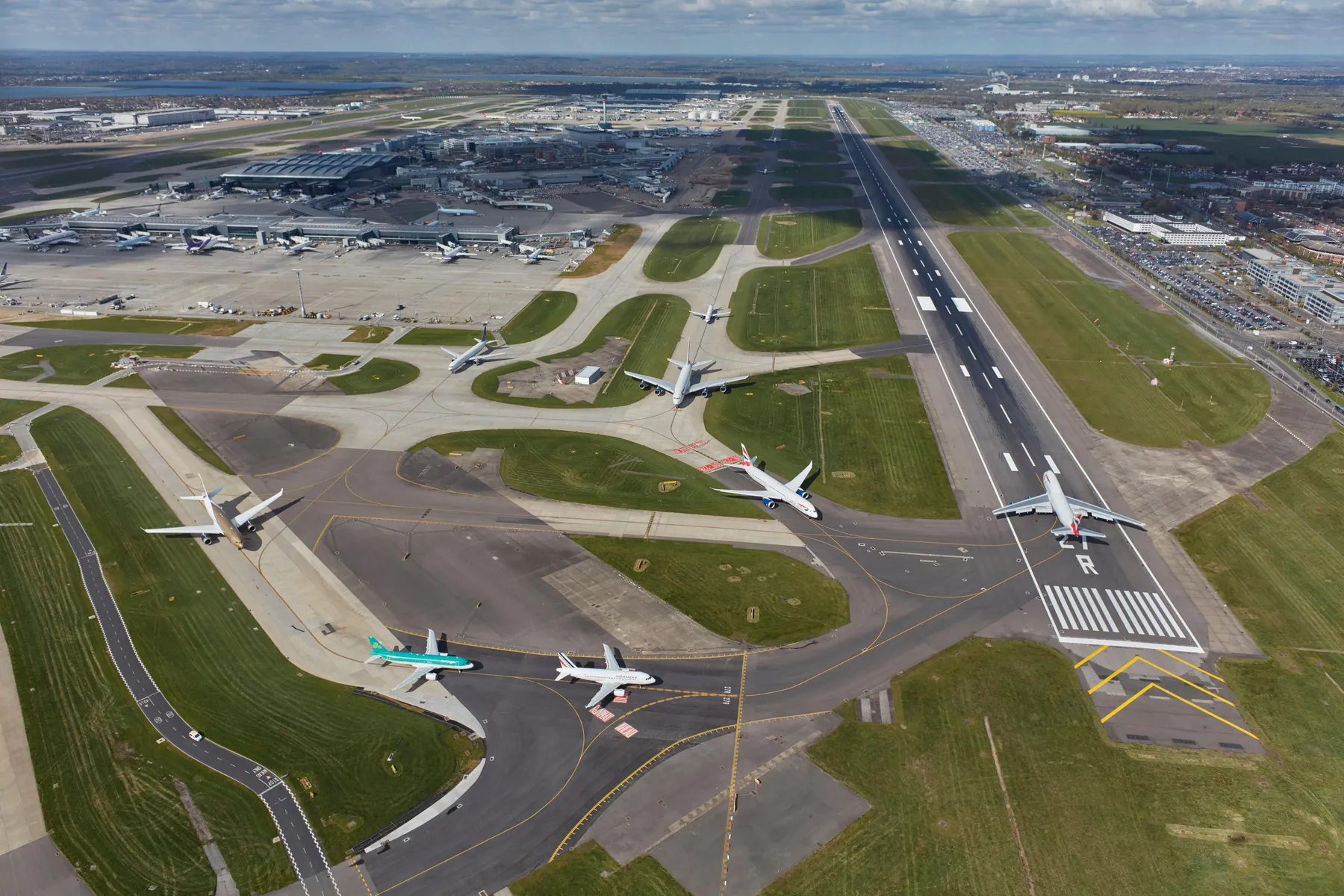
The cost of the planning application for Heathrow’s Airport Third Runway is expected to surpass £700m. This is by the time it is submitted in 2027. This is according to the airport’s latest estimates. This project comes in as UK’s airports gear up to improve their infrastructure in bid to meet the global competition.
Heathrow Airport chief communications and sustainability officer Nigel Milton said approximately £400m had been spent on the planning process. This is before the Grimshaw-designed project was paused in 2020. The project was paused over legal issues relating to the 2015 Paris climate treaty.
Approximately the same figure will now be spent again before the development consent order (DCO) for the £49bn expansion project is submitted in 2027 or 2028. This was revealed by Milton, with the final cost expected to be up to £800m.
Legal Fees, Surveying and Project Traffic Model Fees Take Lead in Heathrow Airport Third Runway Cost
Speaking at UKREiiF in Leeds last week, Milton said the bulk of the costs are being spent on legal fees. Additionally, the costs are being spent on surveying and modelling the project’s traffic and environmental impacts.
“A lot of it is about building up the case of what the impact is going to be and how to present that at the planning process, and a lot of legal fees,” Milton stated.
He added: “You have to say what the impact will be of the finished product. Also, you have to say how each of those impacts are going to be minimised. This is so you can demonstrate to the planning process that the impacts have been mitigated in the best way that they can.
That is essentially at the heart of whether we get planning permission or not, and preparing that case for a project the size of Heathrow, with the geographical area that is being impacted.”
The airport’s £800m estimate for the cost of the DCO would be lower than the price reported in August last year by The Times. The Times said the figure could eventually be closer to £1bn.
Carbon Emissions Laws Lead to Halting of the Expansion at Heathrow
The privately financed expansion project, which has been in development in various forms since the 1970s, was stopped in 2020. This is after the Court of Appeal ruled that the UK had failed to take its commitments to lower carbon emissions as outlined in the Paris Agreement into account.
That decision was overturned later that year. However, the project remained in limbo. This was due to lower passenger numbers during the pandemic, ongoing environmental concerns and rising construction costs.
It was given new impetus following Labour’s 2024 election victory with the government inviting the airport to submit updated proposals in January 2025.
Two options were put forward, the airport’s own £49bn scheme with a full-length 3.5km third runway and a £25bn scheme designed by Scott Brownrigg for developer Arora Group with a shorter 2.8km runway. The government opted for the former in November 2026.
What Causes Higher Costs in the Expansion
The higher cost of the airport’s own scheme is partly due to the requirement to reroute part of the M25 via a new road tunnel beneath the airport.
The runway and road tunnel together are expected to cost £21bn. £12bn will be spent on new terminal infrastructure and a further £16bn on upgrades to the airport’s existing infrastructure.
Heathrow Airport Expansion Project Factsheet
New Infrastructure: Up to 3,500-meter North-West Runway
Total Estimated Cost: £49 Billion (100% privately financed)
Annual Flight Capacity: Increasing from 480,000 to 756,000 Air Traffic Movements (ATMs)
Passenger Capacity: Scaling from 84 million to 150 million passengers per annum
Economic Impact: Projected 0.43% increase in UK GDP by 2050
Target Operational Date: Mid-2030s (aiming as early as 2035 under accelerated framework)
Major Engineering and Terminal Upgrades
- Terminal 5 Extension (T5X & T5XN): A massive new terminal complex constructed to the west of Terminal 5. It will be paired with a brand-new satellite pier (T5XN) to handle massive passenger surges.
- Terminal 2 and 3 Realignment: A major modern upgrade to Terminal 2. It will be accompanied by the phased closure of the legacy Terminal 3 to optimize the airfield layout.
- M25 Motorway Rerouting: One of the most complex civil engineering aspects of the project. It involves realigning and widening a section of the UK’s busiest motorway, diverting it 130 meters westward into a brand-new tunnel running directly underneath the new third runway.
- Watercourse Diversions: Realignment and channeling of local rivers including the River Colne, Wraysbury River, and the Longford River into covered corridors beneath the airfield, alongside extensive new flood-plain mitigation storage.
Budget Breakdown
- £21 Billion: Construction of the 3,500m north-west runway, land procurement, and the intensive M25 motorway tunneling works.
- £12 Billion: Building the new T5X/T5XN terminal facilities and satellite piers.
- £15 Billion: Overhauling and modernizing the airport’s central airfield, cargo hubs, and public transport interchanges.
Leave a Reply